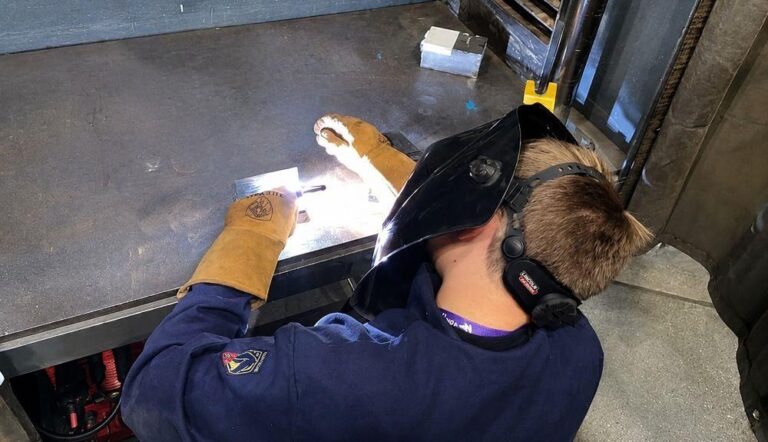

The buzz of excitement is palpable at any career exploration event. Students, with dreams in their eyes and questions on their minds, gather to peer into potential futures, much like the ESL students recently exploring opportunities at a local community college. The sentiment, “All of the careers are very interesting,” perfectly encapsulates the hopeful spirit of discovery. However, beneath this foundational curiosity lies a rapidly evolving landscape, one fundamentally reshaped by artificial intelligence. As an AI specialist and tech enthusiast, I find myself not only excited by these traditional explorations but also compelled to illuminate how AI is not just an interesting facet, but a defining force in the trajectory of virtually every professional journey.
The traditional roadmap of career planning is undergoing a seismic shift. What once seemed like stable, predictable professions are being augmented, automated, or entirely reinvented by AI. This isn’t a distant future; it’s our present reality. For students today, particularly those navigating new linguistic and cultural terrains, understanding this technological revolution is paramount. Community colleges, often serving as crucial gateways to vocational training and higher education, stand at a pivotal intersection, tasked with preparing a diverse workforce for a future that is increasingly intelligent and interconnected. This article will delve into how AI is creating new paradigms for work, examine the indispensable role of community colleges in this transformation, and highlight how individuals, regardless of their starting point, can effectively chart a course towards fulfilling and sustainable AI-driven career paths.
AI-driven Career Paths: Bridging Skills Gaps in a Transforming World
The advent of artificial intelligence is not merely an upgrade; it’s a redefinition of what work means. From sophisticated algorithms predicting consumer behavior to advanced robotics streamlining manufacturing, AI is embedding itself into the very fabric of industries worldwide. The World Economic Forum’s “Future of Jobs Report 2023” projects that 69 million new jobs are expected to emerge while 83 million are expected to disappear by 2027, with AI playing a significant role in both creation and displacement. This dynamic shift necessitates a proactive approach to career development, moving beyond traditional job descriptions to envision how human ingenuity can synergize with machine capabilities.
Consider the healthcare sector. While AI assists in diagnosing diseases more accurately and quickly, analyzing vast datasets of patient information to identify trends and personalize treatments, it also creates new roles for AI ethicists, data privacy specialists, and human-machine interface designers who ensure these powerful tools are used responsibly and effectively. Similarly, in manufacturing, automation has long been a factor, but AI is ushering in an era of “smart factories” where predictive maintenance, quality control, and supply chain optimization are managed by intelligent systems. This doesn’t eliminate human labor but transforms it, demanding skilled technicians capable of overseeing, programming, and troubleshooting complex AI-integrated machinery. The demand for industrial robot programmers, for instance, is seeing a significant uptick, requiring a blend of technical expertise and problem-solving skills often taught in vocational programs. These emerging roles represent clear examples of AI-driven career paths that require a new blend of technical proficiency and critical thinking.
Beyond direct AI development roles like machine learning engineers or AI researchers, which are often pursued through four-year degrees or advanced studies, AI is also augmenting existing professions. Marketers now rely on AI for predictive analytics, content generation, and hyper-targeted advertising. Financial analysts leverage AI for algorithmic trading and risk assessment. Even creative fields like graphic design and content creation are experiencing an AI renaissance, with generative AI tools assisting in brainstorming, prototyping, and execution. The key insight here is that AI doesn’t always replace; more often, it redefines the skill sets required to excel. This means workers across all industries need a foundational understanding of AI’s capabilities and limitations, coupled with uniquely human skills like creativity, emotional intelligence, and complex problem-solving. This fusion of technical acumen and soft skills is increasingly becoming the hallmark of successful engagement with AI-driven career paths.
The challenge for educational institutions, especially community colleges, is to bridge these evolving skills gaps. Unlike traditional four-year universities that often focus on theoretical knowledge, community colleges are typically more agile and responsive to local workforce needs. They have a unique opportunity to design and implement programs that directly address the skills required for the jobs of today and tomorrow. This might involve creating new certificates in AI literacy, data analytics for specific industries, or robotics technician programs that integrate AI principles. The goal is not just to teach students about AI but to equip them with the practical competencies to thrive within an AI-augmented professional landscape.
The Evolving Role of Community Colleges in Workforce Development
Community colleges have long been heralded as pillars of accessible education and vital engines for local economic development. Their open-door policies, affordable tuition, and flexible program structures make them indispensable for a diverse student body, including those seeking to enter the workforce quickly, reskill for new opportunities, or transfer to four-year institutions. In the context of the AI revolution, their role becomes even more critical. These institutions possess the inherent agility and community focus necessary to adapt curricula rapidly to meet industry demands.
Historically, community colleges have been at the forefront of vocational training, preparing students for careers in healthcare, manufacturing, IT support, and skilled trades. Today, these same colleges are pioneering initiatives to integrate AI literacy across various disciplines. For instance, many community colleges are now offering short-term certification programs in areas like data analytics, cybersecurity, cloud computing, and even foundational AI concepts. These programs are often designed in collaboration with local businesses and industry leaders, ensuring that the skills taught are directly relevant and immediately applicable in the regional job market. This direct industry connection is a powerful advantage when navigating the rapid changes brought by AI.
Consider the example of advanced manufacturing. As factories become “smarter” with AI-powered sensors, robotic automation, and predictive maintenance systems, the demand for traditional assembly-line workers decreases, while the need for industrial control technicians, robotics specialists, and data analysts for production optimization surges. Community colleges are responding by offering programs that blend mechatronics, industrial automation, and introductory AI concepts, preparing students for roles that oversee, program, and maintain these sophisticated systems. This focus on practical, hands-on training for real-world applications is precisely what makes community colleges so effective in building pipelines for AI-driven career paths.
Furthermore, community colleges are increasingly adopting “stackable credentials” – smaller, independent certifications that can be earned quickly and then combined to build toward larger degrees. This model is exceptionally well-suited for the fast-paced evolution of AI and technology. A student might earn a certificate in Python programming, then stack it with another in machine learning fundamentals, and perhaps a third in cloud computing, creating a highly specialized and immediately employable skill set. This flexibility allows individuals to continuously update their skills without committing to multi-year degree programs, which is crucial in a job market where technologies and required competencies can shift dramatically in just a few years.
Moreover, community colleges often serve as community hubs, offering resources beyond formal education. Career counseling, job placement services, and partnerships with local employers are integral to their mission. These services are vital for helping students, particularly those new to the workforce or looking to pivot, understand the emerging opportunities and the skills required for AI-driven career paths. By proactively engaging with the local economy and anticipating future needs, community colleges can ensure their graduates are not just educated but truly employment-ready for the digital age.
Empowering Diverse Learners for the Future: The ESL Connection
The excitement of exploring career options, as expressed by the ESL student, underscores a powerful truth: the drive for personal and professional growth transcends language barriers and cultural backgrounds. In an increasingly globalized world, fueled by technology and AI, the contributions of diverse learners are not merely a matter of equity; they are a strategic imperative. ESL students, by their very journey, embody resilience, adaptability, and a unique global perspective — qualities that are immensely valuable in navigating complex AI-driven career paths.
Learning a new language, especially English as a global lingua franca, is an intensive exercise in problem-solving, pattern recognition, and communication — skills highly transferable to technology fields. As AI becomes more ubiquitous, there’s a growing need for tools and applications that are culturally sensitive, linguistically diverse, and ethically sound. Who better to contribute to this than individuals who intimately understand the nuances of different cultures and languages? ESL learners can play crucial roles in areas like:
- **Data Annotation and Labeling:** Training AI models requires vast amounts of high-quality, accurately labeled data. This often involves understanding context, cultural references, and linguistic subtleties, where multilingual individuals excel.
- **Localization and Internationalization:** As AI products expand globally, adapting them for different markets is critical. This goes beyond simple translation, requiring a deep understanding of cultural norms, user expectations, and regulatory frameworks.
- **Human-Computer Interaction (HCI) and UI/UX Design:** Designing intuitive and inclusive interfaces for AI tools demands empathy and an understanding of diverse user needs. Individuals with diverse backgrounds can offer invaluable insights into how AI applications are perceived and interacted with by different demographics.
- **Ethical AI Development:** Ensuring AI systems are fair, unbiased, and equitable requires diverse perspectives in their design and auditing. The experiences and insights of individuals from varied backgrounds are essential to identify and mitigate potential biases in algorithms and datasets.
Community colleges, with their robust ESL programs and supportive environments, are uniquely positioned to guide these students towards these emerging opportunities. They can integrate discussions about AI’s impact and relevant career options directly into ESL curriculum, providing not just language instruction but also vocational guidance. Imagine an ESL class where students analyze articles about AI, discuss its implications for their home countries, and learn vocabulary relevant to tech industries. This not only enhances language skills but also cultivates a crucial future-oriented mindset.
Furthermore, the journey of an ESL student often involves navigating complex systems, seeking resources, and building new networks – all skills that foster independence and resourcefulness. These attributes are precisely what is needed to thrive in dynamic professional landscapes where continuous learning and adaptation are the norm. Community college career services, when equipped with an understanding of evolving AI job markets, can provide tailored advice, connect students with relevant internships, and highlight pathways into technical fields that might not seem immediately obvious. They can help these aspiring professionals see how their unique journey and linguistic abilities are not obstacles, but distinct advantages in the pursuit of AI-driven career paths.
The digital divide and access to technology education remain significant challenges for many, especially those from underserved communities or immigrant backgrounds. Community colleges play a pivotal role in bridging this gap, providing affordable access to essential digital literacy skills and specialized training. By fostering an inclusive environment that values diverse perspectives and proactively connects language learning with technological advancement, these institutions empower a cohort of future professionals who will contribute to shaping a more inclusive and intelligent world. The resilience shown by ESL students in adapting to new environments and mastering new languages is a testament to their potential to master the skills needed for tomorrow’s most innovative roles.
The vibrant energy of a career exploration event, with its promise of discovery and future possibilities, now occurs against the backdrop of an unprecedented technological revolution. Artificial intelligence is not merely changing how we work; it is fundamentally altering the very definition of a career, demanding new skills, fostering new roles, and challenging traditional educational paradigms. For individuals like the enthusiastic ESL student mentioned earlier, this transformation represents not a barrier, but an expansive new horizon of opportunities.
As we move forward, the collaborative efforts of educational institutions, industry, and individuals will be paramount. Community colleges, with their inherent flexibility and commitment to workforce development, are uniquely positioned to serve as crucial navigation points, guiding diverse learners through the complexities of this evolving landscape. By prioritizing AI literacy, adaptable skill development, and inclusive support systems, we can ensure that the promise of AI-driven career paths is accessible to everyone. The future of work is not just about technology; it’s about people, their potential, and our collective ability to adapt, learn, and innovate. It is this human spirit, augmented by intelligent tools, that will truly shape the next era of professional fulfillment.