

In an era increasingly defined by algorithms and digital interfaces, there’s a profound, enduring value in the tangible — in the precision of a cut, the integrity of a joint, the steadfastness of a structure. While the allure of tech giants often dominates career conversations, a quiet revolution is happening in workshops and vocational schools across the nation. Young, eager minds are not just learning theories; they are building, welding, coding, and designing with their hands, preparing to become the backbone of our economy. This isn’t just about learning a trade; it’s about mastering a craft, fostering resilience, and forging a future. As an AI specialist and tech enthusiast, I’m often struck by the parallels between the logical problem-solving in coding and the practical ingenuity required in skilled trades. Both demand precision, an iterative approach, and a deep understanding of systems – be they digital or physical. And at the heart of this transformative journey, bringing these critical skills to the forefront, is the state-level SkillsUSA competition. Let’s explore how this remarkable initiative is shaping the next generation of professionals.
### SkillsUSA Competition: A Crucible for Craftsmanship and Career Readiness
The sounds of hammers striking nails, the focused concentration on blueprints, the meticulous measurements—these aren’t just scenes from a construction site; they’re the vibrant symphony of a state-level SkillsUSA competition. Far from a mere scholastic extracurricular, SkillsUSA is a national organization that champions the development of personal, workplace, and technical skills necessary for successful careers. Founded in 1965 as the Vocational Industrial Clubs of America (VICA), it rebranded to SkillsUSA in 1999, broadening its scope to encompass a wider array of technical and skilled service occupations. Its mission is clear: to empower its members to become world-class workers, leaders, and responsible American citizens.
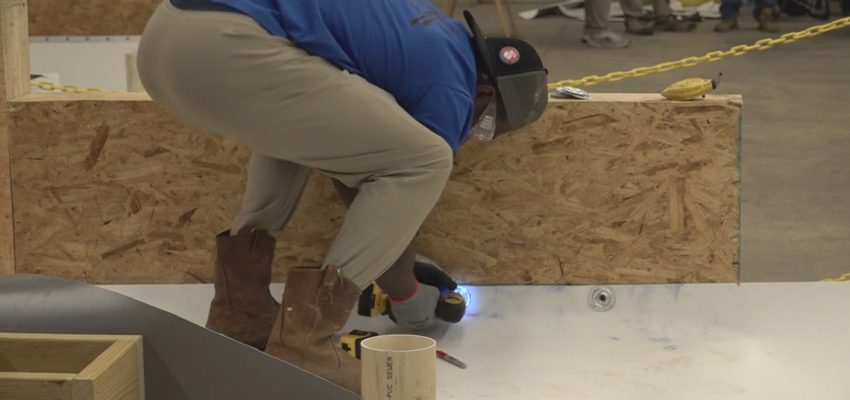
Imagine hundreds of students, from high schools and post-secondary institutions, converging on a convention center, not for a sporting event, but to showcase their mastery in fields as diverse as automotive repair, culinary arts, cybersecurity, health occupations, and, notably, residential and commercial construction. These are not academic debates; these are hands-on, high-stakes contests where precision, speed, and adherence to industry standards are paramount. The construction trades, in particular, demand a blend of physical stamina, spatial reasoning, and an unwavering commitment to safety. Take, for instance, the intense focus required in the roof-building challenge. Students spend hours meticulously constructing a simulated roof structure, cutting rafters, applying sheathing, and installing shingles—all against the clock and under the watchful eyes of industry judges who are experts in their respective fields. This isn’t just a test of knowledge; it’s a real-world simulation, preparing them for the rigors and rewards of a professional career.
The impact of a SkillsUSA competition extends far beyond the tangible project. Participants develop critical soft skills—often referred to as “21st-century skills”—that are increasingly vital in any profession. Teamwork, communication, problem-solving, and adaptability are honed under pressure. Students learn to read complex instructions, manage their time effectively, troubleshoot unexpected issues, and collaborate with peers, mirroring the dynamic environments of actual workplaces. Furthermore, the networking opportunities are invaluable. Industry representatives, college recruiters, and potential employers often attend these events, scouting for talent. A strong performance can lead to scholarships, internships, and even immediate job offers, effectively fast-tracking students into meaningful careers. It’s a testament to the program’s efficacy that many SkillsUSA alumni go on to achieve significant success in their chosen fields, often becoming industry leaders and entrepreneurs themselves, often tracing their foundational experiences back to a pivotal SkillsUSA competition. The skills acquired here are not transient; they are foundational, building blocks for a lifetime of professional growth and contribution.
### Bridging the Skills Gap: The Unsung Heroes of Our Economy
The enthusiasm seen at every state-level SkillsUSA competition is more than just youthful ambition; it’s a powerful response to a critical economic imperative: the ever-widening skills gap. For decades, there has been a significant push towards four-year university degrees, often sidelining vocational and technical education. While higher education is undoubtedly valuable, this societal emphasis has inadvertently led to a severe shortage of skilled tradespeople across various sectors. The National Association of Home Builders (NAHB), for example, consistently reports a chronic shortage of skilled workers, impacting housing availability and affordability. Similarly, sectors from manufacturing to healthcare technology are clamoring for qualified technicians.
According to a 2023 report by Deloitte and The Manufacturing Institute, the skills gap in manufacturing alone could result in 2.1 million unfilled jobs by 2030, potentially costing the U.S. economy $1 trillion. This isn’t merely an abstract statistic; it translates into delayed infrastructure projects, higher costs for consumers, and a slower pace of innovation. This is where Career and Technical Education (CTE) programs and organizations like SkillsUSA become indispensable, with the SkillsUSA competition serving as their most visible and impactful platform. They are actively working to re-legitimize and re-popularize skilled trades, showcasing them not as a fallback, but as viable, lucrative, and deeply satisfying career paths.
Consider the craft of roofing. It might not always capture the glamour of a Silicon Valley startup, but it is an absolutely essential trade. Every structure, from a humble home to a towering skyscraper, relies on a well-constructed, weather-tight roof. The job demands not only physical strength but also a deep understanding of materials science, structural integrity, and local building codes. Modern roofing involves a complex array of materials—asphalt shingles, metal panels, tiles, green roofs, and advanced synthetic membranes—each requiring specialized techniques for installation and maintenance. Furthermore, safety protocols are paramount, making attention to detail and adherence to best practices non-negotiable. A skilled roofer today might use drones for initial inspections, employ advanced thermal imaging to detect leaks, and implement sustainable practices to reduce environmental impact. These are not antiquated jobs; they are evolving professions demanding continuous learning and adaptation, much like any field in technology. The wages for experienced skilled tradespeople are often competitive with, and in many cases exceed, those of some bachelor’s degree holders, offering a direct path to financial stability without the burden of substantial student loan debt.
The renewed focus on CTE, bolstered by initiatives like SkillsUSA, is vital for economic resilience. By providing relevant, hands-on training that directly addresses industry needs, these programs are not just filling jobs; they are building communities, fostering local economies, and creating a stable, skilled workforce ready for the challenges of the 21st century.
### Beyond the Blueprint: Cultivating Leaders and Innovators
What truly sets a SkillsUSA competition apart is its holistic approach to student development. It’s not enough to simply teach a technical skill; true mastery involves developing the character, leadership abilities, and personal responsibility that underpin professional success. The SkillsUSA Framework, a unique common language for students to articulate their personal, workplace, and technical skills, explicitly outlines these crucial elements. Personal skills include integrity, work ethic, self-motivation, and professional development. Workplace skills encompass communication, decision-making, teamwork, and multicultural sensitivity. And technical skills are categorized by knowledge and expertise in various career clusters. This integrated approach ensures that students are not just trained technicians but well-rounded individuals capable of adapting to changing industry demands and leading their peers.
The process of preparing for a SkillsUSA competition is itself a profound learning experience. Students spend countless hours practicing, refining their techniques, and understanding the nuances of their chosen trade. This dedication instills discipline, perseverance, and a strong work ethic. They learn to meticulously review project specifications, identify potential challenges, and strategically plan their execution. When a problem arises—perhaps a material isn’t cutting correctly, or a measurement is slightly off—they learn to troubleshoot under pressure, think critically, and find effective solutions. This iterative process of planning, executing, evaluating, and refining is remarkably similar to the agile methodologies employed in software development and project management, highlighting the universal applicability of these problem-solving frameworks.
Moreover, the competitive environment fostered by the annual SkillsUSA competition cultivates a healthy sense of ambition and self-improvement. While winning is a goal, the true victory lies in the journey of growth. Students often form strong bonds with their teammates and mentors, learning the value of collaboration and shared goals. They gain confidence in their abilities, not just from performing well, but from the sheer act of stepping up, taking on a challenge, and giving their best. This newfound confidence extends beyond the competition floor, empowering them in their academic pursuits, future careers, and personal lives. The emphasis on leadership within SkillsUSA, through its various chapter activities and leadership development conferences, further prepares students to take on supervisory roles, mentor new trainees, and advocate for their trades. They learn public speaking, effective meeting management, and community engagement, transforming them into not just skilled workers, but articulate ambassadors for their professions. The skills gleaned from these experiences are transferable across industries, equipping individuals to thrive in any environment that values innovation, problem-solving, and leadership.
In a world increasingly reliant on both advanced technology and foundational infrastructure, the role of skilled tradespeople has never been more vital. The journey of students painstakingly building roofs, wiring circuits, or crafting culinary masterpieces at a state SkillsUSA competition is a powerful testament to the enduring value of hands-on learning and practical excellence. These events are far more than contests; they are dynamic ecosystems where talent is identified, nurtured, and celebrated, providing a direct pipeline to meaningful, well-paying careers. They are a crucial investment in our collective future, ensuring that the essential services and innovations society relies upon continue to be delivered by a highly competent and dedicated workforce.
As we look to the future, the integration of technology into traditional trades will only accelerate. From AI-powered diagnostics in automotive repair to robotic assistance in construction, the skilled worker of tomorrow will be a hybrid professional, adept with both tools and digital interfaces. SkillsUSA, by grounding students in fundamental craftsmanship while encouraging forward-thinking adaptability, is perfectly positioned to prepare this next generation. By championing career and technical education, we are not just addressing a skills gap; we are fostering a culture of innovation, self-reliance, and economic prosperity, ensuring that every student has the opportunity to build a successful future, one meticulously placed shingle or perfectly programmed line of code at a time. The spirit of craft, precision, and dedication that defines these competitions, culminating in the national SkillsUSA competition, is, indeed, building the foundations of tomorrow.










