

In an era defined by rapid technological advancement and an ever-evolving job market, the traditional one-size-fits-all approach to education is increasingly being questioned. For decades, the four-year college degree was held up as the gold standard, the undisputed gateway to a prosperous career and a fulfilling life. While higher education remains invaluable for many, a significant shift in perspective is underway, highlighting the immense value of alternative pathways. We are witnessing a societal recalibration, where the practical, the hands-on, and the immediately applicable skills are gaining unprecedented recognition. Young people, often burdened by the looming specter of student debt and a competitive job market, are becoming savvier in their educational and career choices, gravitating towards programs that offer direct routes to meaningful employment and financial independence. This fundamental change in attitude is not merely a trend; it’s a necessary evolution, driven by economic realities, employer demands, and a deeper understanding of diverse learning styles.
My journey as an AI specialist, writer, and tech enthusiast has continually reinforced the notion that adaptability and specialized skills are paramount. The future of work, heavily influenced by artificial intelligence and automation, will require a workforce equipped not just with theoretical knowledge, but with practical competencies that can be applied to solve real-world problems. This article delves into this paradigm shift, exploring why investing in programs that provide hands-on experience, dedicated mentorship, and directly marketable skills is not just beneficial, but critical for engaging young minds and preparing them for the careers of tomorrow.
Career and Technical Education: Reshaping the Future Workforce
The term **career and technical education** (CTE) encompasses a broad spectrum of educational programs designed to provide students with academic, technical, and workplace skills to succeed in various career fields. Far from the outdated stereotype of ‘vocational school’ for students not destined for college, modern CTE programs are sophisticated, dynamic, and closely aligned with industry needs. They offer rigorous curricula in fields ranging from advanced manufacturing and cybersecurity to healthcare, renewable energy, and culinary arts. This isn’t just about learning a trade; it’s about mastering a profession that requires critical thinking, problem-solving, and continuous learning, often integrating cutting-edge technology.
The shifting perception around non-college pathways is profoundly impacting how young people, parents, and educators view success. A recent study by the Strada Education Network highlighted that an increasing number of Americans believe that skills-based training and certifications are just as valuable as, if not more valuable than, a traditional degree for many jobs. This sentiment is fueled by several factors. Firstly, the escalating cost of higher education has made a four-year degree an increasingly risky investment for many families, with student loan debt in the U.S. surpassing $1.7 trillion. In contrast, many CTE programs offer quicker pathways to employment, often at a fraction of the cost, making them a financially prudent choice.
Secondly, there’s a growing recognition of the ‘skills gap’ – the disconnect between the skills employers need and those possessed by the available workforce. Industries across the board are struggling to find qualified individuals for skilled trades and technical roles. For instance, the manufacturing sector alone faces a projected shortage of 2.1 million skilled workers by 2030, according to Deloitte and The Manufacturing Institute. **Career and technical education** directly addresses this gap by providing students with credentials and certifications that are immediately recognized and valued by employers. These programs often involve partnerships with local businesses, ensuring that the curriculum remains relevant and responsive to current industry demands. For example, a student graduating from an automotive technology CTE program might earn certifications in advanced diagnostics or electric vehicle repair, making them highly sought after in a rapidly evolving auto industry.
Moreover, the integration of technology, including artificial intelligence, into CTE curricula is transforming these fields. AI-powered simulation tools allow students to practice complex procedures in a risk-free environment, whether it’s operating heavy machinery or performing virtual surgery. Data analytics is becoming crucial even in traditional trades, from optimizing energy consumption in HVAC systems to predictive maintenance in manufacturing. This tech integration not only makes CTE programs more engaging but also ensures that graduates are prepared for a future where digital literacy is as essential as technical proficiency.
Beyond the Lecture Hall: The Power of Hands-On Learning and Mentorship
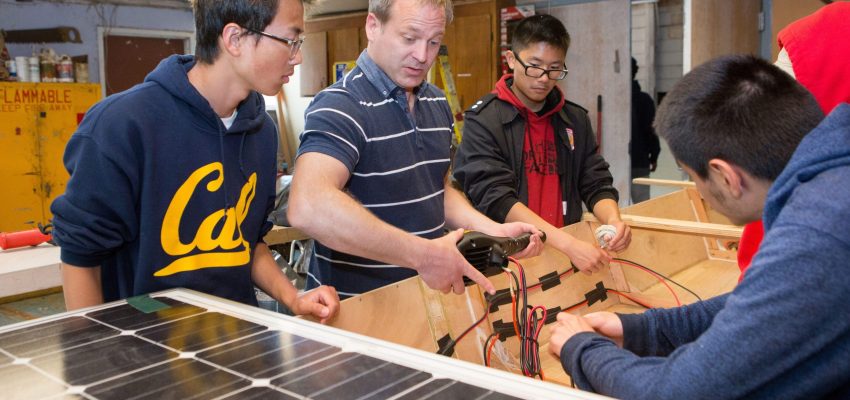
One of the most compelling aspects of modern **career and technical education** is its unwavering focus on hands-on learning. Unlike traditional academic settings where theoretical knowledge often takes precedence, CTE immerses students in practical applications from day one. This experiential learning approach is incredibly effective for engaging young people, particularly those who thrive by doing rather than just listening. Imagine a student learning about renewable energy by actually installing solar panels, or understanding network security by configuring firewalls in a simulated lab. This direct engagement fosters a deeper understanding of concepts, hones problem-solving skills, and builds confidence.
Research consistently shows that active learning methods lead to better retention and greater comprehension. When students can physically interact with tools, machinery, and real-world scenarios, the abstract becomes concrete. This isn’t just about memorizing facts; it’s about developing muscle memory, critical thinking under pressure, and the ability to adapt to unforeseen challenges. Such an approach taps into different learning styles, ensuring that a broader range of students can excel and discover their innate talents. For instance, a student who struggles with abstract algebra might thrive in a welding program, mastering complex geometric principles through practical application.
Equally vital to the success of CTE pathways is the role of mentorship. Mentors – whether they are experienced instructors, industry professionals, or even older students – provide invaluable guidance, support, and real-world insights. They serve as role models, sharing their expertise, offering career advice, and helping students navigate the complexities of their chosen field. This personal connection is often the catalyst for sustained engagement and long-term success. A mentor can demystify a career path, provide networking opportunities, and instill a sense of purpose that a textbook alone cannot. For young people still exploring their identities and career aspirations, a positive mentor relationship can be transformative, helping them visualize their future and providing the encouragement needed to overcome challenges.
Apprenticeship programs, a cornerstone of many CTE pathways, perfectly encapsulate the synergy between hands-on learning and mentorship. Apprentices learn on the job, earning wages while receiving structured training from experienced craftspeople. This centuries-old model is experiencing a resurgence, adapting to modern demands with programs in IT, healthcare, and advanced manufacturing. For example, a growing number of tech companies are sponsoring apprenticeships for roles like software development or cybersecurity analysts, offering a debt-free path to a high-paying career. These programs not only produce highly skilled workers but also cultivate a deep understanding of workplace culture and professional ethics, preparing individuals for sustained career growth.
Navigating the New Educational Landscape: A Pragmatic Path to Prosperity
The evolving educational landscape requires a pragmatic approach, one that recognizes the diverse needs and aspirations of young people. The idea that a single, linear path leads to success is increasingly outdated. Instead, a mosaic of opportunities is emerging, where skills-based learning offers robust and rewarding careers. For many, a well-chosen **career and technical education** program can lead to a fulfilling profession with competitive wages, less debt, and a head start in the workforce. According to Georgetown University’s Center on Education and the Workforce, nearly one-third of students who complete a CTE credential earn more than those with a bachelor’s degree.
This paradigm shift is not about devaluing traditional higher education; rather, it’s about broadening our definition of educational excellence and acknowledging the multifaceted pathways to success. Many CTE programs also offer dual enrollment options, allowing students to earn college credits while still in high school, or provide seamless transitions into associate’s or bachelor’s degree programs. This means that pursuing a technical skill today doesn’t preclude further academic advancement tomorrow; in fact, it often provides a strong foundation and a clearer career direction.
For parents and educators, embracing this shift means actively promoting and investing in robust CTE offerings. It means changing the narrative around skilled trades and technical professions, highlighting their intellectual rigor, technological sophistication, and significant earning potential. It requires providing comprehensive career counseling that exposes students to a wide array of options beyond the traditional college track. It also calls for continued collaboration between educational institutions and industries to ensure that curricula remain current and that graduates possess the skills most needed in the workforce.
Looking ahead, the integration of AI and automation will continue to redefine job roles, creating demand for new skills and making others obsolete. A workforce trained in **career and technical education** is inherently more adaptable, equipped with the practical ability to learn new technologies and apply them effectively. Whether it’s operating advanced robotics, managing complex data systems, or designing sustainable infrastructure, these professionals will be at the forefront of innovation, driving economic growth and societal progress. The emphasis on problem-solving, critical thinking, and continuous learning within CTE frameworks ensures that graduates are not just trained for today’s jobs, but prepared for the jobs of tomorrow.
In conclusion, the changing attitudes towards education and career pathways represent a profound and positive shift. By prioritizing hands-on learning, meaningful mentorship, and skills directly relevant to the modern economy, we empower young people with the tools they need to build successful and satisfying careers. The rise of **career and technical education** is not merely an alternative; it is an essential component of a diverse and resilient educational ecosystem, offering pragmatic routes to prosperity in an increasingly complex world.
As we navigate the future, fueled by technological advancements and evolving societal needs, our commitment to diverse educational pathways will be key. Investing in programs that excite young people about learning, equip them with valuable skills, and connect them with real-world opportunities is paramount. This holistic approach ensures that every individual has the chance to discover their passion, develop their talents, and contribute meaningfully to our collective future, forging a path that is both personally rewarding and economically vital.










