
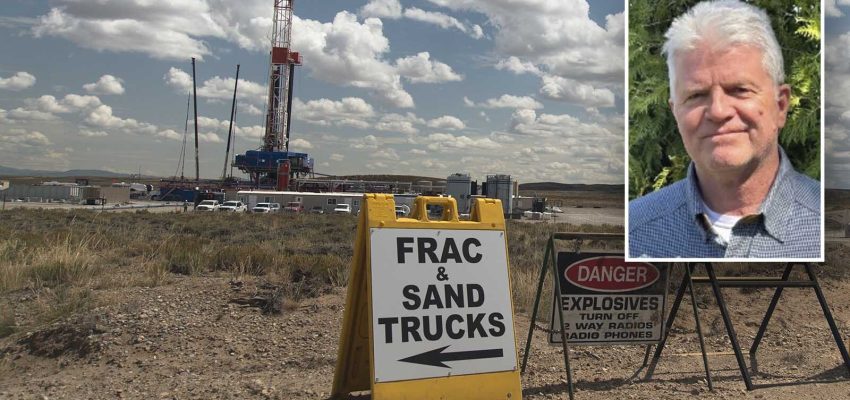

In a world increasingly defined by rapid technological advancement and the pervasive influence of artificial intelligence, the concept of a linear career path feels almost anachronistic. We are constantly reminded of the need for adaptability, reskilling, and an open mind to the unforeseen shifts that lie ahead. Yet, long before AI became a mainstream topic, individuals were already navigating profound professional pivots, demonstrating a resilience that remains critically relevant today.
Consider the story of Dan Doyle. In 1995, Doyle was on the cusp of what many would consider a dream career. His short film was featured at the prestigious Sundance Film Festival, an independent filmmaker’s Mecca, signaling a potential breakthrough into the competitive world of cinema. The dream was palpable, the anticipation immense. Sundance that year was a launchpad for future luminaries, a crucible where creativity met commercial potential. For many, a Sundance appearance is the golden ticket, a moment that defines a career trajectory. But for Doyle, despite the spotlight, the anticipated career in filmmaking didn’t materialize as hoped. The industry, ever-fickle and demanding, didn’t open its doors wide enough, forcing a harsh reconsideration of his path. What followed was not a gradual recalibration, but a dramatic, almost seismic shift: Doyle traded the ethereal world of film sets for the gritty, high-stakes environment of oil fracking in Wyoming.
This isn’t merely a tale of a changing job; it’s a powerful narrative about human ingenuity, the courage to embrace the unfamiliar, and the fundamental imperative of adaptability that resonates deeply in our AI-driven era. As an AI specialist and tech enthusiast, I find stories like Doyle’s particularly compelling. They serve as poignant reminders that while technology reshapes our tools and tasks, the human spirit’s capacity for reinvention remains our most potent asset. His journey from the artistic aspirations of a filmmaker to the rugged pragmatism of an oil fracker offers invaluable insights into the nature of work, skill acquisition, and the often-unpredictable forces that shape our professional destinies.
Career Transformation: From Sundance to the Oilfields
The journey from an indie filmmaker showcasing his work at Sundance to becoming an oil fracker in Wyoming is nothing short of extraordinary. The 1990s independent film scene was vibrant, characterized by a raw energy and a democratic spirit, but also intense competition. For every Quentin Tarantino or Steven Soderbergh who broke through, hundreds of talented individuals found themselves on the periphery. Dan Doyle, having experienced that tantalizing proximity to success, faced a choice: persist in a financially precarious passion or pivot radically. He chose the latter, embarking on a path that led him to the heart of America’s energy sector.
Wyoming, the ‘Cowboy State,’ is synonymous with vast landscapes, rugged individualism, and a robust extractive industry. Oil and gas have been cornerstones of its economy for over a century, providing jobs and driving innovation. Fracking, or hydraulic fracturing, is a highly specialized and technologically intensive process that involves injecting fluid into subterranean rock formations to release oil and natural gas. It’s a field demanding meticulous attention to detail, a strong grasp of engineering principles, and an ability to operate complex machinery in often challenging environments. The contrast with filmmaking – a collaborative art form reliant on narrative, visual aesthetics, and emotional resonance – could not be starker. Yet, Doyle made the leap.
What skills, one might ask, could possibly transfer from directing actors and composing shots to drilling wells and managing high-pressure operations? Perhaps not direct technical skills, but certainly crucial soft skills: problem-solving, resilience under pressure, attention to detail, project management, and a willingness to learn entirely new paradigms. The drive to create, to bring a vision to life, while different in context, finds its echo in the determination required to extract resources from the earth. Doyle’s story exemplifies a profound human capacity for career transformation, demonstrating that professional fulfillment can be found in unexpected places, often requiring us to shed preconceived notions about our own capabilities and vocational identity.
Navigating Professional Pivots in a Technologically Evolving World
Dan Doyle’s decision, made nearly three decades ago, feels remarkably pertinent today as we grapple with the implications of artificial intelligence. The World Economic Forum’s ‘Future of Jobs Report’ consistently highlights that millions of jobs will be displaced by automation and AI, while millions of new ones will be created. This necessitates a global emphasis on reskilling and upskilling initiatives. Just as Doyle had to learn the intricacies of geology, drilling mechanics, and safety protocols, today’s workforce is increasingly called upon to acquire proficiency in data science, machine learning, cybersecurity, or advanced robotics.
The parallel is striking: the ‘death’ of a perceived career path isn’t the end, but often a catalyst for an entirely new beginning. Industries that once seemed immune to technological disruption are now being profoundly reshaped. Manufacturing, healthcare, finance, transportation, and even creative fields are experiencing an AI-driven metamorphosis. For example, generative AI is revolutionizing content creation, potentially altering the landscape for writers, artists, and, yes, even filmmakers, requiring new competencies in prompt engineering, AI tool integration, and ethical considerations. The ability to pivot, to leverage existing transferable skills, and to embrace continuous learning are no longer just advantageous; they are becoming essential for survival and prosperity in the modern economy.
Moreover, traditional industries, often seen as old-world, are increasingly integrating cutting-edge technology. Modern oil and gas operations, far from being solely about brute force, employ sophisticated AI algorithms for seismic data interpretation, optimizing drilling paths, predictive maintenance of equipment, and even enhancing safety protocols. AI-powered sensors monitor well performance in real-time, machine learning models predict potential equipment failures, and drones conduct aerial inspections, minimizing human risk. So, while Dan Doyle’s initial foray into fracking might have been a hands-on, physically demanding role, the industry itself continues to evolve through technological adoption, underscoring that even the most ‘traditional’ sectors are becoming deeply intertwined with advanced tech.
The Imperative of Adaptability and Lifelong Learning
The lessons from Dan Doyle’s personal career transformation extend beyond individual anecdotes; they offer a macro perspective on the future of work. The average person today is expected to change careers, not just jobs, multiple times over their working life. A 2021 study by the University of Phoenix revealed that nearly 70% of American adults have considered a career change, with significant numbers actually making the leap. This isn’t just about dissatisfaction; it’s often about adapting to market demands, pursuing new opportunities, or aligning with evolving personal values.
Doyle’s decision to move to Wyoming and embrace a radically different profession highlights the core tenets of adaptability: an open mind to new experiences, a willingness to overcome challenges, and a commitment to acquiring new knowledge. It underscores that skills are not static; they are dynamic assets that can be repurposed, augmented, or entirely reinvented. In an age where AI promises to automate routine tasks and elevate the importance of uniquely human capabilities like creativity, critical thinking, and emotional intelligence, the capacity for continuous learning becomes paramount. Education is no longer a finite process confined to early adulthood; it is a lifelong endeavor, driven by curiosity and necessity.
Ultimately, stories like Dan Doyle’s serve as powerful parables for our current epoch. They remind us that the human spirit, with its innate drive to solve problems and seek purpose, possesses an incredible capacity for reinvention. As AI continues its inexorable march forward, reshaping industries and creating new paradigms for work, the ability to embrace significant career transformation will define success. It’s about understanding that an unexpected detour can lead to an equally fulfilling, albeit different, destination. It’s about recognizing that the tools may change, the industries may shift, but the fundamental human qualities of resilience, ingenuity, and a thirst for knowledge will always be our guiding lights.
In conclusion, Dan Doyle’s journey from the artistic aspirations of a Sundance filmmaker to the rigorous world of a Wyoming oil fracker is more than just a personal story of unexpected turns. It is a profound testament to the human capacity for adaptability and reinvention in the face of unforeseen professional shifts. His experience, though rooted in a pre-AI boom era, offers timeless lessons for navigating the complex and ever-evolving landscape of modern careers. It demonstrates that professional fulfillment can emerge from courageously stepping into the unknown, acquiring new skills, and embracing a completely different identity.
As we stand at the precipice of an AI-driven future, where job roles are continually being redefined and new industries are emerging with unprecedented speed, the imperative to cultivate such adaptability has never been greater. Doyle’s narrative encourages us to view every professional challenge not as an insurmountable obstacle, but as an invitation for personal growth and a unique opportunity for impactful career transformation. His story serves as a powerful reminder that our most valuable asset in the age of intelligent machines will always be our own human ingenuity and an unwavering commitment to lifelong learning.










