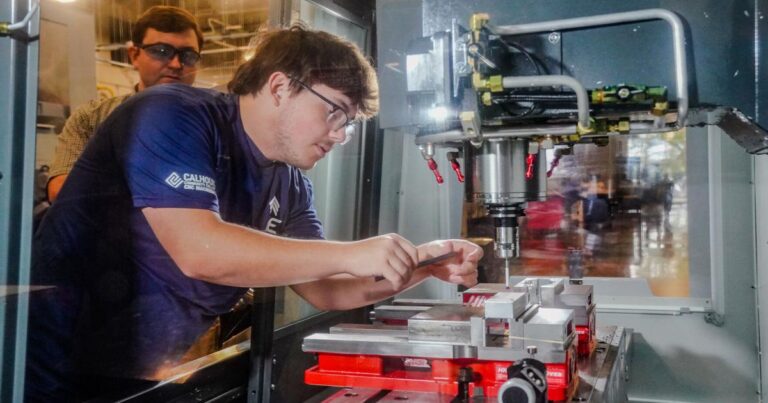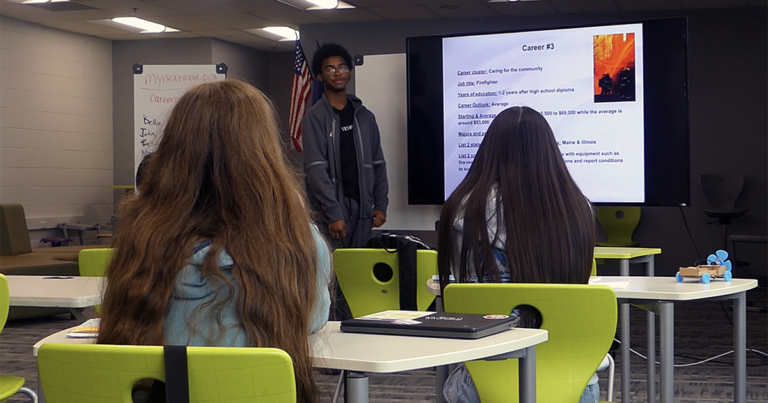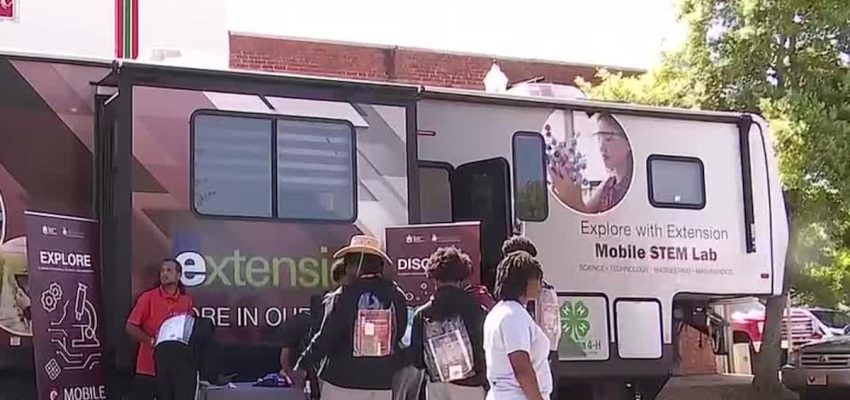

In an era defined by rapid technological advancement, particularly the ascendancy of artificial intelligence, the very notion of a ‘career’ is undergoing a profound metamorphosis. For young minds, still on the cusp of discovering their potential, the landscape of future possibilities can appear both exhilarating and daunting. As an AI specialist and a fervent advocate for technological literacy, I often reflect on how best to equip the next generation for a world that is being reshaped at an unprecedented pace. Events like the ‘Dream It, Do It Day’ – where eighth-graders engage directly with professionals, gaining a valuable sneak peek into diverse fields – are not merely extracurricular activities; they are vital crucibles for future success, fostering imagination and laying foundational pathways for informed choices.
The traditional model of career guidance, often relegated to a single counseling session or a brief aptitude test in high school, is increasingly inadequate for the dynamic reality we inhabit. The job market of tomorrow will demand a different set of skills, a different mindset, and a far more proactive approach to professional development. That’s why initiatives encouraging early career exploration are more critical than ever, serving as early touchpoints that demystify professional life and ignite curiosity about the myriad ways one can contribute to society.
### Career exploration: Charting the Future for the Next Generation
The fundamental premise behind early exposure to careers is deceptively simple: you cannot aspire to be what you do not know exists. For an eighth-grader, whose world might primarily revolve around their school, family, and immediate community, the vast spectrum of professional roles can feel abstract, even intimidating. An event like ‘Dream It, Do It Day’ transforms this abstraction into tangible reality. Imagine a young student, perhaps fascinated by design, suddenly seeing an architect’s blueprints or a product designer’s prototypes. Or a nascent coder interacting with a software engineer, understanding the tangible impact of their work. These interactions are invaluable, planting seeds of interest that can blossom into lifelong passions. They provide context to academic subjects, demonstrating how math isn’t just numbers on a page, but the bedrock of engineering, or how creative writing can lead to a career in content creation, technical writing, or even AI prompt engineering.
Such direct engagement offers several profound benefits. Firstly, it demystifies professions, replacing vague notions with concrete examples. Students learn not just *what* someone does, but *how* they do it, the challenges they face, and the rewards they reap. Secondly, it fosters networking skills at an early age. The ability to ask questions, listen attentively, and engage respectfully with professionals is a soft skill of paramount importance in any field. Thirdly, it builds confidence. Interacting with adults who are passionate about their work can be incredibly inspiring, encouraging students to believe in their own potential to contribute meaningfully. Data from organizations like Junior Achievement consistently show that students who participate in career-focused programs are more likely to pursue higher education and exhibit greater self-efficacy regarding their career prospects. They often report a clearer understanding of the link between their academic performance and their future professional aspirations.
### The AI Revolution and the Evolving Landscape of Work
The urgency for effective career exploration is amplified by the ongoing artificial intelligence revolution. AI is not just another technological advancement; it’s a foundational shift that is reshaping industries from healthcare and finance to creative arts and manufacturing. Many jobs that exist today will be augmented, transformed, or even replaced by AI and automation in the coming decades. Conversely, an entirely new class of jobs, currently unimaginable, will emerge. Think of roles like AI ethicists, prompt engineers, AI-powered content creators, drone traffic controllers, virtual reality experience designers, or human-AI collaboration specialists.
This presents both a challenge and an immense opportunity for educators and parents. We can no longer prepare students for a static set of careers. Instead, we must equip them with the adaptability, critical thinking, and creativity necessary to thrive in an environment of continuous change. This means fostering skills that AI cannot easily replicate: complex problem-solving, emotional intelligence, innovative thinking, interdisciplinary collaboration, and, crucially, an understanding of how to ethically design, deploy, and interact with AI systems. Events centered on career exploration become laboratories for this future-forward thinking, allowing students to glimpse roles that might integrate AI, prompting them to ask, “How will AI change *this* job?” or “What new jobs will AI create *here*?”
Consider the healthcare sector. While AI can diagnose diseases with incredible accuracy or assist in robotic surgeries, the human element of empathy, patient communication, and nuanced ethical decision-making remains indispensable. Students exploring medical careers need to understand not just anatomy and physiology, but also how AI tools like predictive analytics or personalized medicine platforms will integrate into their future practice. Similarly, in creative fields, AI can generate art or compose music, but human creativity, vision, and emotional depth remain the driving force, with AI serving as a powerful co-creator or tool. The future belongs not to those who fear AI, but to those who learn to master it and collaborate with it responsibly.
### Cultivating Future-Ready Skills Through Early Exposure
To navigate this evolving landscape, a holistic approach to skill development is essential. Early career exploration provides a practical lens through which students can understand the relevance of what they learn in the classroom. STEM (Science, Technology, Engineering, and Mathematics) fields, now often expanded to STEAM (incorporating Arts), are increasingly critical. However, it’s not just about technical proficiency. It’s about developing a multidisciplinary mindset.
For example, a student interested in environmental science might learn about data analytics and machine learning to predict climate patterns or optimize sustainable resource management. A budding artist might explore how AI can assist in digital art creation or generate immersive experiences. These intersections are where innovation truly happens. Educational initiatives must move beyond siloed subjects, promoting project-based learning that mirrors real-world challenges. This involves asking students to identify a problem, research potential solutions (possibly involving AI), collaborate with peers, and present their findings – skills that are directly applicable to virtually any future profession.
Furthermore, developing ‘soft skills’ like communication, leadership, and emotional intelligence cannot be overstated. As AI handles more routine and analytical tasks, human-centric skills will become even more valuable. Professionals will increasingly act as orchestrators, collaborators, and innovators, requiring robust interpersonal capabilities. Opportunities for early career exploration, particularly those involving direct interaction with professionals, are perfect settings for students to practice these vital attributes. They learn to articulate their thoughts, ask insightful questions, and interpret feedback, all within a safe and encouraging environment.
The global nature of modern challenges also demands an understanding of diverse cultures and perspectives. AI development itself is not monolithic; it reflects the values and biases of its creators. Therefore, fostering an ethical and inclusive approach to technology, starting with foundational discussions in schools, is paramount. Future professionals will need to understand the societal impact of their work and design technologies that benefit all of humanity, not just a select few. This calls for critical thinking about ethical frameworks and societal responsibility, elements that can be introduced through exploring roles like policymakers, social scientists, or even AI ethicists during career days.
In conclusion, the ‘Dream It, Do It Day’ concept, and indeed any initiative that promotes early career exploration, serves as a crucial bridge between the academic world and the professional future. In a world increasingly shaped by artificial intelligence, preparing students means much more than teaching them facts; it means inspiring them to imagine, to question, and to actively participate in shaping their own professional journeys. By providing these early windows into diverse career paths, we empower young people not just to find a job, but to discover their purpose and to contribute meaningfully to the complex, exciting, and AI-powered world that awaits them.
As an AI specialist, I believe deeply that our collective future hinges on how well we prepare the next generation. It’s about fostering a mindset of lifelong learning, adaptability, and ethical innovation. Encouraging students to dream big, to explore broadly, and to understand the profound impact of technology is not just an educational goal; it’s a societal imperative. Through continued investment in programs that connect students with real-world professionals and future-forward concepts, we can ensure that the architects of tomorrow’s AI-driven world are not only technically proficient but also creatively inspired, ethically grounded, and ready to lead with vision and compassion. The future is not just happening to us; it’s being built by us, one inspired student at a time.