

In an era where the future of work is constantly being reshaped by technological advancements and evolving economic landscapes, the bridge between education and industry has never been more critical. Traditional academic paths remain vital, but the demand for skilled trades and practical expertise continues to surge, often outpacing the supply of qualified professionals. It is within this dynamic context that innovative educational models and collaborative initiatives shine, offering tangible pathways for students to transition seamlessly from the classroom into rewarding careers.
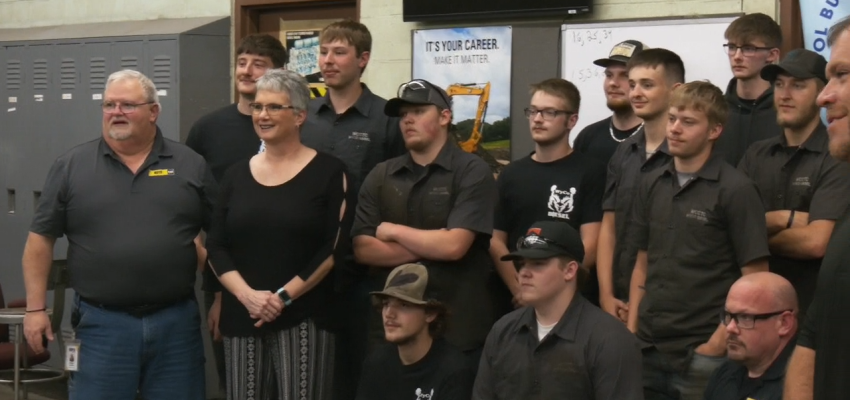
One such beacon of excellence recently emerged from Wyoming County, West Virginia, a testament to forward-thinking collaboration and a profound commitment to student success. The partnership between the Wyoming County Career and Technical Center (WCTC) and Boyd CAT, a leading equipment and engine dealer, has garnered statewide acclaim, being recognized as one of eight regional winners in the prestigious Education Alliance’s Hope for the Future School-Business Partnership of the Year award. This accolade is not merely a recognition of a successful program; it’s an affirmation of a powerful model that empowers young individuals, strengthens local economies, and ensures the continued vitality of essential industries. As an AI specialist and tech enthusiast, I find immense value in understanding how such ground-level human-centric initiatives complement and prepare us for an increasingly automated world. Let’s delve into what makes this particular school-business partnership so impactful and why its lessons are crucial for workforce development everywhere.
School-Business Partnership: A Blueprint for the Future Workforce
The concept of a school-business partnership is deceptively simple yet profoundly effective. At its core, it represents a collaborative effort between educational institutions and private sector companies to provide students with relevant skills, hands-on experience, and direct exposure to potential career paths. This goes far beyond occasional guest speakers or field trips; it involves deep integration, where industry insights directly influence curriculum development, equipment is shared, and mentorship becomes a cornerstone of learning. The Wyoming County diesel program’s recognition underscores the urgent need for such alliances across various sectors.
The United States, like many developed nations, faces a significant skills gap, particularly in the skilled trades. Reports from organizations like the National Association of Manufacturers (NAM) consistently highlight that millions of manufacturing jobs could go unfilled in the coming decade due to a lack of adequately trained workers. Similar trends are observed in sectors like automotive, construction, healthcare, and, notably, heavy equipment and diesel mechanics. Vocational training programs, when closely aligned with industry needs through robust collaborations, are uniquely positioned to address this deficit. They provide students with practical, job-specific training that is immediately applicable in the workforce, reducing the time and cost associated with post-secondary education for many, and often leading directly to well-paying jobs upon graduation.
Such educational collaborations offer a myriad of benefits. For students, they provide invaluable real-world experience, making their classroom learning tangible and purposeful. They gain access to industry-standard equipment, learn from experienced professionals, and build a professional network before even entering the job market. This practical exposure not only enhances their technical skills but also fosters crucial soft skills such as problem-solving, teamwork, communication, and workplace professionalism. For businesses, these alliances serve as a direct pipeline to a skilled and pre-qualified talent pool. Companies can shape the future workforce, ensuring that graduates possess the specific competencies required for their operations. This proactive approach reduces recruitment costs, improves employee retention, and ultimately boosts productivity and innovation. For the community, these programs bolster the local economy by creating jobs, retaining talent, and ensuring the availability of essential services, contributing to overall regional prosperity. The WCTC and Boyd CAT initiative exemplifies how this holistic approach creates a virtuous cycle of opportunity and growth.
The success of a truly effective school-business partnership hinges on mutual understanding, shared goals, and sustained commitment from all stakeholders. It requires educators to be open to industry input and businesses to invest resources—time, expertise, equipment, and financial support—into the educational process. When these elements align, the result is a dynamic learning environment that not only prepares students for today’s jobs but also instills the adaptability and critical thinking necessary for tomorrow’s challenges. This proactive stance on workforce development is increasingly vital, especially as industries grapple with rapid technological shifts and the integration of advanced systems, including AI, into everyday operations.
The WCTC and Boyd CAT Synergy: A Deep Dive into Success
The recognition of the WCTC and Boyd CAT alliance by the Education Alliance’s Hope for the Future School-Business Partnership of the Year award is a testament to its exemplary design and execution. While the original content is concise, it points to a deep and impactful collaboration that transcends typical educational outreach.
Wyoming County Career and Technical Center (WCTC) serves as a vital institution for vocational education in its region, offering programs designed to equip students with hands-on skills in various trades. Boyd CAT, on the other hand, is a well-established and respected dealer of Caterpillar equipment and engines, serving diverse industries such as construction, mining, and power generation across multiple states. This specific industry player’s involvement is critical. Caterpillar equipment is complex, demanding highly skilled technicians for maintenance, diagnostics, and repair. A partnership with a major dealer like Boyd CAT means students are learning on cutting-edge, industry-standard machinery and being trained to meet the exact specifications and expectations of a leading employer.
The nature of their collaboration likely involves several key components. Firstly, curriculum alignment is paramount. Boyd CAT experts would likely have provided direct input on WCTC’s diesel technology curriculum, ensuring that the skills taught are precisely what the industry needs. This could include training on specific diagnostic software, maintenance protocols for modern diesel engines (which are increasingly sophisticated, featuring advanced electronics and emissions control systems), and safety standards. Secondly, access to equipment and resources is crucial. It’s highly probable that Boyd CAT has either donated or provided WCTC with modern diesel engines, heavy equipment components, or specialized tools that would otherwise be cost-prohibitive for a school to acquire. This allows students to gain hands-on experience with the very technology they will encounter in their professional lives.
Furthermore, this type of strategic partnership often includes opportunities for student mentorship and internships. Imagine a WCTC student spending their summer working alongside experienced Boyd CAT technicians, gaining invaluable real-world insights, and applying their classroom knowledge in a professional setting. These internships frequently lead to direct job offers upon graduation, effectively creating a direct career pipeline. Guest lectures from Boyd CAT professionals, job shadowing opportunities, and participation in industry-sponsored competitions could also be integral parts of this successful model. The award from the Education Alliance, an organization dedicated to improving public education in West Virginia through meaningful partnerships, underscores the profound positive impact of this model on student career readiness.
The diesel technician profession itself is undergoing significant evolution. Modern diesel engines are marvels of engineering, incorporating advanced computing, sensor arrays, and telematics systems. Technicians today are not just mechanics; they are diagnosticians who must be proficient in reading complex schematics, interpreting computer codes, and utilizing sophisticated software tools. The WCTC and Boyd CAT school-business partnership is preparing students not just for current industry demands but also for future technological advancements, ensuring they are adaptable and equipped for long-term success in a vital industry.
Navigating the Future: Vocational Training in an AI-Driven World
As an AI specialist, I often ponder the broader implications of automation and artificial intelligence on the global workforce. While many discussions revolve around AI’s impact on white-collar jobs, it’s equally important to consider its influence on skilled trades and vocational professions. The WCTC and Boyd CAT alliance offers a compelling example of how foundational practical skills, far from being rendered obsolete, become even more critical and complex in an AI-driven world.
Consider the future of heavy equipment. We are already seeing the emergence of autonomous or semi-autonomous machinery in mining, agriculture, and construction. These advanced machines, while capable of performing tasks with AI-driven precision, still require human oversight, maintenance, and repair. Who will be responsible for diagnosing an AI system malfunction in a giant mining truck? Who will perform the mechanical repairs indicated by predictive maintenance algorithms? The answer lies with highly skilled technicians, like those being trained at WCTC.
Future diesel technicians will likely interact with AI in several ways: predictive maintenance systems will use machine learning to forecast equipment failures, guiding technicians to specific components that need attention before they break down. Diagnostic tools will be AI-enhanced, offering more accurate and rapid identification of problems. Robotics might assist with certain heavy-lifting or repetitive tasks, allowing human technicians to focus on complex troubleshooting and decision-making. Therefore, vocational training programs must evolve to include not just mechanical skills but also foundational understanding of data interpretation, sensor technology, and even basic programming logic, preparing students to work alongside and leverage AI tools rather than be replaced by them.
The enduring value of vocational training, particularly through robust initiatives like this school-business partnership, lies in its cultivation of human ingenuity, adaptability, and hands-on problem-solving—qualities that remain irreplaceable even amidst the most advanced automation. While AI can optimize processes and analyze vast datasets, the ability to physically inspect, troubleshoot, and repair complex machinery requires a blend of tactile skill, contextual understanding, and critical thinking that is uniquely human. Programs like the WCTC diesel program ensure that the workforce is equipped with these essential capabilities, guaranteeing that industries will continue to function effectively and innovate responsibly in an increasingly technological future. This model not only secures employment for individuals but also ensures that the fundamental infrastructure of our society—from transportation to energy—remains robust and resilient, prepared to integrate and benefit from cutting-edge technologies.
The journey from classroom to career is one that demands foresight, collaboration, and a deep understanding of evolving industry needs. The success story unfolding in Wyoming County, through the exemplary partnership between WCTC and Boyd CAT, is more than just an award-winning program; it is a powerful blueprint for how communities can proactively build a skilled, adaptable, and future-ready workforce. It underscores the undeniable truth that investing in vocational education, particularly through strong industry alliances, yields dividends far beyond individual career paths, enriching entire communities and fortifying economic resilience.
As we navigate a future increasingly shaped by artificial intelligence and rapid technological change, the lessons from this initiative are profound. They remind us that while innovation pushes boundaries, the bedrock of any thriving society remains its people—equipped with practical skills, guided by experienced mentors, and empowered by genuine opportunities. This school-business partnership stands as a shining example of how combining educational rigor with real-world industry demands can create truly transformative outcomes, preparing students not just for jobs, but for meaningful and impactful careers in a dynamic world.










