

The vast expanse of the sky has always captivated humanity, inspiring dreams of flight, exploration, and innovation. From the pioneering days of the Wright brothers to the supersonic jets and burgeoning space tourism of today, aviation has consistently pushed the boundaries of what’s possible. Yet, behind every majestic ascent and every safe landing lies a complex ecosystem of dedicated professionals, whose diverse skills and unwavering passion keep the industry soaring. It is precisely this intricate world that institutions like the Commemorative Air Force (CAF) Airbase Georgia endeavor to unveil to the next generation.
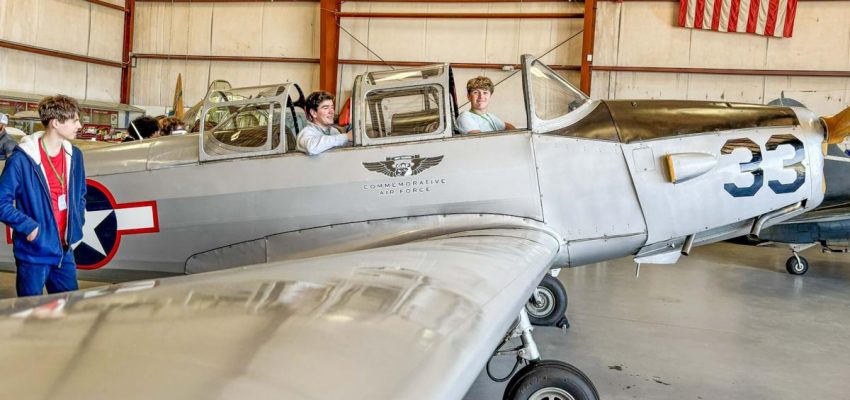
On May 4th, an extraordinary event unfolded at CAF Airbase Georgia, offering students from the Coweta County Education Center a rare, firsthand glimpse into the myriad opportunities available within the aviation sector. This inaugural Aviation Career Day served as more than just an educational outing; it was a potent source of inspiration, a tangible connection to the machines and the minds that define modern flight. As an AI specialist and tech enthusiast, I see such initiatives as critical incubators for future talent, especially as the lines between traditional aviation and cutting-edge technology blur ever more rapidly. The future of flight is not just about engineering; it’s about intelligent systems, sustainable solutions, and a workforce prepared to navigate an increasingly complex, data-driven environment.
### Aviation Careers: Charting a Course Through Innovation
The Commemorative Air Force (CAF) Airbase Georgia, renowned for its commitment to preserving the history of military aviation, ingeniously leverages its historical collection to inspire future innovation. Imagine students walking among meticulously restored World War II aircraft – the iconic P-51 Mustang, the formidable B-25 Mitchell – and hearing stories of the pilots and ground crews who operated them. This direct engagement with history provides a powerful context for understanding the evolution of flight and the enduring principles of engineering, courage, and teamwork that underpin all **aviation careers**.
While the romantic image of a pilot often dominates public perception, the reality of the aviation industry is far more expansive and diversified. A career day like this typically introduces students to a broad spectrum of roles, far beyond the cockpit. They might interact with aircraft mechanics, technicians responsible for maintaining the intricate systems of these machines. They could meet air traffic controllers, learning about the crucial, high-stakes work of guiding aircraft safely through crowded airspace. Aviation management professionals might explain the logistics of airport operations, from gate assignments to baggage handling, demonstrating the organizational prowess required to keep airports running like clockwork.
Moreover, a modern career day increasingly touches upon roles that are less visible but equally vital. Consider aerospace engineers who design the next generation of aircraft, from commercial airliners to sophisticated drones and electric vertical take-off and landing (eVTOL) vehicles. Data scientists are becoming indispensable, analyzing vast datasets to optimize flight paths, predict maintenance needs, and enhance passenger experience. Cybersecurity specialists work tirelessly to protect avionics systems from sophisticated threats, a role of growing importance in our interconnected world. Even fields like material science and sustainable energy are now integral, driving the development of lighter, stronger composites and environmentally friendly fuels.
Each of these specialized roles contributes to a cohesive whole, creating a dynamic environment where problem-solving, technical aptitude, and collaboration are paramount. The hands-on experience of seeing aircraft up close, asking questions of seasoned professionals, and even sitting in a cockpit or flight simulator, can ignite a spark that classroom learning alone might not achieve. It transforms abstract concepts into tangible ambitions, showing young minds that a future in the skies is not just a dream, but a highly attainable path paved with diverse and challenging **aviation careers**.
### The Crucial Role of Hands-On Inspiration
In a world saturated with digital distractions, the power of a tangible, immersive experience cannot be overstated. An Aviation Career Day serves as a critical bridge between theoretical classroom knowledge and the practical realities of a professional field. For many students, it might be their first encounter with a real aircraft up close, the smell of jet fuel (or aviation gas for historic planes), and the roar of an engine – experiences that can profoundly shape their career aspirations. This direct interaction helps demystify complex roles, breaking down intimidating job titles into relatable human stories of dedication and achievement.
Such events are also vital for addressing the pressing talent gap facing the global aviation industry. According to Boeing’s Pilot & Technician Outlook, hundreds of thousands of new pilots, maintenance technicians, and cabin crew will be needed over the next two decades to meet growing demand. This looming shortage underscores the urgency of inspiring and educating young people today. Initiatives like the one at CAF Airbase Georgia are on the front lines of this effort, providing role models and mentorship opportunities that can guide students toward specific educational pathways and skill development programs. Hearing a pilot describe their journey, or a mechanic explain the intricacies of an engine, can make a significant difference in a student’s decision-making process.
Beyond technical skills, career days foster a broader appreciation for the industry’s values. Aviation is a field built on precision, safety, and continuous learning. These events implicitly teach the importance of discipline, attention to detail, and the rigorous standards required to operate in such a critical sector. They also highlight the growing emphasis on diversity and inclusion, showing students from all backgrounds that the sky is indeed open to everyone, regardless of gender, ethnicity, or socioeconomic status. By seeing individuals who look like them succeeding in these roles, students can envision themselves within these professional landscapes.
Furthermore, the psychological impact of witnessing the grandeur of aviation firsthand can be immense. The sheer scale of an aircraft, the complexity of its systems, and the freedom it represents can evoke a sense of wonder and possibility. This emotional connection is a powerful motivator, transforming a vague interest into a concrete goal. It’s about planting the seed of ambition, nurturing it with information, and showing students the many avenues through which they can contribute to an industry that literally shapes the world through connectivity and innovation. These experiences are fundamental to cultivating a robust pipeline for future **aviation careers**, ensuring the industry continues to thrive with fresh talent and new perspectives.
### Navigating the Future: AI, Automation, and Sustainable Flight
As an advocate for the transformative power of artificial intelligence, I see the convergence of AI and aviation as one of the most exciting frontiers for future **aviation careers**. While the image of a traditional pilot remains iconic, the reality is that AI and automation are already deeply embedded in modern aviation and will only expand their influence. This isn’t about replacing humans, but augmenting their capabilities and creating entirely new roles that demand a blend of traditional aerospace knowledge and cutting-edge digital expertise.
Consider AI in the cockpit: advanced systems are assisting pilots with enhanced navigation, real-time weather analysis, predictive anomaly detection, and even managing complex flight patterns in congested airspace. Future pilots will increasingly collaborate with intelligent co-piloting systems, requiring a new skillset focused on monitoring, decision-making based on AI insights, and human-machine interaction. This shift opens doors for specialists in avionics software development, AI systems integration, and human factors engineering, ensuring these technologies are intuitive and reliable.
In maintenance, repair, and overhaul (MRO), AI is revolutionizing how aircraft are kept airworthy. Predictive maintenance algorithms analyze sensor data from engines and airframes to anticipate potential failures before they occur, drastically reducing downtime and increasing safety. Drones equipped with AI vision systems can autonomously inspect aircraft for microscopic cracks or damage, a task that once required extensive manual labor. Augmented reality (AR) and virtual reality (VR) are transforming training for mechanics, allowing them to practice complex repairs in a simulated environment before touching a real aircraft. These advancements create demand for AI engineers, robotics specialists, and AR/VR developers within the MRO sector, enriching the scope of **aviation careers**.
Air traffic management is another area ripe for AI innovation. Intelligent systems are being developed to optimize flight routes, minimize delays, and manage the growing complexity of drone traffic in lower airspace. This requires experts in machine learning for optimization, big data analytics, and robust cybersecurity to protect critical infrastructure. The emergence of Urban Air Mobility (UAM) – featuring fleets of eVTOLs for intra-city travel – will necessitate entirely new traffic management frameworks, heavily reliant on AI for safe and efficient operation.
Beyond AI, the imperative for sustainable flight is driving another wave of innovation and creating new **aviation careers**. The industry is under immense pressure to reduce its carbon footprint, leading to rapid advancements in electric and hybrid-electric propulsion systems, hydrogen fuel cells, and Sustainable Aviation Fuels (SAFs). Engineers specializing in these green technologies, energy storage solutions, and alternative fuel production are becoming highly sought after. Environmental scientists and regulatory experts are crucial for guiding the industry’s transition towards a net-zero future.
This evolving landscape means that today’s students, those inspired at events like the Aviation Career Day, will enter an industry that is fundamentally different from that of previous generations. Success will hinge on adaptability, a willingness to engage with new technologies, and a commitment to lifelong learning. The skills gap is not just about numbers, but about the *type* of skills required: digital literacy, critical thinking, data analysis, ethical AI considerations, and collaborative problem-solving across interdisciplinary teams. The future of **aviation careers** is bright, but it demands a forward-thinking approach to education and talent development, ensuring that the next generation is equipped not just to fly, but to innovate the very fabric of flight itself.
### Conclusion
The inaugural Aviation Career Day hosted by Commemorative Air Force Airbase Georgia was far more than a single event; it was a potent demonstration of how targeted, hands-on inspiration can ignite passion and direct young talent towards a future brimming with opportunity. By bringing students face-to-face with the machines, the professionals, and the sheer wonder of flight, such initiatives are crucial for cultivating the next generation of innovators, engineers, pilots, and technicians who will continue to push the boundaries of aviation. It underscores the critical importance of foundational experiences that transform abstract concepts into tangible aspirations, paving the way for a vibrant and skilled workforce.
As an industry, aviation stands on the cusp of truly revolutionary change, driven by advancements in artificial intelligence, automation, and a profound commitment to sustainability. The diverse and evolving landscape of **aviation careers** will require not just traditional skills, but also a deep understanding of emerging technologies, data analytics, and ethical considerations. The sky is no longer the limit but the launching pad for an exciting era of innovation. Events like the Aviation Career Day are essential catalysts, ensuring that the human element remains at the heart of this technological evolution, inspiring young minds to not just dream of flying, but to actively shape the future of air and space travel.










