
In an era increasingly defined by rapid technological advancements and a dynamic job market, the traditional pathways to a successful career are evolving. While university degrees remain vital for many fields, the value of practical, hands-on experience, earned directly within an industry, is resurging with unparalleled force. This shift is particularly pronounced in sectors demanding high precision, specialized skills, and continuous innovation—such as aerospace. As an AI specialist and tech enthusiast, I’m fascinated by how foundational human skills intersect with emerging technologies, and a recent development from Gulfstream Aerospace perfectly encapsulates this synergy: the expansion of their workforce pipeline through a robust apprenticeship program.
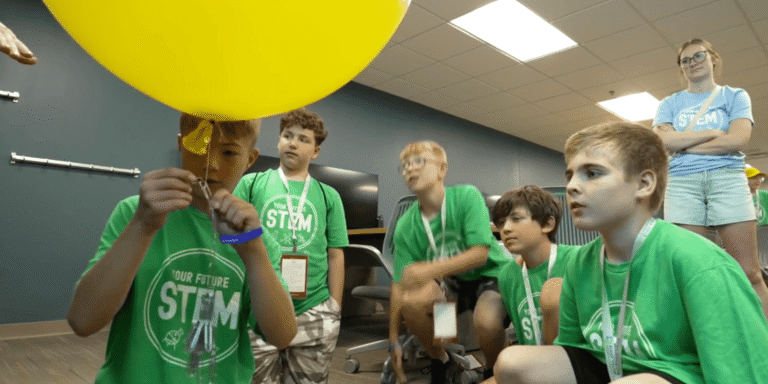
More than 60 recent high school graduates have embarked on a transformative journey, joining Gulfstream’s apprenticeship program in Savannah. These young individuals are not just learning a trade; they are immersing themselves in the intricate world of aircraft manufacturing, maintenance, and cutting-edge aviation technology. This initiative is more than just a recruitment drive; it’s a strategic investment in the future, addressing critical skill gaps while empowering a new generation with the tools and expertise to thrive in a high-tech industry. It’s a testament to the enduring power of practical learning and a strategic response to the evolving demands of advanced manufacturing.
Apprenticeship Program: Nurturing the Next Generation of Aerospace Innovators
The concept of an apprenticeship program, though ancient in its origins, is remarkably contemporary in its application, especially within advanced industries. It provides a unique ‘earn while you learn’ model, allowing participants to gain invaluable on-the-job experience, acquire specialized certifications, and often secure stable employment upon completion, all without accumulating the often-daunting burden of student debt. For a company like Gulfstream, renowned globally for its luxury business jets and sophisticated defense aircraft, these programs are vital. They ensure a steady supply of highly skilled labor, trained precisely to their exacting standards and familiar with their proprietary processes and technologies from day one.
Gulfstream’s commitment to cultivating talent is not new, but the scale of this expansion—welcoming over 60 new apprentices—underscores the urgent need for a skilled workforce in the aerospace sector. According to a 2023 report by the Aerospace Industries Association (AIA), the U.S. aerospace and defense industry supports millions of jobs directly and indirectly, contributing significantly to the nation’s economy. However, an aging workforce and a growing demand for advanced skills mean that robust talent development initiatives are more crucial than ever. Programs like Gulfstream’s apprenticeship program act as a crucial bridge, connecting academic learning with real-world application, making abstract concepts tangible and theoretical knowledge immediately useful.
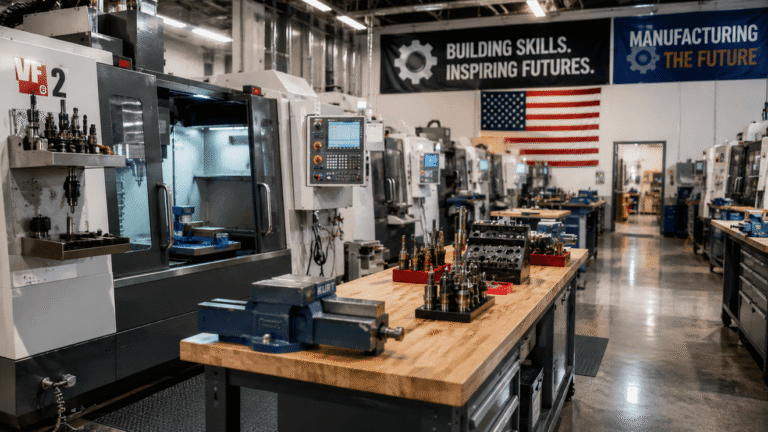
The participants in this particular initiative are diving into three core areas: aircraft manufacturing, maintenance, and aviation technology. Each of these fields represents a complex ecosystem of engineering, precision, and innovation. In manufacturing, apprentices learn about everything from advanced composite materials and intricate assembly processes to state-of-the-art robotic systems and quality control protocols. They gain expertise in computer-aided design (CAD) and manufacturing (CAM), understand lean manufacturing principles, and master the art of producing components that meet the rigorous safety and performance standards of aviation. This includes working with sophisticated machinery and understanding the interplay between human craftsmanship and automated processes, a frontier where AI is increasingly playing a role in optimization and quality assurance.
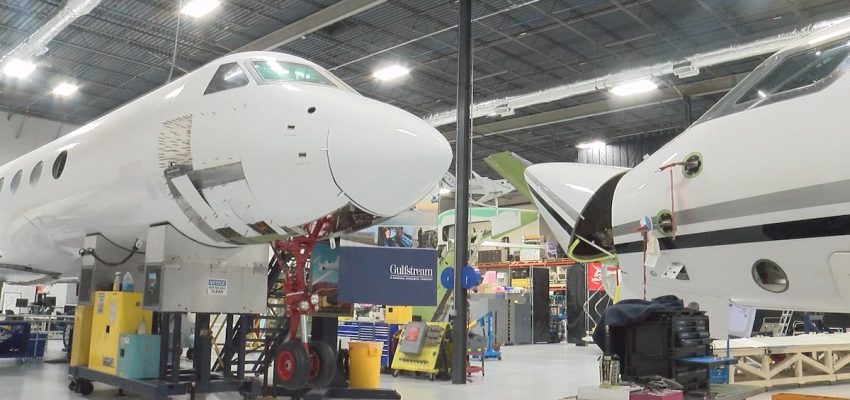
Aircraft maintenance, often referred to as Maintenance, Repair, and Overhaul (MRO), is a field demanding meticulous attention to detail and a profound understanding of complex mechanical and electrical systems. Apprentices in this stream will master diagnostic techniques, learn about regulatory compliance, and work with advanced tools to ensure aircraft remain airworthy and perform optimally. This also involves an increasing reliance on predictive maintenance, leveraging sensor data and machine learning algorithms to anticipate potential failures before they occur, thereby minimizing downtime and enhancing safety—a prime example of AI’s practical impact. Meanwhile, aviation technology focuses on the brains of the aircraft: avionics, flight control systems, navigation, communication, and increasingly, cybersecurity and data analytics related to flight operations. Here, apprentices will be at the forefront of integrating software, hardware, and network systems that power modern aircraft, preparing them for a future where autonomous features and AI-assisted flight systems become more prevalent.
Aerospace Evolution: Where Precision Meets Innovation
The aerospace industry is a crucible of innovation, constantly pushing the boundaries of what’s possible. From the development of supersonic jets to sustainable aviation fuels and electric propulsion systems, the sector demands a workforce that is not only skilled but also adaptable and forward-thinking. Gulfstream’s expansion of its vocational training pathways isn’t just about filling current vacancies; it’s about preparing its future workforce for technologies that are still emerging. Consider the advancements in material science—lighter, stronger composites—or the sophistication of integrated digital systems that manage everything from engine performance to in-flight entertainment. These aren’t static fields; they are continuously evolving, requiring workers to engage in lifelong learning.
Moreover, the role of data and artificial intelligence in aerospace is growing exponentially. From optimizing flight paths for fuel efficiency to automating routine inspections with drones and computer vision, AI is transforming operations across the board. The apprentices joining Gulfstream today will not only be proficient in traditional mechanical and technical skills but will also be expected to work alongside AI tools, interpret data from intelligent systems, and contribute to the development and implementation of future smart technologies. This blend of ‘hard’ technical skills and ‘soft’ analytical and problem-solving capabilities is what truly sets these comprehensive training initiatives apart.
Savannah, Georgia, where Gulfstream has a significant presence, benefits immensely from such a robust apprenticeship program. The company is not just a major employer; it’s an economic anchor, fostering a vibrant ecosystem of suppliers, service providers, and educational institutions. By investing in local talent, Gulfstream helps to create a sustainable economic future for the region, retaining skilled individuals and preventing brain drain. This localized approach to workforce development strengthens communities and ensures that the benefits of technological progress are shared broadly. The program demonstrates a clear understanding that investing in human capital is as crucial as investing in R&D or advanced machinery.
For the apprentices themselves, this opportunity is nothing short of life-changing. Beyond the immediate benefit of earning a living while learning, they are being integrated into a world-class organization, gaining mentorship from seasoned professionals, and building a professional network that will serve them throughout their careers. They are stepping into roles that offer not just jobs, but genuine career paths with opportunities for advancement, specialization, and continuous learning. This hands-on, immersive model fosters a deeper understanding and appreciation for the intricacies of the trade, cultivating a level of expertise that classroom learning alone often cannot provide.
Pioneering the Future: The Human Element in an AI-Driven Era
As an AI specialist, I often reflect on the future of work and the inevitable impact of automation and artificial intelligence on various industries. While concerns about job displacement are valid, initiatives like Gulfstream’s apprenticeship program offer a compelling counter-narrative: the future isn’t just about AI replacing humans, but about humans leveraging AI to achieve unprecedented levels of efficiency, safety, and innovation. The skills these apprentices are acquiring—precision manufacturing, detailed maintenance protocols, and sophisticated aviation technology—are foundational. They are the ‘human-in-the-loop’ skills that will be essential for designing, deploying, monitoring, and troubleshooting the AI systems of tomorrow.
Consider the scenario of an AI-powered diagnostic system for aircraft maintenance. While the AI can analyze vast datasets and identify potential issues with remarkable speed, it still requires a human technician to interpret its findings, perform complex repairs, and make critical judgments based on experience and nuanced understanding that AI currently lacks. Similarly, in manufacturing, while robots and AI can automate repetitive tasks, the design, programming, supervision, and creative problem-solving will always require human intellect and ingenuity. These apprentices are being prepared to be those critical human links in increasingly automated and intelligent workflows.
The beauty of such a comprehensive skill development program lies in its ability to cultivate not just technical proficiency, but also critical thinking, adaptability, and resilience—qualities that are universally valuable in any career, especially in rapidly evolving fields. By placing young talent directly into the heart of aerospace innovation, Gulfstream is not just building aircraft; it is building careers and shaping a workforce that is ready to navigate the complexities and embrace the opportunities of the 21st century. This type of vocational training is a powerful antidote to the fear of technological disruption, proving that focused human development remains the ultimate driver of progress.
In conclusion, Gulfstream’s expansion of its apprenticeship program in Savannah is a far-sighted and strategic move that speaks volumes about their commitment to excellence and future readiness. By welcoming over 60 new high school graduates into the folds of aircraft manufacturing, maintenance, and aviation technology, they are not merely addressing immediate workforce needs but are actively cultivating the next generation of aerospace innovators. This initiative highlights the critical importance of practical skills, on-the-job learning, and strategic talent investment in an era where technological advancements, including AI, are continuously reshaping industries.
This program serves as a powerful model for other industries grappling with skill shortages and the imperative to adapt to a high-tech future. It demonstrates that combining traditional, hands-on expertise with an understanding of emerging technologies creates a resilient and adaptable workforce. As these apprentices grow into seasoned professionals, they will be the human architects and custodians of aerospace innovation, proving that even in an increasingly AI-driven world, the human element—our ingenuity, our problem-solving capacity, and our dedication to mastery—remains irreplaceable and indeed, more vital than ever.