

In an era where scientific advancements accelerate at an unprecedented pace, and the demands on our healthcare systems grow ever more complex, the need for a robust, innovative, and compassionate medical workforce has never been more critical. The future of global health depends not just on breakthroughs in biotechnology or artificial intelligence – areas I am particularly passionate about – but fundamentally on the human talent that will drive these fields forward. It’s a future that begins not in university lecture halls or advanced research labs, but often much, much earlier: in the formative years of childhood.
Imagine a young mind, perhaps a fourth or fifth grader, full of curiosity, wonder, and an innate desire to understand the world around them. What if, at this impressionable age, they were given the opportunity to peek behind the curtain of the medical profession, to see doctors, nurses, and scientists not just as figures in books or on television, but as real people making a tangible difference? This is the profound premise behind initiatives focused on early medical career exploration for youth, a movement gaining traction worldwide, and one that holds immense promise for cultivating the next generation of healers, innovators, and caregivers.
The journey into medicine is long and arduous, demanding years of rigorous study, unwavering dedication, and profound resilience. By introducing children to this path early, we are not simply filling future job vacancies; we are igniting passions, fostering critical thinking, and laying the groundwork for a diverse and highly capable healthcare workforce. These early exposures can demystify complex medical concepts, break down stereotypes, and provide a clear vision for what a career in healthcare truly entails, long before students have to make definitive academic choices.
### Medical Career Exploration for Youth: Why It Matters More Than Ever
The landscape of healthcare is undergoing a profound transformation. We face an aging global population, the emergence of new diseases, and a persistent shortage of skilled healthcare professionals across numerous specialties. The World Health Organization (WHO) projects a global shortage of 18 million health workers by 2030, particularly in low- and middle-income countries, but also significantly impacting developed nations. This looming crisis underscores the urgency of inspiring and preparing the next generation.
Early medical career exploration serves several vital purposes in this context. Firstly, it addresses the awareness gap. Many young people, and even their parents, may only have a superficial understanding of what medical careers entail, often limited to the archetypal physician or surgeon. In reality, the medical field is a vast ecosystem comprising hundreds of specialized roles: medical researchers, epidemiologists, biomedical engineers, genetic counselors, physical therapists, radiographers, public health officials, medical ethicists, and even health informaticists who leverage AI and data science to improve patient outcomes. Exposing children to this rich tapestry of opportunities can broaden their horizons and allow them to discover a niche that truly resonates with their unique talents and interests.
Secondly, such programs integrate seamlessly with broader STEM (Science, Technology, Engineering, and Mathematics) education initiatives. Medicine is inherently a STEM field, demanding strong foundations in biology, chemistry, physics, and increasingly, computational thinking. Hands-on activities that simulate medical procedures or explore anatomical concepts can make abstract scientific principles tangible and exciting. A child who learns about the circulatory system by performing a mock surgery on a realistic model is far more likely to retain that knowledge and develop a deeper appreciation for biological complexity than one who only reads about it in a textbook.
Furthermore, early exposure can democratize access to these pathways. Students from underrepresented backgrounds, who might not have family members in medicine or exposure to such professions, can gain invaluable insights and mentorship. This is crucial for fostering diversity within the medical community, ensuring that healthcare professionals reflect the diverse populations they serve. A diverse workforce brings varied perspectives, enhances cultural competence, and ultimately leads to better patient care and more equitable health outcomes.
### Beyond the Stethoscope: Unveiling Diverse Pathways in Medicine
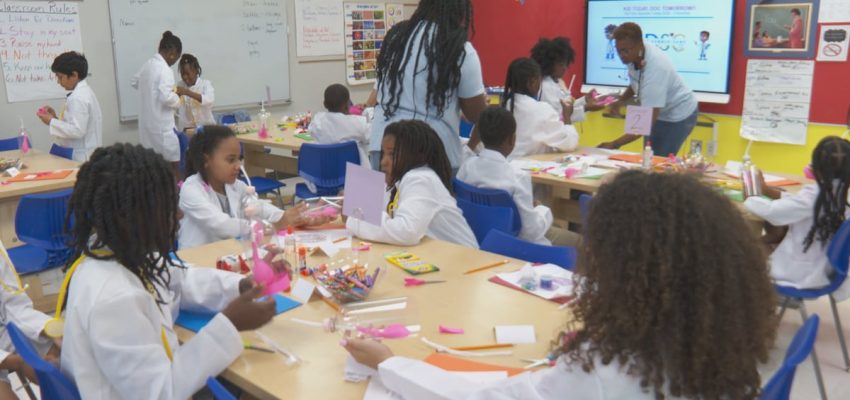
The magic of early medical exploration lies in its ability to move beyond simplistic notions of doctoring and delve into the multifaceted nature of healthcare. These programs often employ highly engaging, interactive methodologies that transform learning into an adventure. Consider a ‘mini-medical school’ summer camp, for instance, where young participants might spend a week immersed in various medical disciplines. One day could be dedicated to understanding basic anatomy and physiology through models and diagrams, while another might introduce them to the sterile environment of an operating room (a simulated one, of course) where they learn about surgical tools and basic suturing techniques using realistic fruit or gelatin models.
Such immersive experiences go far beyond passive observation. Children might learn to take vital signs, understand the basics of first aid, or even conduct simple ‘lab tests’ using household items. They could be introduced to the principles of pharmacology by learning how different medications affect the body (in a simplified, safe manner) or explore the intricacies of human genetics through interactive games. Some programs might even feature sessions on telemedicine, demonstrating how technology facilitates remote consultations, or introduce basic concepts of medical imaging like X-rays and MRI scans through visual aids and simplified explanations.
These hands-on activities are invaluable for developing a range of cognitive and soft skills. Problem-solving becomes intuitive when students are tasked with diagnosing a simulated patient’s condition based on a set of clues. Critical thinking is honed as they analyze scenarios and propose solutions. Empathy and communication skills are cultivated when they practice interacting with ‘patients’ or collaborate with peers on a medical ‘case.’ Teamwork, precision, and attention to detail – all hallmarks of successful medical professionals – are naturally reinforced through these engaging exercises. The exposure also helps demystify the intimidating aspects of medicine, transforming fear into fascination and uncertainty into clear purpose.
### Cultivating the Seeds of Innovation: The Role of Community and Education
For early medical career exploration for youth to be truly effective, it requires a collaborative ecosystem involving schools, parents, community organizations, and healthcare institutions. Educational systems play a foundational role by integrating health-related topics into existing science curricula, hosting career days featuring medical professionals, and encouraging participation in STEM fairs with a focus on health sciences. Schools can also partner with local hospitals or clinics to arrange age-appropriate tours or guest speaker sessions, providing a direct link to the real-world application of their studies.
Community organizations, such as Boys & Girls Clubs, YMCAs, and dedicated non-profits, are often at the forefront of developing specialized summer camps and after-school programs. These initiatives often leverage the passion of volunteer medical professionals – doctors, nurses, paramedics, and medical students – who dedicate their time to mentor and inspire young minds. The opportunity for a child to interact directly with someone working in medicine, to ask questions, and to see their enthusiasm firsthand, can be profoundly impactful. These mentors become living examples, showing what is possible and providing guidance on the educational pathways required.
Parents, too, have a significant role. Encouraging scientific curiosity at home, visiting science museums, watching educational documentaries, and discussing health-related news can all foster an environment where an interest in medicine can blossom. Simple home experiments that demonstrate biological principles, or even discussions about the importance of health and well-being, contribute to a child’s foundational understanding and appreciation for the human body.
Moreover, the integration of technology, particularly in the realm of AI, presents exciting new avenues for early medical education. Imagine interactive virtual reality simulations where children can explore the human body in 3D, performing virtual surgeries or observing the effects of diseases at a cellular level. AI-powered educational platforms could personalize learning experiences, adapting to each child’s pace and interests, making complex medical concepts more accessible and engaging. As an AI enthusiast, I see immense potential in these technologies to democratize and enrich the learning experience, preparing these future doctors for a world where AI will be an indispensable partner in healthcare delivery.
Ultimately, these collective efforts aim not just to educate but to inspire. They provide the practical tools and foundational knowledge, but more importantly, they offer a glimpse into a fulfilling career path dedicated to service and discovery. They help children connect their burgeoning scientific curiosity with the profound human impact of medicine. By doing so, they are not only preparing individuals for future careers but also contributing to the societal good, ensuring a steady supply of compassionate, skilled, and innovative healthcare professionals who are ready to tackle the challenges of tomorrow.
The global landscape of medicine is evolving, driven by unprecedented technological advancements and increasing demands. To navigate this future successfully, we must invest in the foundational stage of talent development: inspiring children. Early programs dedicated to medical career exploration for youth are more than just summer activities or extracurricular clubs; they are crucial incubators for the next generation of medical leaders and innovators. By fostering curiosity, providing hands-on experience, and connecting young minds with real-world medical applications, we empower them to envision a future where they can contribute meaningfully to human health and well-being.
As we look ahead, the continued expansion and support of such initiatives are paramount. These programs lay the groundwork for a more resilient, diverse, and advanced healthcare system. They cultivate not only the scientific acumen required but also the empathy, critical thinking, and collaborative spirit essential for addressing future health challenges. By planting these seeds of interest and knowledge today, we are ensuring that the future of medicine remains bright, driven by passionate individuals who began their journey of discovery long before they ever put on a lab coat.










