
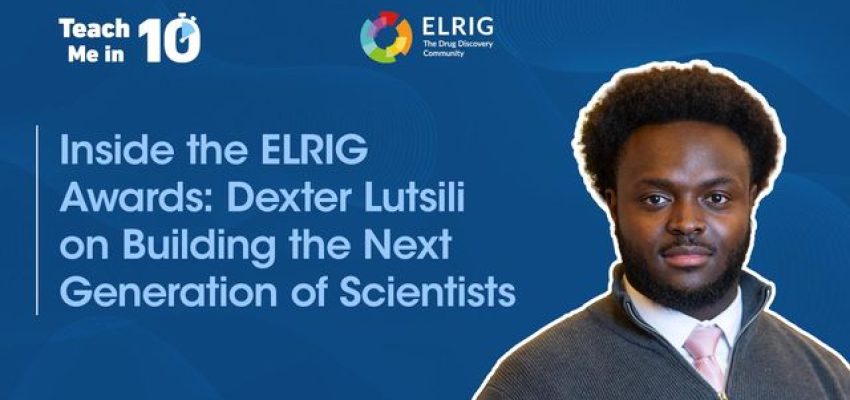

The world of life sciences stands at an exhilarating precipice. From groundbreaking discoveries in genomics to revolutionary advancements in personalized medicine, the pace of innovation is relentless, promising a future where once-impossible medical feats become routine. Yet, beneath this veneer of rapid progress lies a significant challenge for the next generation of scientific minds: how to effectively navigate the complex and ever-evolving landscape of professional opportunities. This journey, often fraught with uncertainty, is precisely what thought leaders like Dexter Lutsili, celebrated at events such as the ELRIG Awards, aim to illuminate for aspiring scientists.
As André Lacerda, an AI specialist with a deep passion for technology’s impact on human potential, I’ve observed firsthand how the fusion of biological sciences with advanced computational methods is not just changing what we study, but how we practice science and what skills are deemed essential. The traditional academic routes and industrial roles are being reshaped by data, automation, and most profoundly, artificial intelligence. Understanding these shifts is paramount for anyone considering a future in this dynamic field. This article delves into the intricacies of carving out a successful career, exploring the hurdles and, more importantly, the immense opportunities that await those ready to embrace an interdisciplinary and technologically fluent approach.
Life Science Career Pathways: Unpacking the Evolving Landscape
The journey into life sciences today is vastly different from even a decade ago. What was once perceived as a clear linear progression—academia, research, or perhaps a defined role in pharmaceutical R&D—has branched into a multifaceted web of specializations and interdisciplinary roles. The sheer complexity of biological systems, coupled with an explosion of high-throughput data generation, demands a new breed of scientist. Aspiring professionals are no longer just bench scientists; they might be data scientists analyzing omics data, computational biologists modeling disease progression, or even regulatory affairs specialists navigating the ethical implications of gene editing.
One of the primary challenges for students lies in the sheer breadth of options. How does one choose between immunology, neuroscience, synthetic biology, or bioinformatics? Each field, while interconnected, requires distinct skill sets and offers unique trajectories. Moreover, the industry itself is undergoing seismic shifts. The global biotechnology market, for instance, was valued at over $1.3 trillion in 2022 and is projected to grow at a compound annual growth rate (CAGR) exceeding 13% through 2030, according to reports by Grand View Research. This rapid expansion creates a multitude of job openings but also necessitates a constant adaptation of skills.
Beyond the traditional pharmaceutical giants, a vibrant ecosystem of biotech startups, contract research organizations (CROs), health tech companies, and even venture capital firms specializing in life sciences has emerged. These organizations often operate with different philosophies, demand different proficiencies, and offer diverse work environments. For students, this presents both a blessing and a curse: more opportunities but less clear-cut guidance. Many undergraduates and even postgraduates report feeling lost when trying to translate their specialized scientific knowledge into tangible career prospects, often lacking practical exposure to industrial settings or an understanding of the business side of science. This gap highlights the critical need for mentorship, industry-academia collaboration, and programs designed to bridge the chasm between theoretical knowledge and practical application, a sentiment often echoed by leaders like Dexter Lutsili.
Navigating these diverse Life Science Career Pathways requires more than just scientific acumen. It demands a strategic approach to skill development, networking, and continuous learning. The emphasis has shifted from simply performing experiments to understanding the bigger picture: how does a discovery translate into a product? How is it regulated? How is it funded? These questions, once ancillary to the pure science, are now integral to a successful career in the sector.
The Interplay of Technology and Talent: Cultivating Future Scientists
The most profound transformation within the life sciences sector is undoubtedly driven by technological advancement. Artificial intelligence, machine learning, robotics, and big data analytics are not just tools; they are fundamental disruptors, redefining research methodologies, accelerating discovery, and creating entirely new professional categories. Consider drug discovery, a process notoriously lengthy and expensive. AI algorithms can now sift through vast chemical libraries, identify potential drug candidates, predict their efficacy and toxicity, and even design novel molecular structures, dramatically reducing the time and cost involved. Companies like Insilico Medicine, for example, have successfully used AI to identify and advance a novel drug candidate for idiopathic pulmonary fibrosis to Phase II clinical trials at unprecedented speeds.
This technological infusion has a direct impact on the kinds of skills that are most valued. A wet-lab biologist who can also code in Python to analyze their own sequencing data becomes an invaluable asset. A pharmacologist who understands machine learning models for predicting drug-target interactions can drive innovation faster. The demand for professionals who can bridge the gap between biological expertise and computational proficiency is skyrocketing. Roles like ‘AI Ethicist in Healthcare,’ ‘Computational Biologist with ML Expertise,’ or ‘Robotics Engineer for Lab Automation’ are becoming increasingly common and critical. This is where organizations like ELRIG play a crucial role, by fostering communities and awards that highlight not just scientific excellence but also the innovative application of technology in laboratories and beyond.
Cultivating future scientists in this environment means moving beyond traditional pedagogical methods. Universities and educational institutions are increasingly challenged to integrate data science, programming, and AI literacy into their core life science curricula. Practical experience, through internships, co-op programs, and collaborative research projects with industry partners, becomes indispensable. This hands-on exposure allows students to apply theoretical knowledge, understand industry demands, and develop the ‘soft skills’ that are often overlooked but equally vital: critical thinking, problem-solving, teamwork, and effective communication across interdisciplinary teams. Mentorship, as championed by figures like Dexter Lutsili, forms the bedrock of this cultivation, providing guidance, opening doors, and helping young scientists envision their unique place within this technological revolution.
Furthermore, the ethical considerations surrounding advanced technologies like AI in healthcare and synthetic biology are becoming central to the Life Science Career Pathways. Future scientists will not only need to understand how to use these technologies but also to engage thoughtfully with their societal implications, ensuring responsible innovation. This requires a broader education that includes elements of philosophy, ethics, and policy, preparing individuals to contribute meaningfully to complex discussions that extend beyond the laboratory bench.
Navigating the AI Frontier: Essential Skills for the Next Generation
For anyone charting their course in life sciences today, an understanding of the AI frontier is not merely advantageous; it is rapidly becoming non-negotiable. Artificial intelligence, in its various forms—machine learning, deep learning, natural language processing—empowers scientists to process, interpret, and derive insights from biological data at scales previously unimaginable. From genomic sequencing to patient health records, the volume of data generated daily is astronomical, making AI an indispensable ally in the quest for new knowledge and treatments.
So, what specific skills are paramount for the next generation of life scientists seeking to thrive at this intersection? Foremost among them is **computational fluency**. This isn’t about becoming a full-stack developer, but rather gaining proficiency in programming languages like Python or R, which are the lingua franca for data analysis in biology. Understanding basic algorithms, data structures, and statistical modeling forms the foundation. Furthermore, familiarity with machine learning fundamentals—understanding concepts like supervised vs. unsupervised learning, neural networks, and model validation—will be crucial for leveraging AI tools effectively and interpreting their outputs critically.
Beyond coding, **data literacy** is critical. This encompasses not only the ability to manipulate and visualize data but also to understand its provenance, limitations, and potential biases. Ethical AI considerations, including data privacy, algorithmic fairness, and transparency, are also emerging as vital competencies. As AI models become more integrated into clinical decision-making and drug development, scientists must be equipped to ensure these technologies are applied responsibly and equitably.
Furthermore, **interdisciplinary collaboration** is a skill that cannot be overstated. The most significant breakthroughs often occur at the interfaces of disciplines. A biologist fluent in data science can communicate effectively with an AI engineer, fostering true innovation. This requires strong communication skills, an open mind, and the ability to work in diverse teams, often remotely across different time zones and cultural contexts. The future of Life Science Career Pathways is inherently collaborative, bridging traditional silos between biology, chemistry, engineering, and computer science.
Finally, and perhaps most importantly, **adaptability and a commitment to continuous learning** are the ultimate meta-skills. The technological landscape evolves at a breathtaking pace. What is cutting-edge today might be standard practice tomorrow, and obsolete the day after. Future scientists must cultivate a ‘learn to unlearn’ mindset, embracing new tools and methodologies with enthusiasm. Online courses, specialized certifications, workshops, and participation in scientific communities are invaluable resources for staying current. The willingness to pivot, acquire new knowledge, and embrace emerging paradigms will define success in the dynamic environment of modern life sciences.
The journey from student to seasoned professional in life sciences is more complex and exciting than ever before. The traditional paths are being supplemented and redefined by the relentless march of technological innovation, particularly the transformative power of artificial intelligence. Aspiring scientists face the dual challenge and opportunity of mastering foundational biological principles while simultaneously becoming adept at computational methods and data interpretation.
To truly thrive, the next generation must cultivate a unique blend of scientific curiosity, technical proficiency, and ethical awareness. Embracing interdisciplinary collaboration, seeking out mentorship, and committing to lifelong learning will not only facilitate personal career growth but also drive the collective progress of humanity. The future of health, biotechnology, and scientific discovery rests in the hands of these adaptable, technologically savvy, and ethically conscious minds, ready to shape the world with intelligence, precision, and profound impact.










