
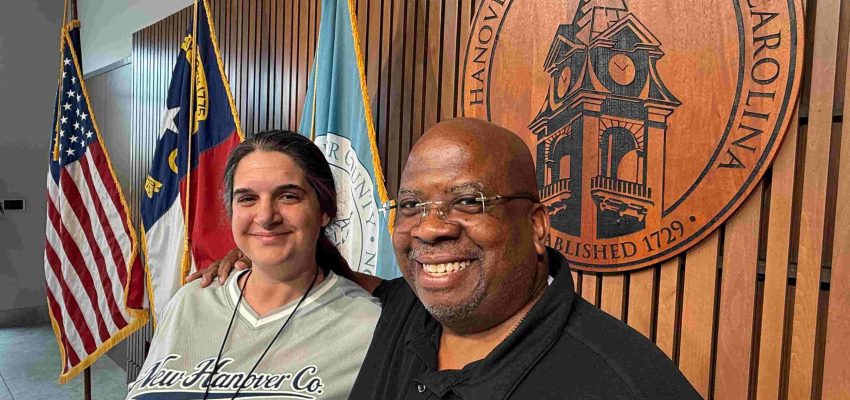

In a world increasingly shaped by algorithms and automation, there are stories that profoundly remind us of the irreplaceable core of human dedication and empathy. As an AI specialist, writer, and tech enthusiast, I often ponder the nexus where cutting-edge technology meets the foundational pillars of our society. One such pillar is emergency services—the 911 centers where the most desperate calls for help are answered. It’s in these high-stakes environments that the true value of human intuition, compassion, and resilience shines brightest, even as technology continues to evolve. The recent story of Roscoe Harris, a longtime employee of New Hanover County’s 911 Center, embodies this precisely, offering a compelling narrative on the profound impact of the human element in crisis response and how it will continue to shape our future alongside emerging technologies.
Harris’s journey, spanning decades of tireless service, is a testament to the profound commitment required to be on the front lines of public safety. His retirement on June 19th marked the end of a distinguished career during which he was undoubtedly the calm voice on the other end of countless frantic calls, the unseen hand guiding responders to emergencies, and a steadfast pillar in his community. But his story doesn’t end there; it pivots into a new, equally vital role as the county’s first 911 chaplain. This transition isn’t just a career change; it’s a powerful illustration of the continuing need for profound human connection and support within the demanding world of emergency services—a realm where even the most advanced AI will always serve to augment, rather than replace, the essential human touch.
### Human element in crisis response: The Unsung Heroism of 911 Dispatchers
The role of a 911 dispatcher is one of the most demanding, yet often underappreciated, positions in public service. These individuals are the true unsung heroes, operating in a high-pressure environment where every second counts, and every decision can mean the difference between life and death. Roscoe Harris, like thousands of dispatchers across the globe, dedicated years to this critical work. Imagine the sheer volume of calls handled, ranging from minor incidents to life-threatening emergencies, each requiring an immediate, accurate, and empathetic response. According to the National Emergency Number Association (NENA), 911 centers in the U.S. receive an estimated 240 million calls annually. That’s nearly 660,000 calls per day, each representing a moment of distress, a plea for help, or a chaotic event that demands clarity and rapid action.
What makes the human element in crisis response so indispensable in this context? It’s the unique combination of active listening, critical thinking, emotional intelligence, and swift decision-making that no machine can yet fully replicate. A dispatcher like Harris doesn’t just process information; they interpret nuances in a caller’s voice, discern panic from genuine threats, and provide crucial pre-arrival instructions, like CPR guidance, over the phone. They manage multiple communication channels simultaneously, dispatching appropriate resources—police, fire, EMS—while maintaining composure and projecting calm to distressed callers. This requires a profound capacity for empathy, an ability to connect with strangers in their most vulnerable moments, and an unwavering commitment to public safety.
The emotional toll on 911 dispatchers is significant. They are often the first point of contact for unimaginable tragedies, from serious accidents and violent crimes to medical emergencies and natural disasters. Studies by organizations like the American Psychological Association highlight that dispatchers frequently experience vicarious trauma and high levels of stress, comparable to first responders on the scene. Yet, they continue to answer the call, day after day, embodying resilience and a deep sense of duty. Roscoe Harris’s long tenure underscores a career spent navigating these emotional landscapes, offering not just a service, but a lifeline, proving time and again the irreplaceable value of the human element in crisis response.
### Beyond the Call: Roscoe Harris and the Evolution of Support Systems
Roscoe Harris’s decision to transition from a frontline dispatcher to New Hanover County’s first 911 chaplain is a poignant reflection of his enduring commitment to the emergency services community, but now from a different vantage point. This new role recognizes a vital, often overlooked, aspect of emergency work: the need for robust emotional and spiritual support for those who bear witness to human suffering daily. The creation of a 911 chaplain position signifies a growing awareness within public safety agencies that supporting the mental and emotional well-being of their personnel is just as critical as providing them with the best equipment and training.
As a chaplain, Harris will offer a unique form of support, extending beyond operational duties to provide comfort, guidance, and counseling to dispatchers, their families, and potentially even callers in moments of profound grief or stress. This role is a direct response to the psychological impact of repeated exposure to traumatic events. While technology can streamline communication and information flow, it cannot provide the deep, empathetic connection needed when someone is grappling with the emotional aftermath of a critical incident. Harris, having lived through these experiences himself, possesses an unparalleled understanding of the specific challenges faced by 911 personnel. His presence will be a reminder that even the strongest individuals sometimes need a pillar of support, reinforcing the foundational importance of the human element in crisis response.
This shift also highlights an interesting parallel in the broader discussion around AI and human endeavor. Just as technology optimizes tasks, human systems are evolving to optimize human well-being. The chaplaincy is a proactive step towards creating a more resilient and sustainable workforce in emergency services, acknowledging that the best technology in the world is only as effective as the well-being of the people operating it. It’s a testament to Harris’s compassion that he chooses to continue serving his community in this new, vital capacity, reinforcing the comprehensive nature of human support required in such demanding fields.
### Augmenting Empathy: The Intersection of AI and the Human Element in Crisis Response
From the perspective of an AI specialist like myself, Roscoe Harris’s story offers a compelling framework to discuss the evolving relationship between advanced technology and the indispensable human element in crisis response. While Harris embodies the unwavering human spirit, it’s also true that 911 centers are increasingly integrating sophisticated technologies, including AI, to enhance their operations. The goal, however, is not to replace the Roscoe Harrises of the world, but to empower them, allowing them to focus their invaluable human skills where they matter most.
Consider how AI is already beginning to transform emergency dispatch. AI-powered systems can analyze incoming call data in real-time, identifying keywords, vocal patterns, and even language barriers to route calls more efficiently to appropriate personnel or provide instant translation services. Natural Language Processing (NLP) can assist dispatchers by transcribing calls, summarizing critical information, and even predicting potential emergency types based on historical data. Computer vision algorithms can analyze live video feeds from public cameras or smart devices, providing first responders with crucial visual context before arrival, or identifying the exact location of a distressed caller with unprecedented accuracy, even without a precise address. These tools enhance efficiency, reduce response times, and offload cognitive burden from human dispatchers.
However, the core of crisis management—the emotional connection, the ethical judgment, the ability to calm a panicked caller, or to make complex decisions in ambiguous, high-stakes situations—remains firmly in the realm of human capability. AI can process data at speeds unimaginable to humans, offering a suite of analytical tools, but it cannot yet grasp the nuances of human emotion, nor can it provide the comfort and assurance that a voice like Roscoe Harris’s offered for decades. The future of emergency services, therefore, lies in a powerful synergy: AI as a vigilant assistant, processing vast amounts of information and presenting actionable insights, while the human dispatcher, armed with this augmented intelligence, focuses on the empathetic communication, critical thinking, and nuanced decision-making that define the human element in crisis response.
This partnership also raises important ethical considerations. As AI becomes more integrated, questions around data privacy, bias in algorithms, and the accountability of AI systems in life-or-death situations become paramount. As an AI enthusiast, I firmly believe that these technologies must always be developed and deployed with a human-centric approach, ensuring that they serve to amplify human capabilities and values, not diminish them. The ultimate goal is to create systems where technology enables more effective, more compassionate, and more resilient emergency responses, always with the irreplaceable human at the helm.
Roscoe Harris’s career at the New Hanover County 911 Center and his subsequent transition to chaplain exemplify the enduring power and necessity of the human touch in our most critical services. His story reminds us that even as technology rapidly advances, the fundamental attributes of empathy, dedication, and supportive community remain the bedrock of effective crisis response. In a world increasingly interconnected and digitized, the value of direct human interaction, particularly in moments of vulnerability, only grows more profound.
Looking ahead, the landscape of emergency services will undoubtedly continue to evolve, with AI and other advanced technologies playing an ever-larger role in streamlining operations and enhancing efficiency. Yet, the saga of individuals like Roscoe Harris underscores a timeless truth: technology, no matter how sophisticated, is a tool designed to serve humanity. It is through the dedicated efforts of people like Harris—who understand the deep emotional and psychological toll of crisis, both on callers and responders—that we build truly resilient and compassionate systems. The future belongs to a powerful synergy where technological innovation amplifies the inherent strengths of the human element in crisis response, ensuring that help, in all its forms, is always there when we need it most.










