
In the vibrant tapestry of human potential, every thread holds value. Yet, for too long, a subtle but insidious systemic barrier has hindered the professional growth of a significant segment of our population: blind Americans. Imagine possessing remarkable talent, drive, and ambition, only to face a paradox where success could inadvertently lead to a loss of essential support. This is the crux of the ‘catch-22’ that the National Federation of the Blind (NFB) is diligently working to dismantle, advocating for solutions that promise not just equity, but a true liberation of potential. As an AI specialist and tech enthusiast, I believe this challenge presents a unique intersection where thoughtful policy converges with groundbreaking technology, particularly artificial intelligence, to forge pathways to genuine career advancement for blind Americans.
The issue isn’t merely about finding a job; it’s about the ability to build a meaningful career, to ascend corporate ladders, to innovate, and to contribute at the highest levels. It’s about ensuring that the pursuit of excellence isn’t penalized by the very systems designed to offer a safety net. This article will delve into the intricacies of this challenge, exploring the proposed legislative remedies and, crucially, examining how cutting-edge AI technologies are poised to become powerful allies in creating a truly inclusive professional landscape.
Career Advancement for Blind Americans: Decoding the “Catch-22”
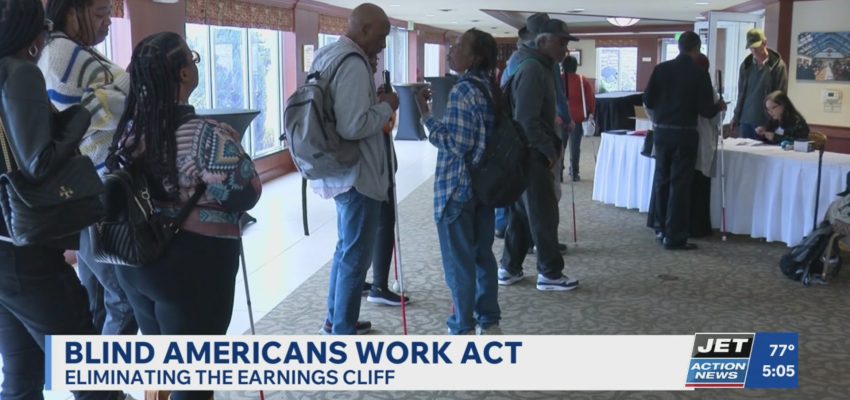
At the heart of the challenge lies a bureaucratic paradox that often forces blind Americans to make an impossible choice: pursue higher-paying, career-advancing opportunities, or retain vital disability benefits. This is the infamous “catch-22.” Many federal and state disability programs, such as Social Security Disability Insurance (SSDI) and Supplemental Security Income (SSI), impose strict income thresholds. If an individual’s earnings surpass a certain limit, they risk losing access to crucial support systems, including healthcare (Medicare or Medicaid), personal care attendants, and funding for essential assistive technologies. For someone who relies on these benefits to live independently and perform their job, losing them can be devastating, effectively wiping out any financial gain from a salary increase.
Consider a talented visually impaired software engineer. They might be offered a promotion to a senior role with a significant salary bump. While exciting on the surface, this promotion could push them past the income threshold for their benefits. Losing their health insurance, for instance, might leave them in a precarious position, as specialized medical care for visual impairments can be extremely costly. Similarly, losing access to funding for a refreshable braille display or a screen reader, which can cost thousands of dollars, could render their new, higher-paying job virtually impossible to perform. The net result is a powerful disincentive to seek promotions, take on more responsibility, or even accept jobs that fully align with their skills and ambitions. This perpetuates a cycle of underemployment and stagnation, preventing countless talented individuals from realizing their full professional potential and contributing more significantly to the economy.
The NFB’s advocacy, therefore, isn’t simply about providing more jobs; it’s about reforming the systemic structures that inadvertently penalize ambition. They propose legislative solutions that would decouple these essential supports from arbitrary income ceilings, allowing individuals to earn more without fear of losing critical services. Such reforms would not only empower individuals but also unlock a vast reservoir of untapped talent, boosting economic productivity and fostering a more equitable society.
Beyond the Benefits Trap: Broader Hurdles to Professional Growth
While the “catch-22” is a significant legislative hurdle, it’s not the only barrier to professional growth for individuals with vision loss. Broader societal and corporate challenges also contribute to underemployment and limit true career advancement for blind Americans. One primary obstacle is employer bias and misconceptions. Despite the protections offered by the Americans with Disabilities Act (ADA), many employers harbor outdated notions about the capabilities of visually impaired individuals or overestimate the costs and complexities of accommodations. This can lead to a lack of interview opportunities, reluctance to hire for certain roles, and a general lack of understanding about how to effectively integrate blind professionals into the workforce.
Furthermore, inaccessible workplace technologies and environments remain a pervasive issue. While progress has been made, many proprietary software systems, internal dashboards, and digital communication platforms are not designed with accessibility in mind. This creates significant barriers, forcing visually impaired employees to rely on workarounds or limiting their ability to perform tasks efficiently. Even physical office spaces, with their visual signage, complex layouts, and lack of tactile cues, can present challenges. Vocational training programs, too, often fall short, failing to adequately prepare blind individuals for careers in rapidly evolving tech-driven industries or neglecting to provide accessible tools and methodologies during training itself. According to the Bureau of Labor Statistics, the unemployment rate for individuals with a visual impairment consistently remains significantly higher than the national average, often hovering around double digits, underscoring the systemic nature of these challenges.
These multifaceted barriers underscore the need for a holistic approach, one that combines legislative reform with corporate responsibility and, increasingly, technological innovation. It’s not enough to remove the financial disincentives; we must also ensure that the workplace itself is a welcoming, enabling, and truly inclusive environment where talent can thrive unhindered.
AI as an Enabler: Revolutionizing Workplace Accessibility and Opportunity
This is where the transformative power of artificial intelligence enters the conversation, promising to revolutionize accessibility and unlock unprecedented opportunities for career advancement for blind Americans. For decades, assistive technologies like screen readers (e.g., JAWS, NVDA), braille displays, and magnifiers have been foundational tools, empowering visually impaired individuals to access information and interact with digital interfaces. These innovations have been critical stepping stones, but AI is now poised to elevate accessibility to entirely new levels, moving beyond mere access to active enablement and augmentation.
AI-powered computer vision, for example, is making the visual world more comprehensible than ever before. Applications like Microsoft’s Seeing AI and Google’s Lookout can describe images, identify objects and people, read text aloud (including handwritten notes), and even describe currency. This real-time environmental understanding vastly improves independence, from navigating public spaces to identifying products in a grocery store. Similarly, AI-driven audio descriptions are enhancing the experience of visual content, while intelligent navigation aids are providing turn-by-turn spoken directions combined with environmental context, reducing barriers to mobility and self-sufficiency.
In the workplace, AI’s potential is even more profound. Consider the impact of AI in data analysis. Traditionally, interpreting complex charts, graphs, and dashboards required strong visual acuity. Now, AI algorithms can process vast datasets, summarize key trends, and generate verbal descriptions or tactile representations, making data-driven roles accessible. For software developers, AI pair programming tools like GitHub Copilot can suggest code snippets, complete functions, and even debug, significantly streamlining the coding process and making it more efficient for visually impaired programmers. AI-powered virtual assistants can manage schedules, answer emails, and draft documents, offloading administrative tasks that might otherwise be cumbersome. These technologies aren’t just accommodations; they are powerful augmentation tools that can enhance productivity for everyone, making the inclusion of blind professionals not just feasible, but highly advantageous.
Furthermore, AI can play a crucial role in making hiring processes more equitable. AI-driven talent acquisition platforms can analyze resumes and match candidates to roles based purely on skills and experience, reducing unconscious biases that might arise from visual cues or assumptions about disability. By focusing on capabilities rather than perceived limitations, AI can help organizations identify and recruit top talent from the visually impaired community, fostering a truly meritocratic hiring environment. The integration of AI into workplace tools and systems promises to break down historical barriers, empowering blind professionals to pursue and excel in careers previously considered out of reach, from data science to creative design, fundamentally reshaping the landscape of professional opportunities.
Crafting an Inclusive Future: Policy and Partnership
Achieving widespread career advancement for blind Americans will require a concerted, multi-pronged effort. Central to this endeavor are the legislative reforms championed by organizations like the National Federation of the Blind. Advocating for a decoupling of essential disability benefits from arbitrary income ceilings is not just a matter of fairness; it’s an economic imperative. By eliminating the disincentive to earn more, policy can unleash the full economic potential of countless individuals, turning recipients of aid into taxpayers and contributors to the national economy. These reforms would create a clear path for professional growth, allowing blind individuals to pursue their ambitions without fear of losing the very support that enables their independence and productivity.
Beyond policy, corporate responsibility is paramount. Businesses must proactively commit to inclusive hiring practices, investing in accessible technologies, and fostering workplace cultures that value diversity and accommodate individual needs. This means not just complying with ADA requirements, but going above and beyond to integrate accessibility into all aspects of their operations, from software procurement to employee training. Companies that embrace this philosophy will not only gain access to a wider talent pool but also benefit from the diverse perspectives and innovative problem-solving approaches that blind professionals often bring.
Finally, the ethical and responsible development of AI is crucial. As an AI specialist, I emphasize that technology must be designed with accessibility and inclusivity from its inception. This involves engaging visually impaired individuals in the design and testing phases, ensuring that AI models are trained on diverse datasets to avoid bias, and prioritizing features that enhance rather than hinder access. Collaborative partnerships between disability advocacy groups, technology developers, policymakers, and employers will be essential to ensure that AI’s immense potential is harnessed to create truly equitable and empowering pathways for professional growth. The goal is not just to provide accommodations, but to leverage AI to create a world where blindness is no longer a barrier to any career aspiration.
The journey towards full career advancement for blind Americans is multifaceted, requiring both systemic legislative change and the thoughtful application of cutting-edge technology. The ‘catch-22’ that has long stifled ambition and limited potential is a tangible problem with clear solutions, advocated for passionately by organizations like the National Federation of the Blind. By reforming outdated benefit structures, we can eliminate the financial disincentives that have held back so many talented individuals, allowing them to pursue higher education, gain new skills, and take on more challenging and rewarding roles without fear of losing vital support.
Simultaneously, the rapid evolution of artificial intelligence offers an unprecedented opportunity to redefine accessibility and unlock new professional frontiers. From enhancing daily independence to revolutionizing workplace tools and fostering equitable hiring practices, AI is proving itself to be a powerful ally in this mission. The vision is clear: a society where talent knows no visual bounds, where every individual, regardless of their sight, has the unencumbered ability to achieve their fullest professional potential. It’s a vision built on smart policy, inclusive design, and the boundless innovation of technology, shaping a future that truly embraces the richness of human diversity.