

In an era defined by rapid technological advancement, the integration of cutting-edge tools into educational curricula is no longer a luxury but a necessity. As artificial intelligence continues to redefine industries and transform the global job market, educational institutions are tasked with the critical mission of equipping the next generation with the skills and foresight to thrive. One such transformative force, quietly soaring into classrooms and workshops worldwide, is the humble yet powerful drone. What was once relegated to military applications or niche hobbyist circles has now blossomed into an indispensable asset across countless sectors, from public safety to precision agriculture. This paradigm shift demands a proactive approach to learning, fostering not just theoretical understanding but crucial hands-on expertise. A compelling recent example of this forward-thinking educational philosophy comes from Hillyard Technical Center, where a strategic partnership is making waves, demonstrating precisely how vocational education can align with the demands of an AI-driven future, particularly in the realm of **drone technology**.
Drone Technology in Educational Curricula: A Flight Towards Future Readiness
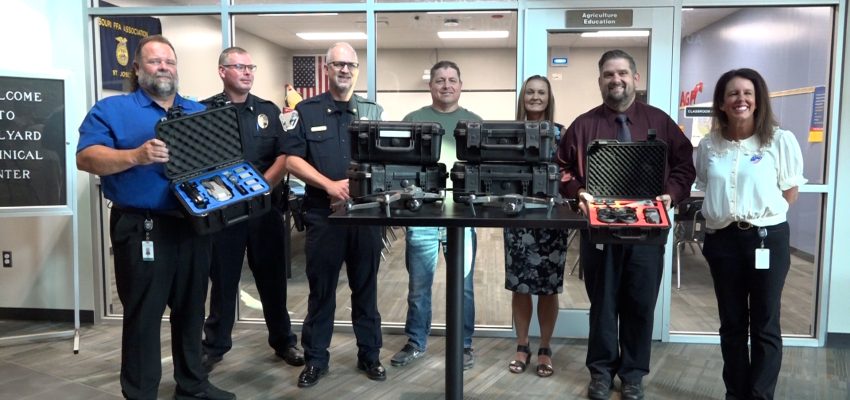
The future is being built today, brick by digital brick, and often, by rotor blade. At the forefront of this educational evolution, the Hillyard Technical Center in St. Joseph, Missouri, recently celebrated a significant milestone: the generous donation of drones from the St. Joseph Police Department. This wasn’t merely a transfer of equipment; it was an investment in the practical skills and career readiness of its students. On August 4th, the center formally recognized the police department for providing these unmanned aerial systems (UAS), empowering students to gain invaluable hands-on experience with the very same advanced equipment currently utilized in professional fields. This initiative transcends traditional textbook learning, plunging students directly into the operational realities of a burgeoning industry.
Why is this hands-on approach so vital? Consider the complexities of operating an unmanned aerial vehicle (UAV). It’s not just about flying; it involves understanding flight dynamics, navigation systems, sensor integration, data collection protocols, and critical safety procedures. For students aspiring to careers in public safety, surveying, infrastructure inspection, or even creative fields like cinematography, direct interaction with these sophisticated machines, and the underlying **drone technology**, is indispensable. They learn to troubleshoot, adapt to real-world scenarios, and develop the critical thinking skills that theoretical lessons alone cannot fully cultivate. The exposure to actual police-grade equipment, for instance, provides insights into the rigorous standards and specific applications required in critical situations, such as search and rescue operations, accident reconstruction, or surveillance. This exposure prepares them not just for a job, but for a specific role within an ecosystem where precision and reliability are paramount.
The integration of **drone technology** into vocational programs like those at Hillyard represents a broader, global trend. Educational institutions worldwide are recognizing the imperative to adapt to a labor market increasingly shaped by automation and intelligent systems. By providing access to professional-grade equipment, schools are closing the gap between academic learning and industry demands. Students gain a competitive edge, entering the workforce not just with certifications, but with demonstrable experience. This direct engagement fosters a deeper understanding of **drone technology**’s capabilities and limitations, cultivates problem-solving abilities, and builds confidence – all crucial attributes for success in a rapidly evolving tech landscape. It transforms abstract concepts into tangible skills, positioning these students to become the innovators and skilled professionals of tomorrow. Moreover, such partnerships between educational institutions and local agencies exemplify a collaborative model that should be emulated, ensuring that community resources are maximized for the benefit of student development and local workforce needs.
The Expanding Horizon: Diverse Career Paths Unlocked by UAVs
The applications of unmanned aerial systems extend far beyond public safety, painting a vibrant picture of diverse career opportunities. Indeed, the global market for commercial **drone technology** alone is projected to reach tens of billions of dollars in the coming years, indicating a substantial demand for skilled professionals. This rapid growth is fueled by the incredible versatility and efficiency that aerial robotics offer across a multitude of industries.
In agriculture, for instance, precision farming utilizes drones equipped with multispectral cameras to monitor crop health, assess irrigation needs, and even apply pesticides with unprecedented accuracy, leading to higher yields and reduced environmental impact. This creates roles for agricultural drone operators, data analysts specializing in agri-tech, and even software developers creating AI algorithms for crop optimization.
The construction sector is another major beneficiary. UAVs are employed for site mapping, progress monitoring, safety inspections of tall structures, and creating highly accurate 3D models of projects. This not only enhances efficiency but significantly improves safety by reducing the need for human workers in hazardous areas. Consequently, demand is rising for drone pilots with civil engineering knowledge, photogrammetry specialists, and project managers adept at integrating drone data into building information modeling (BIM) workflows.
For public safety, beyond the St. Joseph Police Department’s forward-thinking approach, fire departments use drones to assess wildfire spread, identify hotspots, and locate victims in disaster zones. Search and rescue operations are dramatically enhanced by aerial surveillance, especially in remote or dangerous terrains. Law enforcement agencies deploy them for surveillance, accident reconstruction, and managing large public events. These critical applications require highly trained operators who understand both the technical aspects of the aircraft and the intricate legal and ethical frameworks governing their use of **drone technology**.
Media and entertainment industries have long embraced drones for stunning aerial cinematography and live event coverage, creating roles for specialized drone camera operators and production technicians. Environmental monitoring benefits from drone flights to track wildlife, survey deforestation, and monitor pollution levels. Even in logistics and delivery, companies are investing heavily in drone delivery systems, anticipating a future where packages are routinely transported by autonomous aerial vehicles, thus generating a need for fleet managers, regulatory compliance specialists, and robotics engineers.
Each of these burgeoning sectors requires a distinct set of skills, often blending traditional expertise with new technological proficiencies. Beyond piloting, professionals in this field must understand data processing, geospatial mapping, regulatory compliance (such as FAA Part 107 in the United States), basic maintenance, and increasingly, the integration of AI for autonomous operations and data analysis. The ability to interpret complex data captured by drone sensors, such as thermal imagery, LiDAR, or hyperspectral data, is becoming as crucial as the ability to fly the aircraft itself. Therefore, programs that offer a comprehensive curriculum covering not just flight operations but also data analytics, ethical considerations, and relevant industry-specific applications related to modern **drone technology** are truly preparing students for the multifarious challenges and opportunities that await them in this dynamic field.
Bridging the Skills Gap: The Imperative of Early Adoption and Industry Partnerships
The rapid evolution of technologies like artificial intelligence and **drone technology** presents both immense opportunities and significant challenges. One of the most pressing challenges is the widening skills gap—the chasm between the skills possessed by the workforce and those required by employers in emerging industries. Without proactive intervention, this gap can stifle innovation, hinder economic growth, and leave a generation unprepared for the future of work. This is precisely where initiatives like the Hillyard Technical Center’s drone program become not just beneficial, but absolutely essential.
Early adoption of new technologies in educational settings is critical. By introducing students to unmanned aerial systems at a vocational level, institutions are not just teaching a skill; they are fostering an innovative mindset by immersing them in the world of **drone technology**. They are nurturing curiosity, encouraging problem-solving, and familiarizing young minds with the iterative nature of technological development. This early exposure demystifies complex systems and makes future learning in advanced fields, such as AI-driven automation or robotics, more accessible and less intimidating. Moreover, it allows students to discover passions and aptitudes they might not have otherwise encountered within the realm of **drone technology**, potentially steering them toward highly specialized and in-demand careers.
The partnership between the Hillyard Technical Center and the St. Joseph Police Department serves as a sterling model for bridging this skills gap through collaborative effort. Such collaborations are mutually beneficial: educational institutions gain access to cutting-edge equipment and real-world scenarios, while industry partners benefit from a pipeline of well-trained, job-ready individuals. Police departments, for example, can contribute not only equipment but also expert instructors who can share invaluable operational insights and case studies. In return, they help cultivate future emergency responders, technicians, or even police officers who are already proficient in critical aerial surveillance and data collection techniques, utilizing advanced **drone technology**.
Expanding this model, imagine similar partnerships with local agricultural firms providing insights into precision farming, or construction companies detailing the use of drones for site inspection. These collaborations can also extend to curriculum development, ensuring that what is taught in the classroom directly reflects the current and future needs of the industry. This requires ongoing dialogue and flexibility from both sides, as technology and industry demands are constantly shifting.
However, challenges remain. Funding for specialized equipment, continuous professional development for educators, and navigating evolving regulatory landscapes (such as those set by aviation authorities) are significant hurdles. Overcoming these requires sustained investment, robust government support, and a commitment from educational leaders to embrace change. Furthermore, ensuring equitable access to these technologies across diverse communities is paramount, preventing a new form of digital divide. By proactively addressing these challenges, and by continuing to forge strong industry-education partnerships, we can ensure that the next generation is not just aware of emerging technologies, but actively prepared to innovate with them, securing a prosperous and technologically adept future for all.
The journey of a thousand miles begins with a single step, or in this case, a single drone taking flight in a vocational classroom. The initiative at Hillyard Technical Center, propelled by the generous donation from the St. Joseph Police Department, underscores a pivotal truth: the future of education is inextricably linked to the practical application of emerging technologies. By providing students with hands-on experience in **drone technology**, we are not merely teaching them how to operate a machine; we are empowering them to become active participants in shaping the future economy, fostering critical skills, and preparing them for dynamic, rewarding careers that are continuously evolving. This forward-thinking approach builds a resilient workforce capable of adapting to the rapid pace of innovation.
As AI continues to weave itself into the fabric of our daily lives and professional endeavors, the importance of foundational technological literacy only grows. Educational programs that embrace advanced aerial systems, particularly in **drone technology**, are planting seeds of innovation, cultivating a generation of problem-solvers, innovators, and leaders. The sky is no longer the limit; it’s the starting point for a new era of learning and opportunity. Through strategic partnerships and a commitment to practical, relevant education, we can ensure that every student has the chance to soar, equipped with the knowledge and skills to navigate the complexities and harness the immense potential of tomorrow’s technological landscape.










