

In an era increasingly defined by technological advancements and scientific breakthroughs, the call for diversity and inclusion in critical fields like Science, Technology, Engineering, and Mathematics (STEM) has never been louder. Yet, despite significant progress, certain communities remain underrepresented, facing systemic barriers that hinder their full participation. Among these are deaf and hard-of-hearing individuals, whose potential in STEM often goes untapped due to a lack of accessible educational pathways and supportive environments. It is within this context that a beacon of hope emerges from Pittsburgh, a city renowned for its industrial heritage and burgeoning innovation ecosystem: a transformative program designed to specifically empower deaf students to pursue vibrant careers in STEM.
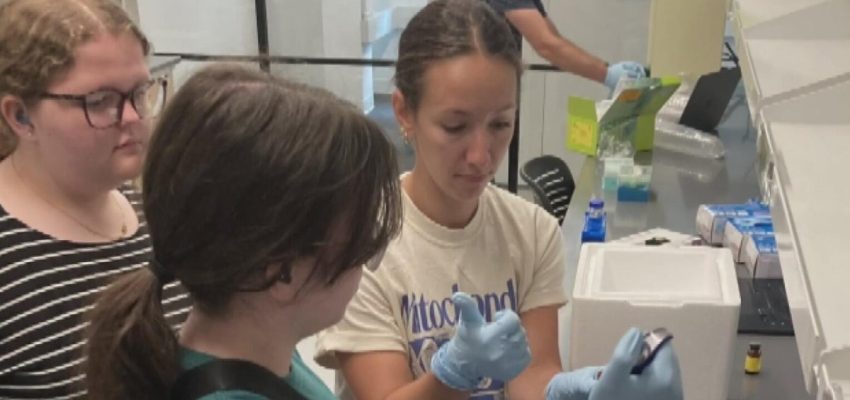
The Assembly building in Pittsburgh’s vibrant Shadyside neighborhood is home to a special academic endeavor for area young people. This is not just another summer camp or after-school club; it is a meticulously crafted initiative that recognizes the unique talents and perspectives deaf students bring to the scientific community. As an AI specialist and tech enthusiast, I, André Lacerda, have long advocated for a more inclusive future where every individual, regardless of ability, has the opportunity to contribute to the technological frontier. This Pittsburgh program embodies that vision, demonstrating a profound commitment to dismantling barriers and cultivating the next generation of innovators.
STEM for Deaf Students: Unlocking Potential in Pittsburgh’s Innovation Hub
Pittsburgh, a city historically synonymous with steel, has, over the past few decades, reinvented itself as a hub of cutting-edge technology, robotics, and artificial intelligence. This vibrant ecosystem, fueled by institutions like Carnegie Mellon University and the University of Pittsburgh, provides an ideal backdrop for fostering new talent. However, the true strength of any innovation hub lies not just in its infrastructure but in the diversity of its intellect. The program in Shadyside, spearheaded by the Hillman Academy, directly addresses a critical gap: providing accessible, high-quality STEM for deaf students.
For too long, deaf individuals have encountered significant hurdles in accessing quality STEM education. These challenges range from communication barriers in traditional classroom settings, where interpreters may be scarce or ineffective, to a lack of visual learning aids and role models. Imagine a lecture hall where complex scientific concepts are delivered purely aurally, or a laboratory where safety instructions are not clearly communicated in a visually accessible format. These scenarios are not hypothetical but daily realities that can deter even the most brilliant minds from pursuing scientific aspirations. The Hillman Academy program, drawing inspiration from these challenges, has meticulously designed an environment that prioritizes accessibility from its foundational principles.
This initiative goes beyond merely providing interpreters. It fosters an immersive learning experience where American Sign Language (ASL) is not just accommodated but celebrated as a primary mode of communication. Instructors are often fluent in ASL, or supported by highly skilled interpreters who are also knowledgeable in scientific terminology. This creates a classroom environment where questions can be asked freely, discussions can flourish, and complex ideas can be explored without the constant mental overhead of communication challenges. Students are empowered to engage with the material directly, fostering deeper understanding and critical thinking skills essential for any STEM field.
Moreover, the program focuses heavily on hands-on, experiential learning. Practical applications, visual demonstrations, and collaborative projects form the bedrock of its curriculum. This approach is not only highly effective for deaf learners but is recognized as a best practice in modern STEM education generally. Whether it’s dissecting specimens in a biology lab, coding an algorithm in a computer science module, or designing a prototype in an engineering workshop, students are actively doing, experimenting, and discovering. This not only reinforces learning but also builds confidence and practical skills that are invaluable in real-world scientific and technological careers. The emphasis on project-based learning encourages problem-solving, teamwork, and innovative thinking – traits that are universally desired in the STEM workforce.
Bridging the Accessibility Gap: A Model for Inclusive Learning
The Hillman Academy’s approach to providing STEM for deaf students serves as a powerful model for inclusive education nationwide. It highlights that true accessibility is not merely about compliance but about thoughtful design and genuine commitment. One of the program’s unique strengths lies in its mentorship component. Students are often paired with deaf or hard-of-hearing professionals already working in STEM fields. These mentors provide invaluable guidance, share their personal journeys, and demonstrate that a successful career in science and technology is not only possible but achievable. For many young deaf students, seeing someone who looks like them and communicates like them thriving in a demanding STEM role can be a profoundly inspiring and validating experience, breaking down self-imposed limitations and societal stereotypes.
The curriculum itself is broad and dynamic, covering a range of disciplines from computational biology and robotics to environmental science and material engineering. This multidisciplinary exposure allows students to explore their interests, identify their passions, and develop a well-rounded scientific foundation. In an increasingly interdisciplinary world, this holistic approach prepares students not just for specific jobs but for a lifetime of learning and adaptation. The program also integrates modern technological tools designed to enhance accessibility. From advanced speech-to-text software that can aid in note-taking during group discussions to haptic feedback devices that provide tactile information for scientific experiments, technology is leveraged to level the playing field, ensuring that students have every resource at their disposal.
Furthermore, the program fosters a strong sense of community. Deaf students from various backgrounds come together, forming peer networks that can last a lifetime. This shared experience of learning, growing, and overcoming challenges together creates a supportive environment where students feel understood and empowered. This community aspect is crucial, as isolation can often be a significant barrier for deaf individuals in mainstream educational settings. By cultivating a space where their unique identities are affirmed and celebrated, the program builds resilience and a collective drive towards academic and professional excellence. The focus here is not just on academic achievement but on holistic development, nurturing confident, capable, and connected future leaders.
Beyond the Classroom: Cultivating Future Innovators
The impact of programs like the Hillman Academy extends far beyond the individual students it serves. By actively preparing deaf students for careers in STEM, it addresses a broader societal need for diverse perspectives in innovation. Research consistently shows that diverse teams are more innovative, productive, and resilient. Individuals with different life experiences, including those who navigate the world with sensory differences, often bring unique problem-solving approaches and creative insights that can lead to groundbreaking discoveries and technological advancements.
For instance, a deaf engineer might intuitively design a communication system that is inherently more robust and visual, benefiting a wider range of users, not just those with hearing impairments. A deaf scientist might approach a biological problem with a different set of observations, leading to novel hypotheses. The inclusion of diverse minds in STEM is not merely an act of benevolence; it is a strategic imperative for progress. As an AI enthusiast, I recognize that the development of ethical, unbiased, and truly intelligent AI systems requires input from the broadest possible spectrum of human experience. Ignoring any segment of the population means missing out on vital contributions to the very technologies that will shape our future.
The success of the Pittsburgh program also sends a powerful message to other educational institutions and employers: that investing in accessibility and inclusivity for deaf individuals in STEM is not only morally right but also incredibly beneficial. It challenges the traditional notions of what a scientist or an engineer “looks like” and opens doors for countless others. This initiative serves as a blueprint, demonstrating practical strategies that can be adopted and adapted across different educational landscapes to ensure that the field of STEM for deaf students is not just a niche, but a recognized and celebrated pathway for talent. It’s about building a future where every brilliant mind, regardless of how they communicate or perceive the world, has the opportunity to contribute to humanity’s collective knowledge and technological advancement.
The program’s ripple effect could inspire a new generation of educators and policymakers to re-evaluate existing accessibility frameworks and invest more significantly in specialized STEM programs for underrepresented groups. It underscores the importance of early intervention and sustained support to nurture scientific curiosity from a young age. By focusing on critical thinking, problem-solving, and adaptability, the Hillman Academy is not just teaching science; it is equipping students with the tools to navigate a rapidly changing world and become leaders in their chosen fields.
Conclusion
The pioneering work being undertaken at the Assembly building in Pittsburgh’s Shadyside neighborhood represents more than just an academic program; it is a testament to the power of intentional inclusion and a blueprint for cultivating a more equitable future in STEM. By creating a supportive, accessible, and inspiring environment, this initiative is directly empowering deaf students to pursue their passions in science, technology, engineering, and mathematics. It’s a vital step towards ensuring that the vast potential within the deaf community is recognized, nurtured, and celebrated, enriching not only individual lives but also the broader scientific and technological landscape.
As we look towards a future increasingly shaped by innovation and scientific discovery, the need for diverse voices and perspectives becomes paramount. Initiatives like Pittsburgh’s program for STEM for deaf students are not just closing an accessibility gap; they are actively shaping a more vibrant, innovative, and inclusive world where every individual has the opportunity to contribute their unique brilliance to the grand challenges of our time. This is not merely an investment in education; it is an investment in the future of humanity itself, ensuring that the progress we make is truly reflective of our diverse global community.










