

In an era defined by rapid technological advancement and evolving workforce demands, the traditional pathways to professional success are undergoing a profound transformation. As an AI specialist and tech enthusiast, I’ve long observed how innovation reshapes industries, creating new roles and requiring fresh skill sets. Yet, amidst the excitement surrounding AI and software development, we must not overlook the foundational sectors that quite literally build our world. The construction industry, often perceived through a lens of manual labor and hard hats, is in fact at the forefront of this evolution, integrating advanced technologies at an astonishing pace. This dynamic shift underscores the critical importance of initiatives that bridge the gap between education and industry, particularly in fostering the next generation of skilled professionals.
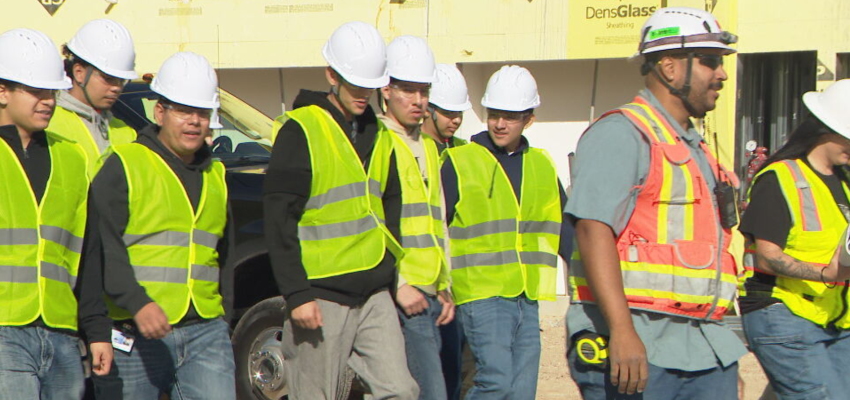
Recently, an inspiring event in Nevada perfectly encapsulated this forward-thinking approach. The Nevada State Contractors Board’s Commission on Construction Education hosted its inaugural "In the Field Trip," inviting over 100 students from Southeast Career Technical Academy (SECTA) to dive deep into the diverse world of construction. This was more than just a site visit; it was an immersive experience designed to demystify an industry often misunderstood, revealing the vast opportunities and technological sophistication that define modern construction. It served as a powerful reminder that while AI develops algorithms, human ingenuity and skilled hands continue to lay the groundwork for our physical world. Such proactive engagement is vital, ensuring that bright, young minds can envision a future where their talents can be applied to tangible, impactful projects, contributing directly to the infrastructure and communities of tomorrow.
Construction Career Exploration: Building Tomorrow’s Workforce
The "In the Field Trip" organized by the Nevada State Contractors Board’s Commission on Construction Education was a landmark event for more than 100 students, primarily from Southeast Career Technical Academy. These young, eager minds were not merely passive observers; they were active participants, engaging directly with professionals and gaining firsthand insight into the myriad roles available within the construction sector. From project management and civil engineering to specialized trades like electrical work, plumbing, and heavy equipment operation, the students were exposed to a spectrum of possibilities that extend far beyond the typical job site imagery often portrayed in media. Such direct exposure is invaluable for effective construction career exploration, allowing students to connect classroom learning with real-world applications and professional environments.
The timing of this initiative couldn’t be more critical. The construction industry faces a significant and persistent labor shortage across the United States. According to the Associated General Contractors of America (AGC), approximately 80% of construction firms reported difficulty finding qualified workers in 2023. This isn’t just a challenge for contractors; it poses a substantial risk to economic growth and infrastructure development. The U.S. Bureau of Labor Statistics projects a steady demand for construction managers, electricians, plumbers, and carpenters over the next decade. These are not merely ‘jobs’; they are vital roles that underpin our societal progress, from residential housing to commercial complexes, and critical infrastructure like roads, bridges, and renewable energy facilities. Addressing this shortage requires a multi-faceted approach, and direct educational outreach, like this field trip, plays a pivotal role in sparking interest and guiding students towards rewarding pathways.
Furthermore, the demographics of the existing construction workforce reveal an aging population, with a significant portion nearing retirement. This creates an urgent need for a robust influx of new talent to ensure continuity and innovation. Programs designed for comprehensive construction career exploration are therefore essential not only for students but for the long-term health and sustainability of the entire industry. By introducing students to the dynamic, technology-infused reality of modern construction, these initiatives challenge outdated perceptions and showcase an industry ripe with opportunity for growth, creativity, and significant societal impact. They help students understand that a career in construction isn’t just about physical labor, but also involves problem-solving, teamwork, and the application of cutting-edge technology.
Beyond the Blueprint: Technology’s Role in Modern Construction
My passion for AI often leads me to explore how technology can enhance and transform traditional sectors, and construction is a prime example. The industry is rapidly shedding its "old-school" image, embracing a wave of digital tools and automation that are revolutionizing everything from design and planning to execution and maintenance. This technological renaissance means that students considering construction career exploration today are looking at a fundamentally different landscape than previous generations. They are entering a field where digital fluency is increasingly as important as hands-on skill.
Consider Building Information Modeling (BIM), a sophisticated process that creates and manages information for a construction project across its lifecycle. BIM is far more than just 3D modeling; it integrates data on cost, scheduling, energy performance, and facility management, allowing for better collaboration, fewer errors, and more efficient project delivery. Professionals skilled in BIM software and data analysis are highly sought after. Similarly, the rise of modular construction and prefabrication is streamlining processes, reducing waste, and improving safety by moving significant portions of building off-site to controlled factory environments. This demands expertise in logistics, quality control, and advanced manufacturing techniques.
Robotics and automation are also making their mark, particularly in repetitive or hazardous tasks. From bricklaying robots that work with unparalleled precision to autonomous excavators and drones for site surveying and inspection, technology is enhancing safety and efficiency. Drones, equipped with high-resolution cameras and LiDAR, can map entire construction sites in minutes, providing invaluable data for planning and progress tracking. This creates new career avenues for drone operators and data analysts who can interpret aerial imagery and create detailed 3D models.
And then there’s Artificial Intelligence. AI and Machine Learning are beginning to optimize project schedules, predict potential delays, and even enhance safety protocols by analyzing vast datasets of project performance and incident reports. Predictive analytics can help allocate resources more efficiently, identify potential supply chain issues before they arise, and even guide optimal building designs for energy efficiency. Imagine an AI assistant that can review blueprints for compliance or suggest the most cost-effective materials based on real-time market data. Furthermore, the Internet of Things (IoT) is turning construction sites into "smart" environments, with sensors tracking equipment utilization, material levels, and worker safety, all feeding into AI-powered dashboards for real-time decision-making. Augmented Reality (AR) and Virtual Reality (VR) are also transforming training, allowing workers to practice complex procedures in a safe, simulated environment, and enabling project managers to visualize designs in a real-world context before construction even begins. These technologies aren’t just futuristic concepts; they are becoming standard tools, underscoring why strong technical skills are now integral to any meaningful construction career exploration.
Pathways to Success: Education and Industry Collaboration
The evolving nature of the construction industry places a premium on robust educational frameworks and strong collaboration between academic institutions and industry stakeholders. Career Technical Education (CTE) programs, like those offered at Southeast Career Technical Academy, are absolutely vital. These programs move beyond theoretical instruction, providing students with hands-on training, practical skills, and often, industry-recognized certifications before they even graduate high school. This approach ensures that graduates are not only knowledgeable but also immediately employable, equipped with the competencies demanded by modern employers. When students have the opportunity for direct construction career exploration through such programs, they gain a tangible advantage, often leading to lucrative job offers or apprenticeships directly after graduation.
Apprenticeships, in particular, represent a gold standard for entering the skilled trades. They combine paid on-the-job training with classroom instruction, allowing individuals to earn a living while learning from experienced professionals. This model not only addresses the immediate labor demand but also fosters a culture of mentorship and continuous learning. Organizations like the Nevada State Contractors Board and various trade associations actively promote and facilitate these apprenticeships, understanding their crucial role in developing a highly skilled workforce. Furthermore, internships and mentorship programs provide invaluable real-world experience, helping students solidify their career interests and build professional networks.
From a societal perspective, investing in CTE and industry partnerships yields significant benefits. Graduates of these programs often enter the workforce with little to no student debt, quickly achieving financial independence and contributing to the economy. The wages in many skilled trades are competitive, often exceeding those available to some four-year degree holders, and offer clear pathways for advancement into supervisory roles, project management, or even entrepreneurship. This creates a powerful alternative narrative to the traditional four-year college path, emphasizing diverse routes to professional fulfillment and economic stability. By actively promoting diverse and inclusive participation in construction, we can also tap into a broader talent pool, bringing fresh perspectives and ideas to an industry that greatly benefits from varied backgrounds.
Ultimately, the success of future construction projects, whether they involve smart cities, sustainable infrastructure, or technologically advanced buildings, hinges on our ability to attract and train a new generation of professionals who are equally adept with a wrench and a data dashboard. This requires ongoing commitment from government bodies, educational institutions, and private industry to continuously adapt curricula, provide state-of-the-art training facilities, and create accessible avenues for comprehensive construction career exploration. Events like the "In the Field Trip" are more than just excursions; they are pivotal investments in the human capital that will literally construct our future.
The inaugural "In the Field Trip" spearheaded by the Nevada State Contractors Board’s Commission on Construction Education is a shining example of how targeted initiatives can inspire and inform. By offering a direct, immersive experience to over 100 career tech students, it has undoubtedly broadened horizons and planted seeds of interest in a vital industry. It underscores the profound importance of bridging the perceived gap between academic learning and practical application, especially in fields where hands-on skill and technological savvy are increasingly intertwined. As an AI specialist, I find immense value in seeing how traditional industries are embracing innovation, creating diverse and rewarding career paths for the digital age.
The future of construction is not just about erecting buildings; it’s about building sustainable communities, integrating smart technologies, and creating resilient infrastructure. This future demands a workforce that is well-trained, adaptable, and technologically fluent. Initiatives that promote thorough construction career exploration are therefore critical, not just for the individuals who find their calling, but for the economic health and progress of our societies. Let us continue to invest in these programs, fostering a new generation of builders who are prepared to innovate, lead, and construct the world of tomorrow, brick by digital brick, and beam by integrated circuit.










