

From the intricate click of LEGO bricks fitting together to the sophisticated hum of automated machinery, humanity has an innate drive to build, to connect, and to bring ideas into tangible existence. This fundamental human curiosity, often sparked in childhood, lays the groundwork for remarkable career paths that bridge imagination with practical application. In an era increasingly defined by artificial intelligence and automation, the journey from a youthful fascination with how things work to a professional career in advanced technology has never been more vital or exciting. As an AI specialist and enthusiast, I’ve seen firsthand how practical skills, honed through direct experience, are becoming indispensable.
Consider the story of a young individual, much like many who grew up disassembling and reassembling toys, driven by an insatiable desire to understand the mechanics behind everyday objects. This passion, when nurtured, can lead to groundbreaking contributions in fields that are at the very core of our technological future. Today, one such field, mechatronics, stands out as a beacon for those who wish to not only understand but actively shape the intelligent systems that power our world. It’s a discipline that seamlessly blends mechanical engineering, electronics, and computer science, creating the backbone for everything from advanced robotics to smart manufacturing systems. And for many, the most effective gateway into this dynamic profession is through a hands-on, immersive learning experience: the **mechatronics apprenticeship**.
This article delves into the transformative power of practical training, particularly focusing on how a **mechatronics apprenticeship** offers an unparalleled pathway to a rewarding and future-proof career. We’ll explore the essence of mechatronics, its undeniable synergy with artificial intelligence, and why learning by doing is more critical than ever in an rapidly evolving technological landscape.
Mechatronics Apprenticeship: Bridging the Gap Between Concept and Reality
At its heart, mechatronics is an interdisciplinary branch of engineering that combines mechanics, electronics, and computing to create intelligent systems. Think of a modern industrial robot arm: it has mechanical components for movement, electronic sensors and actuators to perceive and act, and a computer brain running software to control its actions and even learn from its environment. This synergy is what defines mechatronics, making it a pivotal field in the era of Industry 4.0 and beyond. Without professionals skilled in this domain, the seamless integration of AI into physical systems would be impossible.
Historically, engineering disciplines were siloed. Mechanical engineers designed the physical structures, electrical engineers handled power and circuitry, and software engineers wrote the code. Mechatronics breaks down these barriers, fostering professionals who possess a holistic understanding of how these components interact. This broad skillset is precisely what industries demand today, especially as they automate complex processes and integrate AI-driven intelligence into their operations. From autonomous vehicles and sophisticated medical devices to advanced manufacturing robots and smart home systems, mechatronics principles are at play everywhere.
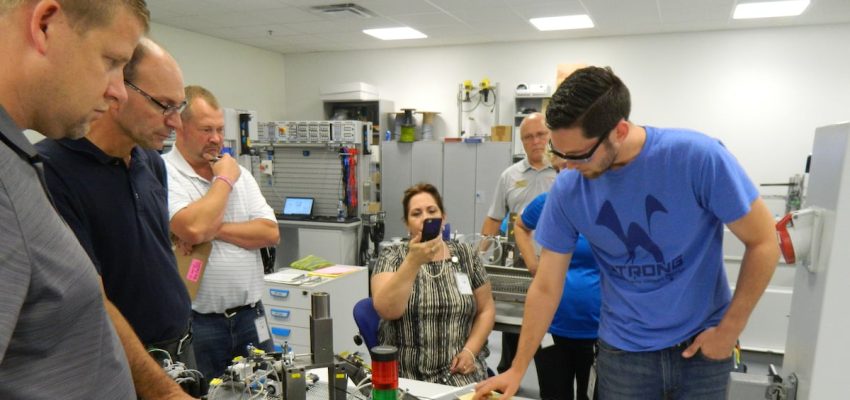
The traditional educational model, while invaluable for theoretical foundations, often falls short in providing the immediate, practical experience necessary for these complex, integrated systems. This is where an apprenticeship shines. A **mechatronics apprenticeship** offers a unique opportunity to learn directly on the job, under the guidance of experienced professionals. It’s an immersive model where theoretical knowledge gained in a classroom setting (often alongside the apprenticeship) is immediately applied in a real-world industrial environment. Apprentices learn to troubleshoot intricate machinery, program sophisticated robots, maintain critical electronic systems, and even contribute to the design of new automated solutions. This hands-on approach cultivates problem-solving skills that textbooks simply cannot replicate.
The demand for skilled mechatronics technicians and engineers is skyrocketing. According to a report by the National Association of Manufacturers, the skills gap in manufacturing could result in 2.1 million unfilled jobs by 2030, with a significant portion being in advanced manufacturing and automation. This gap highlights the urgent need for pathways like the **mechatronics apprenticeship** that can quickly and effectively train a new generation of professionals. These apprenticeships are not just about learning a trade; they are about preparing individuals to be innovators and integrators in a world increasingly powered by smart technology.
The Evolving Landscape of Tech Careers: Why Hands-On Learning Matters More Than Ever
The job market is in constant flux, but the pace of change has accelerated dramatically with the advent of advanced AI. While some fear AI replacing human jobs, the reality is more nuanced: AI is transforming jobs, creating new roles, and elevating the need for uniquely human skills. For those in tech, particularly in fields that interact with the physical world, the ability to work with and adapt alongside intelligent machines is paramount. This makes practical, hands-on learning through apprenticeships incredibly valuable.
An apprenticeship provides a distinct advantage by embedding individuals directly within the operational fabric of a company. Unlike a purely academic path, an apprentice gains immediate exposure to real-world challenges, deadlines, and team dynamics. They learn not just *what* to do, but *how* to adapt when things don’t go according to plan – a crucial skill in complex mechatronic systems that often require iterative refinement and rapid troubleshooting. This direct exposure also fosters a deep understanding of industry best practices, safety protocols, and the economic realities of production. It’s an education that comes with a paycheck, mitigating the burden of student debt that often accompanies traditional higher education.
Moreover, the skills acquired in a **mechatronics apprenticeship** are highly transferable and future-proof. While specific technologies may evolve, the foundational understanding of mechanical systems, electronic circuits, programming logic, and control theory remains relevant. Apprentices learn to think systematically, diagnose complex issues, and implement solutions that integrate hardware and software. These are precisely the skills needed to design, implement, and maintain the intelligent factories, robotic systems, and autonomous devices that AI will increasingly power. The apprenticeship model effectively closes the gap between theoretical knowledge and practical application, ensuring that graduates are job-ready from day one.
Consider the impact on employers: by investing in apprenticeships, companies can cultivate a pipeline of highly skilled, loyal employees who are specifically trained to meet their unique operational needs. This reduces recruitment costs, increases retention rates, and ensures that the workforce remains at the cutting edge of technological advancements. It’s a win-win scenario: individuals gain invaluable experience and a clear career path, while businesses secure the talent they need to remain competitive in a rapidly automating world. The resurgence of apprenticeships across various tech sectors, from cybersecurity to AI development, underscores a growing recognition that practical, experiential learning is an indispensable component of modern workforce development.
Beyond the Build: Shaping the Future with AI and Automation
The journey from a childhood fascination with building to a professional career in mechatronics is more than just about fixing machines; it’s about actively shaping the future. Mechatronics professionals, especially those with hands-on experience gained from a robust **mechatronics apprenticeship**, are at the forefront of implementing AI and automation in ways that improve efficiency, safety, and productivity across countless industries. They are the architects of intelligent systems, translating complex AI algorithms into physical actions and tangible results.
Imagine the advanced manufacturing floors where collaborative robots (cobots) work alongside human operators, increasing precision and output without replacing jobs but rather enhancing them. These cobots are products of mechatronic design, controlled by sophisticated AI that allows them to learn tasks, adapt to environmental changes, and even anticipate human movements. Or consider the intricate systems behind smart cities, where sensors, actuators, and control systems (all mechatronic components) gather data that AI then analyzes to optimize traffic flow, manage energy consumption, and improve public safety. These innovations are not theoretical; they are being built and maintained by individuals who possess a deep, practical understanding of integrated systems.
The ethical considerations surrounding AI and automation also underscore the importance of skilled human oversight. As AI systems become more autonomous, the role of mechatronics professionals in ensuring their safe, reliable, and ethical operation becomes paramount. They are the ones who can identify potential failure points, debug complex code interacting with hardware, and implement safeguards that prevent unintended consequences. Their ability to bridge the digital and physical worlds makes them indispensable guardians of our automated future.
For those embarking on this path, the learning never stops. The world of AI and automation is dynamic, constantly evolving with new algorithms, sensors, and materials. A strong foundation from a **mechatronics apprenticeship** instills not just specific skills but also a mindset of continuous learning and adaptability. It prepares individuals to embrace new challenges, experiment with emerging technologies, and contribute to the next wave of innovation. From designing advanced prosthetics that restore functionality to individuals, to developing drone systems for infrastructure inspection, the impact of mechatronics professionals is profound and far-reaching.
In conclusion, the path from a childhood passion for building to a fulfilling career in mechatronics represents a powerful testament to the value of hands-on learning. In an age where artificial intelligence is rapidly redefining industries and creating unprecedented opportunities, the practical, integrated skillset fostered by a **mechatronics apprenticeship** is not just beneficial; it is essential. These programs cultivate a generation of problem-solvers, innovators, and integrators who are uniquely equipped to navigate the complexities of modern technology.
As we look to the future, the demand for professionals who can bridge the gap between digital intelligence and physical reality will only grow. For aspiring engineers, technicians, and anyone with a curious mind and a desire to build, an apprenticeship in mechatronics offers a tangible, impactful, and rewarding route to a career that is truly shaping tomorrow. It’s about empowering individuals to do more than just operate technology; it’s about enabling them to design, create, and master the intelligent systems that will define our world for decades to come.










