
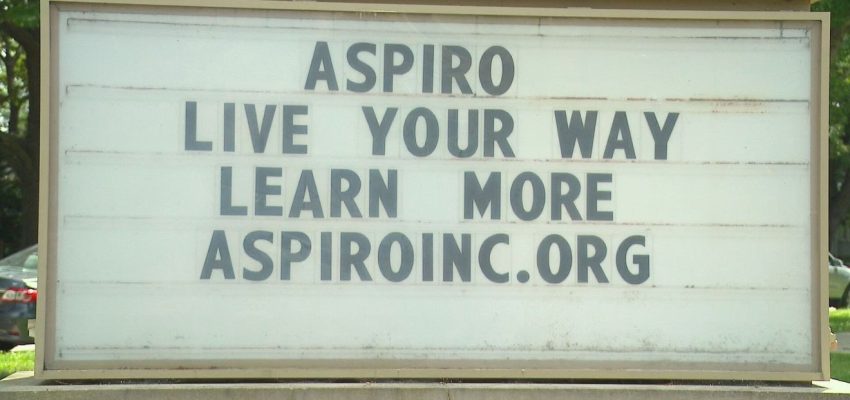

In a world increasingly shaped by technological advancements, the human element remains paramount. News of the Aspiro career placement program, a decades-old initiative dedicated to helping adults with disabilities enter the workforce, having its funding restored, serves as a powerful reminder of this fundamental truth. It’s a testament to the enduring value of human potential and the critical importance of creating equitable opportunities for all members of our community. This restoration isn’t just about a program; it’s about reaffirming a commitment to inclusion, diversity, and the belief that every individual has valuable contributions to make.
As an AI specialist and enthusiast, I see such initiatives not just through a lens of social responsibility, but also as vital components in building a resilient, adaptable, and truly intelligent society. While discussions around artificial intelligence often gravitate towards automation and the future of jobs, it’s equally crucial to explore how AI can become an unparalleled ally in amplifying human capabilities, particularly for those who have historically faced barriers to employment. The convergence of compassionate human support and cutting-edge technology holds the key to unlocking unprecedented levels of inclusion and economic participation. Aspiro’s renewed vitality offers a compelling springboard for examining how we can collectively leverage innovation to ensure that the march of progress leaves no one behind.
AI in Workforce Development: A Catalyst for Inclusion
The Aspiro program, with its rich history of supporting adults with disabilities in Green Bay, Wisconsin, stands as a beacon of dedicated service. Its mission—to empower individuals through career placement and sustained support—is more relevant than ever in our rapidly evolving economic landscape. The recent restoration of its funding is a moment to celebrate, ensuring that a critical resource for skill-building, job matching, and ongoing career coaching continues to operate. This program understands that meaningful employment transcends a simple paycheck; it fosters independence, self-worth, and a deeper connection to the community. But what role, one might ask, does artificial intelligence play in a program centered on human guidance and personalized support?
The answer lies in AI’s capacity to personalize, predict, and augment. When we talk about **AI in workforce development**, we’re discussing how intelligent systems can complement human efforts, making them more efficient, more targeted, and ultimately, more effective. Consider the process of identifying suitable career paths. AI-powered analytics can process vast amounts of data on job market trends, individual skill sets, and specific disability accommodations more rapidly and comprehensively than human analysis alone. This isn’t about replacing career counselors but providing them with advanced tools to make more informed recommendations, tailored to each individual’s unique strengths and aspirations. For instance, an AI system could analyze a candidate’s existing skills, learning style, and stated preferences, then cross-reference these with available job openings, predicting roles where they are most likely to thrive, not just get hired. This precision can be a game-changer for individuals who might otherwise be overlooked or misdirected in traditional job searches.
Furthermore, AI offers transformative potential in the realm of personalized training and skill acquisition. Adaptive learning platforms, powered by machine learning, can adjust curriculum difficulty and presentation style in real-time, catering to diverse learning paces and cognitive styles. For an adult with a learning disability, this could mean an educational experience that perfectly recalibrates to their needs, minimizing frustration and maximizing retention. Imagine virtual reality or augmented reality simulations, guided by AI, that allow individuals to practice job skills in a safe, controlled environment, building confidence before entering a real-world workplace. These tools can simulate various work scenarios, providing immediate feedback and allowing for repeated practice until mastery is achieved. This level of personalized, immersive training was unimaginable just a few decades ago, but it’s quickly becoming an accessible reality, thanks to advancements in artificial intelligence. By integrating such technologies, programs like Aspiro can extend their reach and deepen their impact, preparing individuals not just for existing jobs, but for the dynamic roles of the future.
Redefining Potential: AI’s Role in Adaptive Learning and Support
Beyond initial placement and training, the power of **AI in workforce development** extends to ongoing support and accessibility. One of the most significant contributions of AI is in the development of assistive technologies that dismantle barriers to employment. From advanced speech-to-text software that allows individuals with motor impairments to dictate documents, to predictive text algorithms that speed up communication for those with limited dexterity, AI is creating more inclusive digital and physical workspaces. Consider AI-powered screen readers that intelligently interpret complex web layouts or smart captioning services that provide real-time, highly accurate transcripts for virtual meetings. These are not merely conveniences; they are fundamental tools that enable individuals with disabilities to participate fully and independently in the modern workplace.
The application of intelligent systems also offers promising avenues for early intervention and support. AI-powered diagnostic tools can help identify specific learning preferences or potential workplace challenges, allowing career coaches to proactively implement strategies and accommodations. Predictive analytics, for instance, could flag an individual who might benefit from additional mentoring or a slight adjustment to their work environment before minor difficulties escalate into significant hurdles. This proactive approach, fueled by data-driven insights, ensures that support is not just reactive but preventive, fostering greater job retention and long-term career success. Companies like Microsoft, through their AI for Accessibility program, are already investing heavily in such solutions, recognizing the vast untapped potential of diverse talent pools.
However, the integration of AI must be approached with careful consideration of ethical implications. Bias in AI algorithms, often stemming from biased training data, is a well-documented concern. If an AI system is trained primarily on data from a non-disabled population, it might inadvertently develop biases that disadvantage or misrepresent individuals with disabilities. Ensuring that AI is a force for good means prioritizing diverse datasets, implementing robust ethical review processes, and constantly auditing algorithmic outcomes to prevent the perpetuation or amplification of existing inequalities. The goal must always be augmented human capability, not automated discrimination. Collaborations between organizations like Aspiro and AI developers are crucial here, providing real-world insights to ensure that AI solutions are truly inclusive, equitable, and designed with human dignity at their core.
The Future of Work: A Collaborative Human-AI Ecosystem
The global job market is undergoing a profound transformation, with artificial intelligence serving as a primary driver. While headlines often sensationalize job displacement, a more nuanced understanding reveals that AI is fundamentally reshaping job roles, creating new categories of employment, and augmenting existing ones. The skills most valued in this emerging landscape are often those that AI cannot easily replicate: creativity, critical thinking, emotional intelligence, complex problem-solving, and adaptability. These are precisely the kinds of holistic skills that comprehensive workforce development programs like Aspiro cultivate, alongside specific vocational training.
The long-term vision for a truly inclusive economy is one where technology serves to uplift all members of society, ensuring no one is left behind. This is where the concept of “augmented intelligence” shines brightest. Instead of AI replacing humans, it works alongside them, enhancing their capabilities and allowing them to focus on tasks that require uniquely human attributes. For an individual with a disability, this might mean an AI assistant handling repetitive data entry, freeing them to engage in more strategic or creative aspects of their role. It could be an AI-powered co-pilot for someone navigating complex project management, ensuring accuracy and efficiency.
Realizing this future requires more than just technological innovation; it demands robust public-private partnerships, continuous investment in education and reskilling initiatives, and the establishment of clear ethical guidelines for AI’s deployment in employment contexts. Organizations dedicated to human development, like Aspiro, become even more critical in this paradigm. They are the frontline responders, providing the human touch, the nuanced understanding of individual needs, and the community integration that no algorithm alone can replicate. Their work ensures that as technology advances, the focus remains firmly on human flourishing.
The synergy between programs that champion human potential and the intelligent tools offered by AI creates a powerful ecosystem. It’s a system where every talent is recognized, every barrier is challenged, and every individual has the opportunity to contribute meaningfully to society. As we look ahead, the imperative is clear: we must harness the transformative power of AI not just for efficiency or profit, but as a force for unparalleled inclusion and empowerment, ensuring that the future of work is a future for everyone.
The restoration of funding for the Aspiro program is more than just good news; it’s a vital affirmation of our collective commitment to an inclusive workforce. It underscores the foundational importance of human-centric programs that provide tailored support, skill development, and career placement for adults with disabilities. Such initiatives are the bedrock upon which a truly equitable society is built, ensuring that every individual has the opportunity to achieve their full professional potential and contribute their unique talents to the world.
As we navigate the complexities and opportunities of the AI era, it becomes increasingly clear that technology is not merely a tool for automation but a powerful lever for augmentation and inclusion. By thoughtfully integrating artificial intelligence into workforce development strategies, we can amplify the efforts of programs like Aspiro, personalizing training, enhancing accessibility, and creating more precise job matches. The challenge, and indeed the exciting opportunity, lies in leveraging AI ethically and strategically to build a future where human ingenuity, in all its diverse forms, is celebrated and empowered, paving the way for a collaborative human-AI ecosystem that benefits us all.










