In an era defined by accelerating technological change, where artificial intelligence routinely dominates headlines and reshapes industries at an unprecedented pace, it’s easy to focus solely on the digital frontier. Yet, amidst the excitement of algorithms and automation, the foundational pillars of our physical world—the infrastructure we rely on, the vehicles we drive, the buildings we inhabit—remain critically dependent on human skill, ingenuity, and a deep understanding of practical trades. It’s a testament to enduring human need and adaptability that while we ponder the future of AI, a parallel, equally vital transformation is unfolding in our communities: the resurgence and profound impact of adult education focused on tangible, hands-on expertise.
Recently, a compelling example of this enduring value emerged from the Franklin County Career & Technical Institute, which proudly celebrated the graduation of 37 adult students. These individuals, embarking on new career paths after completing intensive 12-week programs in building maintenance, electrical, automotive technology, and welding, represent more than just a statistic. They embody a powerful narrative of resilience, a commitment to lifelong learning, and the strategic pursuit of skills that are not only essential today but will continue to be indispensable in the complex, tech-integrated world of tomorrow. Their journey underscores a fundamental truth: while AI enhances many aspects of our lives, the human touch, problem-solving acumen, and specialized knowledge cultivated through hands-on education are irreplaceable components of a thriving society and a robust economy. This event isn’t just a local celebration; it’s a vital reminder of where true empowerment for the future often begins.
Vocational Training: A Foundation for Future-Proof Careers
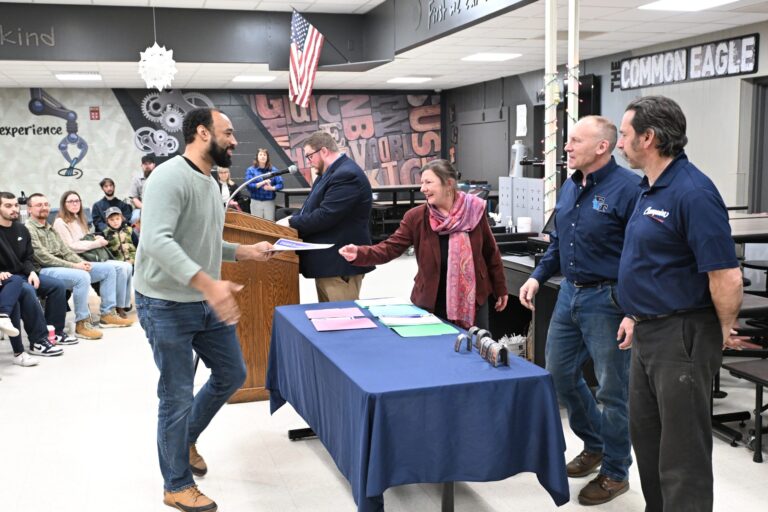
The 37 graduates from the Franklin County Career & Technical Institute are a powerful symbol of the proactive approach many adults are taking to navigate a dynamic job market. These individuals completed intensive 12-week programs designed to equip them with the precise, in-demand skills needed across critical sectors. The areas of study—building maintenance, electrical work, automotive technology, and welding—are far from static, ‘traditional’ trades; they are evolving fields constantly integrating new technologies and demanding a sophisticated blend of technical proficiency and adaptability. Many of these graduates were deservedly honored with awards, recognizing their exceptional hard work and dedication, a testament to the rigorous commitment required to master these complex skills.
Why are these programs particularly crucial now? The United States faces a significant and growing skilled trades gap. Data from organizations like the National Association of Home Builders (NAHB) consistently highlight chronic shortages in professions such as electricians, plumbers, and carpenters. This scarcity is exacerbated by an aging workforce, with many experienced tradespeople nearing retirement. As a result, the demand for newly trained professionals is soaring, creating substantial opportunities for those who choose a path in skilled trades. The economic implications are clear: these are not just jobs, but often highly lucrative careers with stable employment prospects and opportunities for entrepreneurship. Furthermore, these trades are intrinsically linked to modern living. Consider the rise of smart homes and sustainable building practices, which require electrical systems to be integrated with complex digital networks. Automotive technology is rapidly transitioning to electric vehicles and advanced driver-assistance systems (ADAS), necessitating entirely new skill sets for diagnosis and repair. Even welding, a craft centuries old, now employs robotic systems and advanced materials that demand specialized knowledge beyond traditional techniques. The future of these professions is not one of obsolescence, but of evolution and integration, where foundational skills are augmented by technological literacy. This makes **vocational training** a smart, strategic investment for individuals looking to secure their economic future.
The Transformative Power of Hands-On Learning and Lifelong Skill Acquisition
The core strength of **vocational training** lies in its emphasis on practical, hands-on learning. Unlike purely academic pathways, these programs are meticulously designed to simulate real-world working environments, allowing students to develop mastery through direct application. This pedagogical approach fosters a unique kind of critical thinking—one that translates theoretical knowledge into tangible solutions. When an electrical student wires a circuit, or an automotive technician diagnoses an engine issue, they are not just memorizing facts; they are developing problem-solving muscles, refining their spatial reasoning, and honing their dexterity. These are cognitive and motor skills that are inherently human and incredibly difficult for even advanced AI systems to replicate, especially in unpredictable, dynamic physical environments.
The 12-week duration of these programs at institutions like Franklin County Career & Technical Institute speaks volumes about their efficiency and immediate impact. They are intensive, focused, and designed for rapid skill acquisition, enabling adult learners to transition quickly into new careers or upgrade existing ones. This rapid pathway is often a compelling factor for adults seeking career pivots, re-entry into the workforce, or simply a more direct route to economic stability without the extended commitment of a four-year degree. The benefits extend beyond immediate employability; vocational careers often lead to higher job satisfaction due to the tangible nature of the work, the clear impact one has, and the continuous learning involved as technology advances. For instance, a skilled welder might work on anything from delicate medical instruments to massive infrastructure projects, constantly challenged by new materials and techniques. An expert in building maintenance today must be adept not only at plumbing and carpentry but also at understanding energy management systems and smart climate controls. These are careers that reward continuous learning and adaptation, ensuring professionals remain relevant and valuable throughout their working lives. The true power of this education lies in its capacity to cultivate not just skills, but also resilience and a proactive mindset toward lifelong learning, which are universally prized attributes in any future job market.
Crafting Resilience: How Adult Education Shapes a Dynamic Future
The graduation ceremony at Franklin County Career & Technical Institute is more than a local event; it’s a powerful microcosm of how adult education acts as a critical engine for individual and societal resilience. Each of the 37 graduates represents a unique story of determination—perhaps a career change motivated by shifting economic landscapes, a desire for greater job security, or the pursuit of a long-held passion for working with their hands. These individuals, by choosing to invest in themselves through rigorous practical training, are actively crafting their own resilience in the face of uncertainty. They are demonstrating the human capacity to adapt, to learn new competencies, and to pivot when circumstances demand it. This dedication and commitment are qualities that transcend specific technical skills and are invaluable in any aspect of life.
From a broader perspective, a robust ecosystem of adult education and **vocational training** is indispensable for the health of local and national economies. A skilled workforce drives innovation, supports essential infrastructure, and ensures that communities can adapt to emerging needs. Consider the impact of these graduates: new electricians contribute to sustainable energy solutions, automotive technicians keep our transportation systems running, and welders build the foundations of new industries. In a world increasingly interconnected and influenced by AI, the demand for human expertise in building, maintaining, and troubleshooting the physical world becomes even more pronounced. AI may optimize designs, automate routine tasks, and provide predictive analytics, but it still requires skilled human operators and technicians to implement, repair, and innovate. The symbiotic relationship between advanced technology and highly skilled tradespeople is critical. Therefore, investing in accessible, high-quality adult education programs is not merely a social good; it is a strategic imperative for governments, industries, and educational institutions alike. It’s about empowering individuals to thrive and ensuring that our societies possess the collective human capital to build a dynamic, prosperous, and adaptable future.
The celebratory graduation at the Franklin County Career & Technical Institute, honoring 37 dedicated adult students, serves as a poignant reminder of the enduring and increasingly vital role of practical, hands-on education. In a world captivated by the dizzying pace of AI and digital transformation, these graduates exemplify the fundamental truth that human skill, adaptability, and the mastery of tangible trades remain indispensable. Their journeys through intensive 12-week programs in areas like building maintenance, electrical, automotive technology, and welding are not just personal victories; they are collective affirmations of the power of **vocational training** to build resilient careers and robust communities. It underscores that while technology will continue to evolve, the foundational need for expert human hands and minds to build, maintain, and innovate in the physical world will persist, creating a powerful synergy between human ingenuity and technological advancement.
As we look ahead, it becomes clear that fostering and celebrating such pathways to skill acquisition is more important than ever. The commitment shown by these graduates—who received awards for their hard work and dedication—is a beacon for others seeking to navigate career changes or enhance their expertise. It is a call to action for continued investment in accessible adult education, ensuring that everyone has the opportunity to acquire the practical skills that empower them to thrive. The future workforce will be one that seamlessly integrates cutting-edge technology with profound human expertise, and it is through institutions like Franklin Tech that we are actively cultivating the versatile, skilled professionals who will undoubtedly shape that future, one career, one innovation, and one repaired system at a time.