
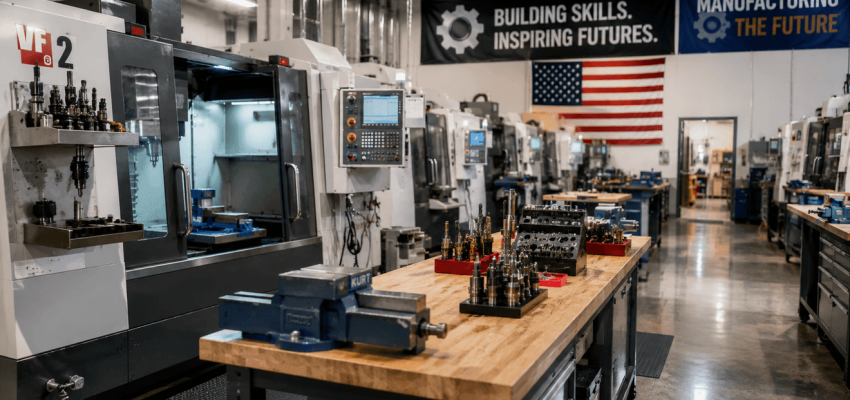

The industrial landscape is undergoing a profound transformation, driven by innovation, automation, and artificial intelligence. What was once perceived as a traditional, labor-intensive sector is rapidly evolving into a high-tech frontier, demanding a new breed of skilled professionals. In this exciting shift, targeted investments in education are proving to be absolutely critical. Recently, a significant announcement highlighted this very trend: local schools are set to receive nearly $1 million in state grants, a strategic move designed to bolster manufacturing career-tech programs and prepare the workforce for the demands of tomorrow.
Ohio Governor Mike DeWine emphasized that this substantial investment arrives at a pivotal moment, as the state actively attracts manufacturing companies and generates new employment opportunities. This initiative is far more than just financial aid; it’s a forward-thinking commitment to economic development, workforce resilience, and technological advancement. As an AI specialist and tech enthusiast, I see this as a clear signal: the future of manufacturing isn’t just about machines, but about the intelligent hands and minds that design, operate, and innovate within them. These grants are not merely funding; they are igniting a new era of industrial prowess, ensuring that the talent pipeline remains robust and responsive to the industry’s ever-evolving needs, especially as AI becomes an integral part of every factory floor.
Manufacturing Career-Tech Programs: Paving the Way for Industry 4.0
The concept of manufacturing has shifted dramatically over the past few decades. Gone are the days when the factory floor was solely characterized by repetitive manual labor. Today, we are firmly in the era of Industry 4.0, where cyber-physical systems, the Internet of Things (IoT), cloud computing, and artificial intelligence are converging to create ‘smart factories.’ These advanced facilities leverage data in real-time to optimize production, predict maintenance needs, enhance quality control, and streamline supply chains. This technological leap, however, creates a noticeable skills gap.
Traditional vocational training, while foundational, often falls short in preparing individuals for roles that require proficiency in robotics, automation, data analytics, and industrial AI. This is precisely where modern manufacturing career-tech programs step in. These initiatives are designed to equip students with the specialized knowledge and hands-on experience required to thrive in an automated and data-driven environment. They move beyond basic machinery operation to encompass complex systems integration, digital fabrication, and understanding sophisticated software interfaces.
Consider the scope: students enrolled in these programs might learn to program collaborative robots (cobots) that work alongside human operators, master additive manufacturing techniques like 3D printing for rapid prototyping and custom parts, or delve into the principles of predictive analytics to anticipate equipment failures before they occur. Cybersecurity, often overlooked in industrial settings, is also a crucial component, as interconnected systems become vulnerable to digital threats. By focusing on these high-demand areas, these programs are not just teaching trades; they are cultivating a new generation of tech-savvy industrial professionals.
The nearly $1 million in state grants signifies a profound recognition of this evolving landscape. It empowers local schools to invest in cutting-edge equipment, develop relevant curricula, and train educators who can impart these advanced skills effectively. This investment directly addresses the pressing need for a workforce capable of navigating complex automated systems and leveraging artificial intelligence to drive efficiency and innovation. For students, these programs offer clear pathways to high-wage, in-demand careers that are intellectually stimulating and offer significant growth potential. For businesses, access to this skilled talent pool is a major draw, influencing decisions on where to locate new facilities and expand operations. It’s a virtuous cycle: investment in education leads to a skilled workforce, which attracts companies, which in turn creates more jobs and further fuels economic growth.
Bridging Education and Industry: A Collaborative Ecosystem
The success of contemporary manufacturing career-tech programs hinges on a strong, collaborative ecosystem involving educational institutions, local industries, and government bodies. It’s no longer sufficient for schools to operate in isolation; they must form robust partnerships with companies that can provide real-world insights, internship opportunities, and even donate equipment that mirrors what students will encounter in their future workplaces. This collaborative approach ensures that the curriculum remains highly relevant and responsive to the dynamic needs of the manufacturing sector.
For instance, an advanced manufacturing facility might partner with a local career-tech center to help design a course module on industrial automation, providing guest lecturers who are experts in robotics or sensor technology. Students might then engage in apprenticeships, spending time on the factory floor applying their classroom knowledge to actual production challenges, learning everything from advanced CNC machining to the intricacies of industrial control systems. These experiences are invaluable, offering practical skills and professional networking opportunities that accelerate career readiness. This symbiotic relationship not only benefits the students by providing them with practical experience but also offers companies a direct pipeline to highly qualified candidates who are already familiar with their operations and culture.
Government initiatives, like the grants mentioned by Governor DeWine, act as the crucial catalyst for these partnerships. By providing financial incentives, states encourage schools to update their infrastructure and program offerings, making them more attractive to both students and industry partners. This strategic funding often covers the costs of specialized machinery, software licenses for design and simulation tools, and professional development for instructors who need to stay abreast of the latest technological advancements, particularly in areas like AI and data science in manufacturing. Without this initial investment, many educational institutions would struggle to keep pace with the rapid technological evolution seen in the modern industrial sector.
From an AI specialist’s perspective, this collaboration is essential for integrating artificial intelligence effectively into the manufacturing workflow. It’s not just about teaching students how to use AI tools, but also how to think critically about data, optimize processes, and troubleshoot intelligent systems. This requires a deep understanding of both theoretical concepts and practical applications, often best learned through real-world projects guided by industry mentors. These partnerships are instrumental in ensuring that the next generation of manufacturing professionals is not just ‘tech-aware’ but ‘AI-fluent,’ ready to contribute to smart factories from day one.
Future-Proofing Careers in a Smart Manufacturing Landscape
The rapid evolution of manufacturing, particularly with the pervasive integration of AI and automation, raises questions about job security and the future of work. However, rather than diminishing opportunities, these advancements are fundamentally transforming them, creating new roles and demanding a more sophisticated skill set. The investment in manufacturing career-tech programs is a deliberate strategy to future-proof careers, ensuring that individuals possess the adaptability and expertise to thrive in this dynamic environment.
The jobs of tomorrow in manufacturing will often combine technical prowess with cognitive skills. For instance, while robots handle repetitive tasks, humans will be needed to design, program, maintain, and supervise these robots. Data scientists will analyze the vast amounts of information generated by smart factories to identify inefficiencies and opportunities for improvement. AI engineers will develop and deploy machine learning models for predictive maintenance, quality control, and even new product design. The focus shifts from brute force to brainpower, from manual labor to analytical and creative problem-solving.
Consider the diverse career paths opening up:
- Robotics Technicians: Installing, programming, and troubleshooting industrial robots and cobots.
- Additive Manufacturing Specialists: Designing and operating 3D printers for complex parts.
- Industrial Data Scientists: Analyzing factory data to optimize production, quality, and supply chains.
- AI Integration Engineers: Implementing and managing AI solutions for various manufacturing processes.
- Automation Engineers: Designing and maintaining automated systems.
- Cybersecurity Analysts: Protecting industrial control systems from digital threats.
- Predictive Maintenance Technicians: Using data and AI to forecast equipment failures and schedule preventive actions.
These roles require continuous learning and a proactive approach to skill acquisition. The best manufacturing career-tech programs instill not just specific skills but also a mindset of lifelong learning, preparing students for an evolving technological landscape.
Moreover, these modern manufacturing jobs often come with attractive compensation and benefits, challenging outdated perceptions of factory work. They offer intellectually engaging tasks, opportunities for innovation, and a chance to work at the forefront of technological advancement. By highlighting these opportunities and providing accessible pathways to acquire the necessary skills, states like Ohio are not only attracting new industries but also cultivating a vibrant, resilient workforce that can adapt to future technological shifts and maintain a competitive edge in the global economy. This proactive investment in human capital is arguably the most critical component in ensuring long-term prosperity and innovation in the age of intelligent manufacturing.
The nearly $1 million in state grants for manufacturing career-tech programs represents a vital investment in the future, signaling a clear understanding that economic growth and job creation are intrinsically linked to a skilled, adaptable workforce. As we stand at the precipice of a new industrial era, driven by artificial intelligence and advanced automation, the commitment to modernizing vocational education is not just beneficial; it is essential.
This strategic funding empowers local schools to be at the forefront of innovation, ensuring that students are not merely observers of technological change but active participants and creators within it. By fostering collaboration between educators, industry, and government, these initiatives are building a robust pipeline of talent capable of navigating the complexities of Industry 4.0 and beyond. The future of manufacturing is bright, smart, and increasingly human-centric, and with targeted investments like these, we are collectively forging a path toward sustained prosperity and a workforce ready for anything the future may hold.










