

The healthcare landscape is at a critical juncture. Across the globe, and particularly within vibrant regions like Arizona, communities are grappling with an escalating shortage of healthcare professionals. This isn’t merely a statistic; it’s a palpable challenge impacting patient access, quality of care, and the overall well-being of our societies. Amidst this pressing reality, innovative initiatives are emerging, not just to mitigate the immediate crisis but to proactively sculpt the architects of tomorrow’s medicine.
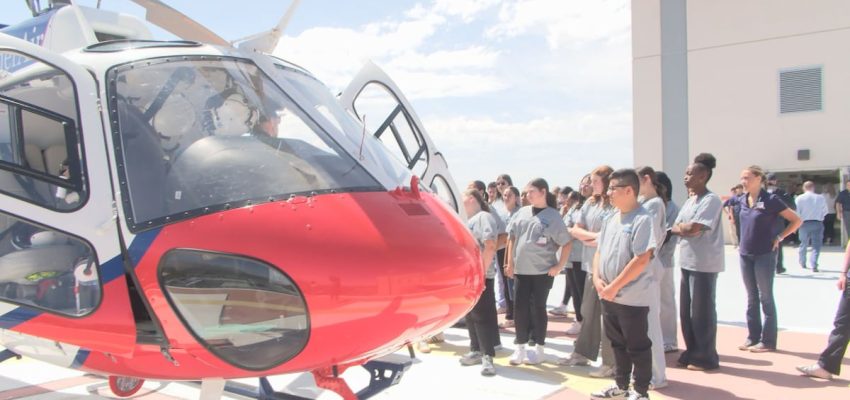
One such beacon of hope shines brightly in Tucson, Arizona, where a visionary summer camp, supported by Banner Health, is making significant strides. Far from being just another seasonal activity, this program is a deliberate investment in human potential, offering invaluable scholarships and unparalleled access to careers in medicine for aspiring young minds. As an AI specialist and fervent advocate for technology’s transformative power, I see these programs as more than just recruitment pipelines; they are crucibles where traditional medical wisdom meets the inevitable evolution driven by artificial intelligence, data science, and advanced robotics. They are, in essence, laboratories for crafting **future healthcare careers**.
### Future Healthcare Careers: Inspiring the Next Generation Amidst a Growing Shortage
The challenges facing the healthcare sector are multifaceted. According to projections from the Association of American Medical Colleges (AAMC), the U.S. could see a shortage of up to 124,000 physicians by 2034. This alarming figure encompasses primary care physicians and specialists alike, with rural and underserved urban areas bearing the brunt of this deficit. Arizona, a state experiencing rapid population growth and an aging demographic, is acutely feeling this pressure. Factors contributing to this scarcity include an aging workforce nearing retirement, burnout exacerbated by the recent pandemic, the increasing complexity of patient care, and a bottleneck in medical education and residency slots. This creates a critical imperative to not only retain current professionals but also to vigorously cultivate the next wave of talent.
This is precisely where programs like the Banner Health camp become indispensable. By reaching out to students at a formative age, these camps serve as powerful conduits, demystifying the often-intimidating world of medicine. For many participants, particularly those from underrepresented backgrounds or without direct family ties to the medical field, this exposure is transformative. Imagine a young student, perhaps previously unaware of the diverse specializations within medicine, suddenly finding themselves engaged in simulated surgeries, interacting with cutting-edge diagnostic equipment, or conversing directly with doctors, nurses, and allied health professionals. Such experiences ignite passion, clarify pathways, and provide the practical insights that textbooks alone cannot offer. Scholarships play a pivotal role here, dismantling financial barriers that might otherwise prevent talented, passionate students from even considering a medical path, ensuring that the **future healthcare careers** pipeline is as diverse and inclusive as the communities it serves.
The curriculum of such a camp extends beyond theoretical knowledge. It offers hands-on experiences that mimic real-world medical scenarios, fostering critical thinking, problem-solving skills, and an early understanding of teamwork crucial in clinical settings. Participants might learn basic first aid, practice suturing on models, or even observe medical procedures, all under expert guidance. This early immersion provides a distinct advantage, allowing students to gauge their interest, discover their aptitude, and gain a realistic perspective on the demands and rewards of various medical professions. It’s about planting the seeds of curiosity and nurturing them into lifelong commitments to healing and innovation.
### The Evolving Landscape of Medicine: Technology as a Catalyst for Change
As we look ahead, it’s impossible to discuss **future healthcare careers** without acknowledging the profound impact of technology, particularly artificial intelligence. AI is not merely an auxiliary tool; it is rapidly becoming an intrinsic part of modern medical practice, reshaping everything from diagnostics and treatment planning to patient management and administrative efficiency. For the next generation of medical professionals, understanding and leveraging these technologies will not be optional, but fundamental.
Consider the advancements in AI-powered diagnostics. Algorithms can now analyze medical images – X-rays, MRIs, CT scans – with remarkable speed and accuracy, often identifying subtle anomalies that might be missed by the human eye. This frees up radiologists and pathologists to focus on more complex cases, enhancing efficiency and improving early detection rates for diseases like cancer. Similarly, AI is revolutionizing personalized medicine, using vast datasets of genetic information, patient history, and real-world evidence to predict individual responses to treatments, allowing for highly tailored therapeutic strategies.
Robotics in surgery, for instance, already enables surgeons to perform intricate procedures with unparalleled precision and minimal invasiveness, leading to faster patient recovery times. Beyond the operating room, robotic assistants are being deployed in hospitals for tasks such as delivering medications, sterilizing rooms, and even assisting with patient mobility, thereby alleviating the workload on human staff. Telemedicine, once a niche application, became a lifeline during the pandemic and continues to expand, offering remote consultations, monitoring, and even remote-guided procedures, broadening access to care for geographical isolation. These technological shifts demand a new skill set for **future healthcare careers**.
Graduates entering medicine today must be digitally literate, adept at data analysis, and comfortable interacting with AI systems. They will need to understand how to interpret AI-generated insights, maintain data privacy and security, and apply ethical considerations to algorithmic decision-making. Programs that expose students early to these technological intersections, perhaps by incorporating modules on medical informatics or digital health tools, are therefore crucial. The Banner Health camp, by providing a glimpse into the cutting edge of medicine, implicitly prepares these young minds for a world where human expertise and artificial intelligence collaborate to deliver superior patient outcomes. It fosters a mindset of innovation and adaptability, qualities that will define the most successful medical practitioners of the future.
### Cultivating Resilience and Innovation: Beyond Clinical Skills
While technical proficiency and a grasp of emerging technologies are undoubtedly critical for **future healthcare careers**, the most effective medical professionals possess a broader range of attributes. The summer camp experience, with its intensive schedule and collaborative environment, inherently cultivates essential soft skills: resilience, critical thinking, problem-solving, and emotional intelligence. Medicine is a demanding field, requiring immense dedication and the ability to navigate high-pressure situations, emotional challenges, and constant learning. Programs that provide early exposure to these realities, while offering a supportive framework, help build the mental fortitude required for a long and impactful career.
The emphasis on scholarships, as offered by Banner Health, is another layer of strategic investment. It’s not just about providing financial aid; it’s about fostering diversity and inclusion within the medical community. A healthcare workforce that mirrors the diverse patient population it serves is better equipped to understand cultural nuances, communicate effectively, and address health disparities. By empowering students from varied socioeconomic backgrounds, these scholarships contribute to a richer, more empathetic, and ultimately more effective medical profession. They send a powerful message: talent and passion, not privilege, should dictate who shapes the future of healing. This focus on equity ensures that the brightest minds, regardless of their starting point, have the opportunity to contribute to **future healthcare careers**.
Moreover, the collaborative nature of such camps—where students from different schools and backgrounds come together to learn and interact—simulates the interdisciplinary teamwork inherent in modern healthcare. Doctors, nurses, therapists, technicians, and administrators must all work in concert to provide holistic patient care. Early experiences in collaborative learning instill the value of communication, mutual respect, and shared responsibility. These are the human elements that will always remain indispensable, even as AI handles more routine and analytical tasks. The ‘human touch’—empathy, compassion, and the ability to connect with patients on a profound level—will only become more valued in a technology-rich environment.
In essence, these camps are not just teaching medical facts; they are building character, fostering curiosity, and instilling a deep sense of purpose. They are creating an environment where young people can explore their potential, understand the gravity and grandeur of a career in medicine, and prepare themselves to be not just practitioners, but innovators and compassionate leaders in the evolving world of healthcare.
As we navigate the complexities of modern medicine and look toward the horizons shaped by technological breakthroughs, initiatives like the Banner Health summer camp stand out as vital blueprints for progress. They are testament to the belief that addressing systemic challenges requires proactive engagement and a profound investment in human capital. By inspiring, educating, and supporting the next generation, these programs are not merely filling vacancies; they are actively shaping the character, capability, and compassionate core of **future healthcare careers**.
The fusion of hands-on learning with an implicit understanding of technology’s role ensures that these young aspirants are not just prepared for the medicine of today, but for the dynamic, AI-augmented healthcare ecosystem of tomorrow. It is through such foresight and dedication that we can confidently anticipate a future where healthcare shortages are mitigated, innovation thrives, and the human element remains at the heart of healing, championed by a new generation of empowered and tech-savvy medical professionals.










