
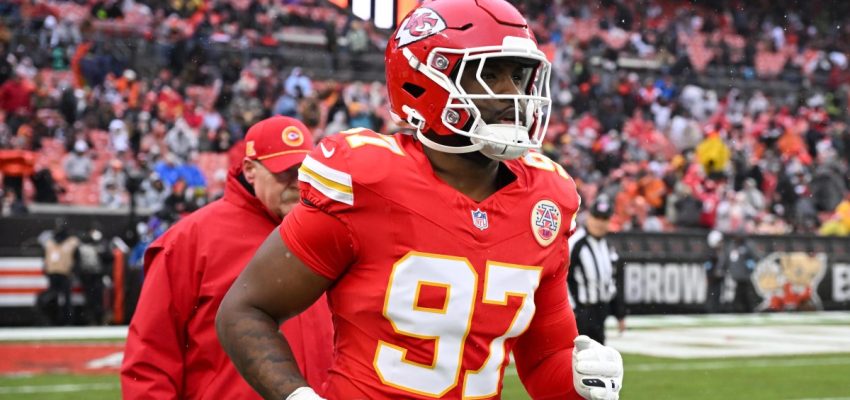

In the dynamic world of professional sports, where every season writes a new chapter in an athlete’s narrative, certain moments emerge as profoundly defining. For the Kansas City Chiefs, a franchise synonymous with recent gridiron dominance, the pursuit of continued excellence often hinges on the development of its young talent. As an AI specialist fascinated by patterns and potential, I find the intersection of human performance under pressure particularly compelling. This coming season, one player stands squarely in the spotlight, poised at a critical juncture where opportunity meets expectation: defensive end Felix Anudike-Uzomah. His journey from a promising first-round pick to a potentially foundational piece of a dynasty is far from guaranteed, and the weight of what lies ahead is immense. This isn’t merely about playing football; it’s about navigating the intricate web of personal ambition, team necessity, and the unforgiving microscope of the NFL. We delve into why this particular season holds such significant meaning, examining the confluence of factors that elevate Anudike-Uzomah’s career stakes to an unparalleled level.
### Anudike-Uzomah’s Career Stakes: A Deep Dive into the Defensive End’s Pivotal Season
When a player is selected in the first round of the NFL Draft, especially by a Super Bowl-contending team like the Kansas City Chiefs, the expectations are immediately astronomical. Felix Anudike-Uzomah, picked 31st overall in the 2023 Draft out of Kansas State, arrived in Kansas City with the promise of bolstering an already formidable defense. His rookie season, however, offered a mixed bag, a common trajectory for many young defensive linemen transitioning to the professional ranks. While flashes of his explosive talent and relentless motor were evident, consistent high-level production remained somewhat elusive. Now, entering his second year, the landscape around him has shifted, amplifying Anudike-Uzomah’s career stakes exponentially.
First, let’s consider the team’s perspective. The Chiefs have successfully built a defensive powerhouse under the guidance of Defensive Coordinator Steve Spagnuolo, known for his aggressive and flexible schemes. A cornerstone of this defense is a relentless pass rush that can disrupt opposing quarterbacks, minimizing the burden on the secondary. While George Karlaftis has emerged as a consistent threat, and veteran Charles Omenihu provides significant impact, the Chiefs thrive on a deep rotation of edge rushers. This depth ensures sustained pressure throughout a game and guards against fatigue and injuries. Anudike-Uzomah was drafted precisely to become a core component of this rotation, ultimately evolving into a dominant force. His ability to step up this season and consistently generate pressure will be vital for the Chiefs’ aspirations, particularly as they aim for an unprecedented third consecutive Super Bowl title. This isn’t just about personal statistics; it’s about contributing meaningfully to a dynasty-in-the-making.
From a financial standpoint, the stakes are equally high. As a first-round pick, Anudike-Uzomah is on a four-year rookie contract, with the Chiefs holding a fifth-year option. His performance in the coming seasons will directly influence whether that option is picked up, and more importantly, what his second contract, a potentially life-altering deal, will look like. Demonstrating significant growth and establishing himself as a reliable, productive starter in year two would not only solidify his position on the team but also lay the groundwork for a lucrative long-term future in the NFL. Conversely, another season of inconsistent play could raise questions about his draft capital and future with the organization, even if the Chiefs have a history of patience with developing talent.
Furthermore, the competition within the Chiefs’ locker room adds another layer of pressure. Defensive end is a position where depth is often king, and players are constantly vying for snaps. With the return of veterans and the potential emergence of new talent, Anudike-Uzomah must prove he deserves an increased role and significant playing time. This means excelling in training camp, performing well in the preseason, and translating that into consistent impact during the regular season. The opportunity is there for him to seize a more prominent role, but it won’t be handed to him. He must earn it, every single snap. This critical juncture for Anudike-Uzomah’s career stakes will test his resilience, adaptability, and unwavering commitment to his craft.
### From Collegiate Dominance to NFL Realities: Anudike-Uzomah’s Journey
Felix Anudike-Uzomah’s path to the NFL was paved with impressive collegiate success. At Kansas State, he was a disruptive force, culminating in a stellar 2022 season where he recorded 8.5 sacks and 11 tackles for loss. His explosive first step, natural bend around the edge, and high motor made him a tantalizing prospect. Scouts lauded his ability to convert speed to power and his relentless pursuit of the quarterback. He possessed all the physical tools and the relentless mentality that NFL defensive coordinators covet.
However, the leap from college football to the NFL is notoriously challenging, especially for defensive linemen. The offensive linemen are bigger, stronger, faster, and more technically refined. Schemes are more complex, and every opposing team fields elite talent. Anudike-Uzomah’s rookie year saw him primarily in a rotational role, registering 15 total tackles and 1.0 sack across 16 games. While a single sack might seem underwhelming for a first-round pick, it’s crucial to examine the context. He played a modest 27% of the Chiefs’ defensive snaps, totaling 286 snaps throughout the regular season, according to Pro Football Focus. This limited playing time, coupled with a learning curve that involves adapting to the speed of the game, mastering NFL-level techniques, and understanding complex defensive calls, meant his impact was often constrained.
Many defensive linemen, even highly touted first-rounders, take time to develop. For instance, players like Brian Burns (16th overall, 2019) had 7.5 sacks in his rookie year but truly broke out in subsequent seasons. Rashan Gary (12th overall, 2019) had just 2 sacks in his rookie season before becoming a dominant force. The development trajectory isn’t linear. The Chiefs understand this, having seen similar growth curves with players like George Karlaftis, who significantly improved his sack production from 6 sacks in his rookie year to 10.5 in his second season. The expectation isn’t for Anudike-Uzomah to suddenly become a 15-sack player, but rather to show significant, tangible progress in his technique, consistency, and overall impact.
The Chiefs’ defensive line room is competitive, featuring a mix of established veterans and promising young talent. George Karlaftis, a former first-round pick himself (2022), has firmly entrenched himself as a starter. Charles Omenihu, despite a suspension that impacted his 2023 season, proved to be an elite pass rusher when healthy. Mike Danna has been a reliable, versatile contributor. This environment, while challenging, can also be incredibly beneficial for a young player like Anudike-Uzomah. He has the opportunity to learn from experienced professionals, hone his skills against high-caliber teammates in practice, and develop under one of the league’s most respected defensive minds in Steve Spagnuolo. The resources and mentorship are abundant; it’s now up to Anudike-Uzomah to fully capitalize on them to elevate his game and demonstrate he can meet the high expectations associated with Anudike-Uzomah’s career stakes.
### Measuring Success: Performance Indicators and Future Implications
Defining what a ‘successful’ season looks like for Felix Anudike-Uzomah goes beyond just headline sack numbers, though those are undeniably important. For a player facing such significant Anudike-Uzomah’s career stakes, the evaluation will be holistic, encompassing various facets of his game.
One key metric will be his snap count and overall playing time. A significant increase in defensive snaps, particularly in critical situations, would signal the coaching staff’s growing trust in his abilities. If he can consistently earn around 40-50% of the Chiefs’ defensive snaps, up from his rookie 27%, that would be a strong indicator of progress. This increased workload should ideally translate into more opportunities to make plays.
Beyond snap count, advanced analytics will play a crucial role. Metrics like pressures generated, quarterback hit rate, and pass rush win rate (how often he beats his blocker within 2.5 seconds) offer a deeper insight into his effectiveness than sacks alone. Sometimes, a defensive end can consistently pressure the quarterback, forcing errant throws or quick releases, without always registering the sack. These ‘unseen’ contributions are invaluable to a defensive scheme. For instance, PFF data often highlights players who are consistently disruptive even if the sacks don’t always materialize. Improving these underlying metrics will be paramount.
His run defense will also be under the microscope. While primarily drafted for his pass-rushing prowess, a well-rounded defensive end must be stout against the run. Anudike-Uzomah showed areas for improvement in this aspect during his rookie season. Developing better technique, leverage, and gap discipline in run support would make him a more complete and indispensable player, crucial for earning more three-down snaps. This would allow Spagnuolo to keep him on the field in more varied situations, rather than being relegated to obvious passing downs.
Furthermore, his impact on special teams, while less glamorous, can be an avenue for demonstrating versatility and commitment, especially if his defensive snap count doesn’t immediately skyrocket. Every opportunity to contribute meaningfully adds to his value to the team.
The implications of Anudike-Uzomah’s performance this season extend far beyond his individual stat line. Should he take a significant leap forward, it would provide the Chiefs with a formidable and potentially dominant edge-rushing quartet alongside Karlaftis, Omenihu, and Danna. This depth allows for continuous pressure on opposing offenses, helping maintain the team’s defensive intensity throughout grueling playoff runs. A robust and consistent pass rush is often the engine of a championship defense, and Anudike-Uzomah’s emergence could be the crucial missing piece for the Chiefs to cement their dynastic status.
Conversely, stagnation or limited growth could force the Chiefs to re-evaluate their long-term defensive end strategy, potentially looking to the draft or free agency for solutions in the near future. This would be a significant setback for a first-round investment. The Chiefs are in a Super Bowl window, and they need their high draft picks to contribute sooner rather than later. The trajectory he establishes this year will be pivotal, not only for his personal career but also for the strategic direction of the Chiefs’ defense for years to come. The stakes are profoundly intertwined. His success could unlock new defensive possibilities, while struggle could necessitate difficult future roster decisions.
As we look ahead to the upcoming NFL season, the narrative surrounding Felix Anudike-Uzomah transcends simple gridiron battles. It embodies the relentless pursuit of potential, the intricate dance between raw talent and refined execution, and the profound pressure that accompanies being a key piece in a championship puzzle. This season is not merely another year on his contract; it is a crucible where his future will be forged, a pivotal chapter that will define his trajectory in the demanding world of professional football. The Chiefs, in their quest for continued historical dominance, are counting on his evolution, and the eyes of the league will be watching to see if this promising talent can fully blossom.
For Anudike-Uzomah’s career stakes, the pathway to success lies in consistent growth, unwavering dedication, and the ability to translate his impressive physical gifts into tangible, game-changing production. His journey reminds us that even in the most data-driven and strategically analyzed environments, the human element—the drive, the resilience, the hunger to prove oneself—remains the ultimate determinant of success. The stage is set, the expectations are clear, and the opportunity is immense. How Felix Anudike-Uzomah responds to this challenge will not only shape his legacy but potentially influence the very fabric of the Kansas City Chiefs’ future defensive prowess. We eagerly await to witness the next evolution of this compelling story.










