
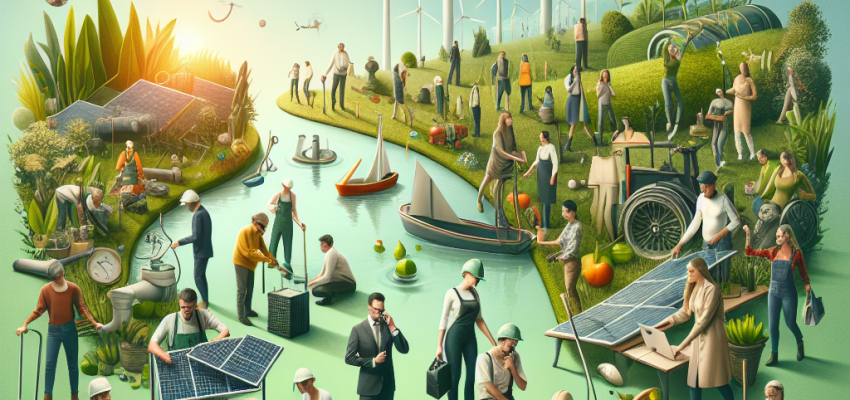

The global landscape is shifting. A quiet revolution, fueled by innovation, necessity, and a growing collective consciousness, is redefining industries and reshaping the very fabric of our professional lives. This seismic shift is creating unprecedented opportunities for individuals eager to align their work with purpose, contributing to a sustainable future while building rewarding careers. Are you feeling the pull towards a more meaningful professional path, one that addresses the planet’s most pressing challenges? Perhaps you are an experienced professional seeking a fresh direction, a recent graduate navigating a complex job market, or someone simply curious about where the future of work is headed. If so, understanding how to transition into the burgeoning green economy job market is not just a strategic career move, it is an essential step towards securing your place in the next industrial revolution.
This comprehensive guide will demystify the process, illuminating the pathways to success in a sector poised for exponential growth. We will explore the diverse opportunities available, dissect the skills in high demand, and outline actionable strategies for making a successful pivot. Prepare to embark on a journey that could transform your professional trajectory, empowering you to thrive in a world increasingly committed to environmental stewardship and economic sustainability.
Green Economy Careers
The concept of the green economy is expansive, encompassing a wide array of sectors and roles dedicated to reducing environmental risks and ecological scarcities, fostering sustainable development, and ensuring human well-being. It is an economy where growth in income and employment is driven by public and private investments that reduce carbon emissions and pollution, enhance energy and resource efficiency, and prevent the loss of biodiversity and ecosystem services. The evolution of green economy careers is directly linked to global efforts to combat climate change, transition to renewable energy sources, manage resources more efficiently, and adopt sustainable practices across all industries. This is not a niche market; it is a fundamental reorientation of economic activity.
Understanding the Green Economy Landscape
The green economy is multifaceted, impacting nearly every traditional sector and creating entirely new ones. It is characterized by innovation, often driven by policy and consumer demand for more sustainable products and services. This landscape includes everything from the development of advanced renewable energy technologies to the design of eco-friendly buildings and the implementation of sustainable agriculture practices. Understanding this broad scope is the first step in identifying where your skills and passions can best fit into this transformative movement. The growth trajectory of green economy careers is robust, with projections indicating a sustained demand for professionals across various disciplines. For instance, according to the U.S. Bureau of Labor Statistics, employment in occupations related to renewable energy, such as solar photovoltaic installers and wind turbine technicians, is projected to grow much faster than the average for all occupations. For more detailed insights, exploring the U.S. Bureau of Labor Statistics’ occupational outlook handbook on “Green Jobs” can provide valuable context.
Key Sectors Driving Green Employment
The opportunities within the green economy are incredibly diverse, spanning numerous industries. Here are some of the primary sectors where green economy careers are flourishing:
- Renewable Energy: This sector includes solar, wind, geothermal, hydropower, and bioenergy. Roles range from engineers designing new systems, technicians installing and maintaining equipment, project managers overseeing large-scale developments, and policy analysts advocating for renewable energy adoption.
- Energy Efficiency and Green Building: Focuses on reducing energy consumption in residential, commercial, and industrial settings. This involves architects designing LEED-certified buildings, energy auditors identifying savings opportunities, construction workers implementing energy-efficient solutions, and specialists in smart grid technologies.
- Sustainable Agriculture and Food Systems: Encompasses organic farming, permaculture, urban agriculture, sustainable fisheries, and food waste reduction. Opportunities exist for agronomists, food scientists, supply chain managers focused on sustainable sourcing, and community organizers promoting local food systems.
- Waste Management and Circular Economy: Moving beyond landfilling to embrace recycling, composting, upcycling, and resource recovery. This sector needs environmental engineers, waste diversion specialists, product designers focused on circularity, and operations managers for recycling facilities.
- Water Resource Management: Addresses issues of water scarcity, pollution, and efficient water use. Roles include hydrologists, water treatment plant operators, environmental consultants, and policy experts focused on water conservation.
- Conservation and Ecosystem Services: Protecting natural habitats, restoring ecosystems, and managing natural resources. This involves conservation scientists, park rangers, wildlife biologists, foresters, and environmental educators.
- Environmental Consulting and Policy: Providing expertise to businesses and governments on environmental regulations, sustainability strategies, and impact assessments. This includes environmental consultants, policy analysts, legal experts, and sustainability officers.
- Green Finance and Investment: Funding sustainable projects and businesses. Opportunities for financial analysts, investment managers specializing in ESG (Environmental, Social, and Governance) funds, and impact investors.
- Green Technology and Innovation: Developing new technologies to address environmental challenges. This sector needs software developers, data scientists, material scientists, and R&D engineers focused on sustainable innovations.
In-Demand Green Skills and Roles
While the sectors are diverse, certain skills are consistently sought after in green economy careers. These can be broadly categorized as technical, scientific, and soft skills:
Technical and Scientific Skills:
- Data Analysis and Modeling: Essential for understanding environmental impacts, energy consumption patterns, and resource flows.
- Project Management: Crucial for overseeing renewable energy installations, green building projects, or conservation initiatives.
- GIS (Geographic Information Systems) Proficiency: Used for mapping environmental data, urban planning, and resource management.
- Engineering Principles: Across various disciplines (electrical, mechanical, civil, environmental) for designing sustainable systems.
- Understanding of Regulatory Frameworks: Familiarity with environmental laws, policies, and compliance standards.
- Life Cycle Assessment (LCA): Analyzing the environmental impacts of products and services throughout their entire life cycle.
Soft Skills:
- Problem-Solving: Tackling complex environmental and sustainability challenges.
- Communication: Effectively conveying technical information to diverse audiences, from stakeholders to the general public.
- Collaboration and Teamwork: Many green projects require interdisciplinary teams.
- Adaptability and Innovation: The green economy is rapidly evolving, requiring professionals to be agile and forward-thinking.
- Strategic Thinking: Developing long-term sustainability plans for organizations.
- Passion for Sustainability: A genuine commitment to environmental stewardship is often a differentiating factor.
Roles that exemplify these skills include renewable energy engineers, sustainability managers, environmental scientists, urban planners focused on sustainability, energy auditors, and waste management consultants. The demand for these roles continues to grow, making green economy careers a secure and impactful choice.
Assessing Your Current Skills and Experience for a Green Transition
Making a successful pivot into the green economy does not always require starting from scratch. Many individuals possess a wealth of transferable skills and experiences from their current or previous roles that are highly valuable in the sustainable sector. The key is to strategically identify these assets and articulate their relevance to the specific demands of green economy careers. This self-assessment phase is critical for developing a targeted and efficient transition strategy.
Identifying Transferable Skills
Look beyond your job title and consider the core competencies you have developed. Many skills are universally applicable and highly prized in the green economy:
- Project Management: Whether you have managed IT projects, marketing campaigns, or construction sites, your ability to plan, execute, and deliver on time and within budget is invaluable for renewable energy installations, green infrastructure development, or conservation initiatives.
- Data Analysis and Interpretation: If you work with data in finance, marketing, or research, your ability to collect, analyze, and derive insights from complex datasets is essential for environmental monitoring, energy consumption optimization, or resource management.
- Communication and Stakeholder Engagement: From client relations to internal team coordination, strong communication skills are vital for sustainability consultants, policy advocates, and community outreach specialists.
- Problem-Solving and Critical Thinking: Every industry faces challenges. Your ability to identify problems, analyze root causes, and develop innovative solutions is directly applicable to addressing environmental issues.
- Financial Acumen: Budgeting, forecasting, and understanding return on investment are crucial for green finance, sustainable business development, and securing funding for environmental projects.
- Sales and Business Development: The green economy needs professionals who can market sustainable products, secure partnerships, and expand the reach of green technologies and services.
- Operations and Logistics: Experience in supply chain management, process optimization, or logistics can be leveraged in circular economy initiatives, sustainable manufacturing, or efficient waste management.
- Marketing and Branding: Promoting sustainable products, services, or organizational values requires expertise in digital marketing, content creation, and brand storytelling.
By reframing your existing skills through a sustainability lens, you can demonstrate your readiness for various green economy careers.
Gap Analysis and Upskilling Opportunities
Once you have identified your transferable skills, the next step is to perform a gap analysis. Compare your current skillset with the specific requirements of your target green roles.
- Research Target Roles: Thoroughly examine job descriptions for green economy careers that interest you. Make a list of required technical skills, certifications, and industry knowledge.
- Self-Assessment: Honestly evaluate where your skills align and where there are gaps. Be specific. For instance, if a role requires LEED AP certification and you are an architect without it, that is a clear gap.
- Prioritize Gaps: Determine which gaps are critical and which can be addressed through on-the-job learning.
- Identify Upskilling Pathways: For critical gaps, explore various upskilling opportunities. This might include:
- Online Courses and MOOCs: Platforms like Coursera, edX, and LinkedIn Learning offer specialized courses in renewable energy, sustainability management, circular economy principles, and environmental policy.
- Certifications: Industry-recognized certifications (e.g., LEED AP for green building, NABCEP for solar professionals, CSM for sustainable materials) can significantly boost your credibility.
- Workshops and Bootcamps: Intensive short-term programs can provide focused training in specific green technologies or methodologies.
- Volunteering: Gaining practical experience by volunteering for environmental non-profits, local sustainability initiatives, or green startups can provide invaluable hands-on learning and networking opportunities.
This systematic approach ensures that your efforts to acquire new knowledge are targeted and efficient, directly addressing the requirements for desired green economy careers.
Leveraging Prior Industry Experience
Your existing industry experience, even if seemingly unrelated to environmental issues, can be a powerful asset. Many companies in the green economy are seeking professionals who understand the complexities of traditional industries and how to transition them towards more sustainable practices.
- Industry Knowledge: If you have worked in manufacturing, transportation, finance, or retail, you possess invaluable insights into the operational challenges and opportunities within those sectors. This knowledge is crucial for companies developing sustainable solutions for those industries. For example, an experienced logistics manager could transition into optimizing green supply chains, or a financial analyst could specialize in green bonds.
- Network: Your professional network within your current industry can be a bridge to new opportunities. Existing contacts may know about companies exploring sustainability, or they may be able to connect you with green sector professionals.
- Operational Expertise: You understand business processes, regulatory environments, and customer needs within your prior field. This operational expertise is highly valuable to green companies looking to scale their solutions or integrate them into existing business models. For instance, a veteran of the automotive industry could apply their knowledge to electric vehicle manufacturing or charging infrastructure development.
- Problem-Solving Context: Your experience with specific industry problems allows you to frame sustainability solutions in a relevant, practical context that resonates with decision-makers in that industry.
Do not underestimate the value of your career journey so far. By strategically framing your background, you can position yourself as a unique asset, bridging the gap between traditional industry practices and the innovative demands of green economy careers.
Strategic Education and Training Pathways
Transitioning into green economy careers often requires a targeted approach to education and training. While transferable skills are a strong foundation, specialized knowledge can significantly accelerate your career pivot. The good news is that there are multiple pathways to acquire the necessary expertise, catering to different time commitments, financial resources, and learning styles.
Formal Education: Degrees and Certifications
For many, formal education provides a comprehensive grounding in the principles and practices of sustainability.
- Graduate Degrees: Master’s degrees in environmental science, sustainability management, renewable energy engineering, environmental policy, or urban planning with a sustainability focus are becoming increasingly popular. These programs offer in-depth knowledge, research opportunities, and often include practical components like internships. They are particularly beneficial for those aiming for leadership roles, research positions, or highly specialized technical roles within green economy careers.
- Undergraduate Degrees: While some may pursue a second bachelor’s degree, it is more common for those seeking a career change to leverage their existing bachelor’s degree and supplement it with specialized coursework or a graduate program. However, for those early in their career, an undergraduate degree in environmental studies, sustainable development, or a related engineering field provides a strong foundation.
- Certifications: Industry-recognized certifications are often more flexible and time-efficient than full degree programs. They validate specific skills and knowledge, making you more marketable for certain green economy careers. Examples include:
- LEED (Leadership in Energy and Environmental Design) Professional Accreditation: For green building and construction.
- NABCEP (North American Board of Certified Energy Practitioners): Certifications for solar and wind energy installers and technical sales.
- CEM (Certified Energy Manager): For professionals involved in energy efficiency.
- PMP (Project Management Professional) with a sustainability focus: While PMP is general, applying its principles to sustainable projects is key.
- GRI (Global Reporting Initiative) Standards Certification: For sustainability reporting professionals.
These certifications demonstrate commitment and competence in specific areas of the green economy.
Vocational Training and Apprenticeships
Not all green economy careers require a four-year degree or a master’s. Many critical roles are in the skilled trades, requiring hands-on training.
- Vocational Schools and Community Colleges: These institutions offer practical, job-focused programs in areas like solar panel installation, wind turbine technology, energy auditing, green building construction, and water treatment operations. These programs often lead to certificates or associate degrees and are designed to get students into the workforce quickly.
- Apprenticeships: A fantastic way to learn on the job, apprenticeships combine paid work with technical instruction. Many clean energy companies and trade unions offer apprenticeships for roles such as electricians specializing in solar, HVAC technicians focusing on energy efficiency, and plumbers for sustainable water systems. This path provides valuable real-world experience and a direct pipeline to employment in green economy careers.
Online Courses and Micro-Credentials
For maximum flexibility, online learning platforms have become indispensable for upskilling and reskilling.
- MOOCs (Massive Open Online Courses): Platforms like Coursera, edX, Udacity, and FutureLearn offer courses from top universities and industry experts on topics ranging from sustainable business strategies to renewable energy technologies and environmental data science. Many offer specializations or professional certificates that can be completed in a few months.
- Industry-Specific Online Training: Many industry associations and software providers offer online training modules for their specific technologies or standards.
- Micro-credentials and Badges: These are smaller, highly focused certifications that validate specific skills. They are excellent for filling knowledge gaps quickly and demonstrating proficiency in niche areas relevant to green economy careers.
This flexible approach allows individuals to continue working while acquiring new skills, making the transition more manageable.
Networking and Mentorship
While not strictly educational in the traditional sense, networking and mentorship are crucial for navigating your career transition.
- Professional Associations: Join organizations related to your target green sector (e.g., Solar Energy Industries Association, U.S. Green Building Council, American Water Works Association). Attend their events, webinars, and conferences. These are prime opportunities to learn about industry trends, meet potential employers, and find out about unadvertised green economy careers.
- Informational Interviews: Reach out to professionals already working in your desired green roles. Ask them about their career path, daily responsibilities, and advice for entering the field. These conversations provide invaluable insights and can often lead to unexpected opportunities.
- Mentorship: Seek out experienced professionals who are willing to guide you. A mentor can offer advice, introduce you to their network, and provide insights into the nuances of various green economy careers.
- LinkedIn: Optimize your LinkedIn profile to highlight your transferable skills and your interest in sustainability. Join relevant groups, follow green companies, and engage with content from thought leaders in the green space.
Education, whether formal or informal, combined with strategic networking, forms a powerful combination for anyone looking to enter or advance within the green economy.
Crafting Your Green Career Transition Plan
A successful career transition, especially into a rapidly evolving sector like the green economy, requires meticulous planning and execution. Beyond acquiring new skills, it is about strategically positioning yourself as a desirable candidate for green economy careers. This involves tailoring your job application materials, refining your interviewing techniques, and actively building a relevant professional network.
Tailoring Your Resume and Cover Letter
Your resume and cover letter are your first impression. They must clearly communicate your passion for sustainability and demonstrate how your skills and experiences align with green roles.
- Keyword Optimization: Research job descriptions for your target green roles and identify common keywords and phrases (e.g., renewable energy, circular economy, sustainability reporting, energy efficiency, carbon footprint, ESG). Weave these naturally into your resume’s summary, experience descriptions, and skills sections. This is crucial for passing Applicant Tracking Systems (ATS) that many companies use.
- Quantify Achievements: Instead of merely listing responsibilities, quantify your accomplishments wherever possible, even if they are not directly environmental. For example, instead of saying Amanaged projects@, say Amanaged projects saving 15% in operational costs@. Then, in your cover letter or interview, explain how your cost-saving mindset translates to resource efficiency in a green context.
- Highlight Transferable Skills: Explicitly connect your past experience to the demands of green economy careers. If you were a project manager in IT, highlight how your ability to manage complex timelines and cross-functional teams is directly applicable to managing a solar farm installation.
- Craft a Green-Focused Summary/Objective: Start your resume with a powerful summary that states your career objective to transition into the green economy and highlights your most relevant skills and passion for sustainability.
- Personalize Your Cover Letter: This is where you tell your story. Explain your motivation for transitioning, demonstrate your understanding of the target company and its mission, and explicitly connect your unique background to the specific job requirements. Showcase any new certifications, courses, or volunteer work related to the green sector.
Mastering the Green Job Interview
Interviewing for green economy careers often involves a blend of standard behavioral questions and specific inquiries related to sustainability knowledge and passion.
- Research Extensively: Go beyond the job description. Research the company’s sustainability initiatives, recent projects, and environmental goals. Understand their market position and any challenges they face. This level of preparation will impress interviewers and enable you to ask insightful questions.
- Prepare for Behavioral Questions: Use the STAR method (Situation, Task, Action, Result) to answer questions about your past experiences. Be ready to discuss how you have demonstrated problem-solving, collaboration, innovation, and adaptability, linking these to sustainability principles.
- Showcase Your Green Knowledge: Be prepared to discuss industry trends, key environmental challenges, and the specific technologies or policies relevant to the role. If the role involves technical aspects, review relevant concepts.
- Articulate Your Passion and Motivation: Be authentic about why you want to work in the green economy. Share your personal commitment to sustainability and how you see yourself contributing to the company’s mission.
- Ask Thoughtful Questions: Prepare questions that demonstrate your engagement and foresight, such as: AWhat are the company’s long-term sustainability goals?@ or AHow does this role contribute to the company’s broader environmental impact?@
Building a Professional Green Network
Networking is not just about finding jobs; it is about learning, building relationships, and positioning yourself for long-term success in green economy careers.
- Attend Industry Events: Conferences, webinars, workshops, and local meetups focused on renewable energy, sustainability, green building, or environmental technology are excellent places to connect with professionals.
- Leverage LinkedIn: Use LinkedIn to identify professionals in your target roles and companies. Send personalized connection requests and engage with their content. Participate in relevant LinkedIn groups.
- Informational Interviews: As mentioned previously, these are powerful tools for gaining insights and expanding your network. Approach them as learning opportunities, not direct job requests.
- Volunteer: Volunteering for environmental non-profits or community sustainability projects not only provides practical experience but also introduces you to a network of like-minded individuals and potential professional contacts.
- Seek Mentorship: A mentor already established in green economy careers can offer guidance, introduce you to their network, and provide valuable insights into navigating the sector.
Finding Green Job Opportunities
Knowing where to look is half the battle when seeking green economy careers.
- Specialized Job Boards:
- GreenBiz Jobs: A leading source for sustainability and clean energy roles.
- Ecotality: Focuses on environmental jobs.
- Work for Good: Features jobs in non-profits, many with an environmental focus.
- Idealist: Great for social impact and environmental non-profit roles.
- General Job Boards with Keyword Searches: Use platforms like LinkedIn Jobs, Indeed, and Glassdoor, but use specific green keywords (e.g., Asustainability manager,@ Arenewable energy engineer,@ Aenvironmental consultant,@ Acircular economy specialist@) to narrow your search.
- Company Careers Pages: Many large companies with strong sustainability initiatives (e.g., tech companies, consumer goods giants, utilities) will list their green roles directly on their corporate career sites.
- Government Agencies: Look for roles with environmental protection agencies (EPA), energy departments, and state/local government sustainability offices.
- Recruiters Specializing in Green Jobs: Some recruitment firms focus exclusively on placing talent in green economy careers.
By combining these strategies, you can systematically navigate the job market and successfully transition into a rewarding green career.
Overcoming Challenges and Sustaining Momentum
The journey into green economy careers, while promising, is not without its challenges. Like any significant career pivot, it requires resilience, continuous learning, and a proactive approach to address potential hurdles. Understanding and preparing for these challenges will help you sustain momentum and ensure a smoother transition.
Addressing Knowledge Gaps
One of the primary challenges for career changers is the perceived or actual knowledge gap. While transferable skills are vital, a lack of specific industry knowledge or technical expertise can feel daunting.
- Proactive Learning: Continuously engage in self-directed learning. Subscribe to industry newsletters, follow influential figures in the green space on social media, listen to podcasts, and read relevant books and reports. This keeps you updated on trends and terminology.
- Micro-Learning: Break down large knowledge areas into smaller, manageable chunks. Focus on learning specific tools, software, or concepts that are frequently mentioned in job descriptions for your target green economy careers.
- Seek Mentorship: A mentor can guide your learning, pointing you to the most relevant resources and helping you prioritize what to learn. They can also explain industry nuances that are not found in textbooks.
- Hands-on Experience: If possible, gain practical experience through volunteer work, personal projects, or short-term consulting gigs. This not only builds your skills but also demonstrates initiative to potential employers.
Remember that companies often value a candidate’s passion and ability to learn quickly as much as their existing knowledge. Frame your learning journey as a testament to your dedication.
Navigating a Competitive Market
As more individuals recognize the potential of green economy careers, the market can become competitive, especially for entry-level or highly desirable roles.
- Differentiate Yourself: What makes you unique? Is it a rare combination of skills, a specific passion, or unconventional experience? Highlight these differentiators in your applications and interviews.
- Network Relentlessly: Many jobs are found through networking. Personal connections can give you an edge, leading to referrals or even unadvertised opportunities. Build genuine relationships within the green community.
- Target Niche Areas: Instead of applying for every general sustainability role, consider specializing in a niche that aligns with your unique background or newly acquired skills. For example, rather than general renewable energy, focus on geothermal or offshore wind.
- Consider All Entry Points: Do not limit yourself to your ideal role immediately. Sometimes, a lateral move, a contract position, or a role that is a stepping stone can provide the necessary experience to access your ultimate goal within green economy careers.
- Be Patient and Persistent: Career transitions take time. Be prepared for rejections, learn from them, and continue to refine your approach. Your persistence will eventually pay off.
Long-Term Career Growth in the Green Sector
The green economy is not a static field; it is constantly evolving with new technologies, policies, and market demands. Sustaining momentum and achieving long-term growth in green economy careers requires a commitment to continuous development.
- Embrace Lifelong Learning: The skills and knowledge required today may shift tomorrow. Stay curious, adaptable, and committed to continually updating your expertise through courses, certifications, and industry publications.
- Cultivate a Growth Mindset: View challenges as opportunities for learning and development. Be open to new ideas, different approaches, and constructive feedback.
- Seek Diverse Experiences: Within your chosen green field, try to gain experience across different project types, technologies, or organizational structures. This broadens your expertise and makes you more versatile.
- Develop Leadership Skills: As you gain experience, seek opportunities to lead projects, mentor others, or contribute to strategic decision-making. Leadership is crucial for advancing in any career path, including green economy careers.
- Stay Connected: Maintain and expand your professional network. Industry peers, mentors, and former colleagues can provide invaluable insights, advice, and opportunities throughout your career journey.
- Advocate for Change: Use your position to drive further sustainability within your organization and beyond. Being a change agent can enhance your impact and professional standing.
By proactively addressing challenges and committing to continuous growth, you can not only transition successfully but also build a resilient and impactful career in the ever-expanding green economy. The future is green, and your contribution can be significant.
The journey to transition into the green economy job market is more than a mere career change; it is an alignment with a global movement towards sustainability, innovation, and a more resilient future. We have navigated the expansive landscape of green economy careers, from understanding diverse sectors and in-demand skills to strategically assessing your existing experience and identifying crucial learning pathways. We explored the vital steps of crafting a compelling professional narrative through tailored resumes and cover letters, mastering the green job interview, and building a robust professional network. Finally, we addressed the inevitable challenges, offering strategies to overcome knowledge gaps, navigate a competitive market, and ensure long-term career growth in this dynamic field.
The green economy is not a temporary trend; it is the definitive economic model of the 21st century. Its continuous expansion promises a wealth of opportunities for those prepared to embrace change and contribute to a healthier planet. By applying the strategies outlined in this guide, you can confidently embark on your transition, transforming your professional purpose and securing your place within this impactful and thriving sector. Your expertise, coupled with a passion for sustainability, is precisely what the world needs now. Make the pivot, build a meaningful career, and become a part of the solution.










