

In an era defined by unprecedented technological acceleration and the ubiquitous rise of artificial intelligence, the foundational skills we impart to our children today will determine their capacity to thrive tomorrow. As an AI specialist and a fervent advocate for technological literacy, I often reflect on the true bedrock of innovation: curiosity, critical thinking, and a profound understanding of how the world works. These are the cornerstones of what we now refer to as STEAM – Science, Technology, Engineering, Arts, and Mathematics.
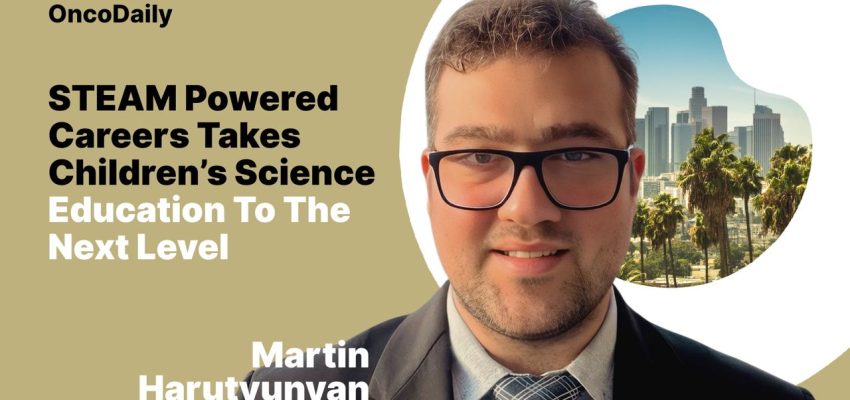
While the acronym has become commonplace, truly effective `STEAM education` initiatives remain vital, especially those designed to captivate young minds. This is precisely where the work of Martin Harutyunyan shines. Through his unique educational endeavor, the ‘STEAM-Powered Careers Children’s Book Series,’ Harutyunyan isn’t just teaching concepts; he’s igniting passions, demystifying complex fields, and, in doing so, preparing a generation not just to adapt to the future, but to actively create it. This series is more than just a collection of books; it’s a carefully crafted gateway into the world of innovation, driven by a vision that extends far beyond the classroom.
The journey into STEAM for many can often feel daunting, a labyrinth of abstract theories and intimidating equations. Harutyunyan’s approach, however, transforms this perception, making the incredible potential of these fields accessible and exciting for young readers. It’s an initiative born from insight, perhaps even personal experience, into the critical role science and innovation play in our lives, from tackling global challenges like disease to shaping the very tools that define our digital age. Let’s delve deeper into how this groundbreaking series is setting a new standard for early educational engagement.
STEAM Education: Igniting Curiosity from an Early Age
The concept of `STEAM education` is more comprehensive than its predecessor, STEM, by integrating the Arts into the traditionally science-focused disciplines. This inclusion acknowledges that creativity, design thinking, communication, and humanistic understanding are not mere add-ons but essential components of problem-solving and innovation. In a world increasingly automated by AI, uniquely human skills like ethical reasoning, artistic expression, and interdisciplinary collaboration become paramount.
Why is early exposure to STEAM so crucial? Children are natural explorers, driven by an innate desire to understand the ‘how’ and ‘why’ of everything around them. This inherent curiosity, if nurtured, can evolve into a lifelong love of learning and discovery. Studies consistently show that children who engage with science and math concepts early on develop stronger analytical skills, improved problem-solving abilities, and a greater capacity for critical thinking. Yet, traditional educational models often introduce these subjects in ways that can be perceived as abstract or irrelevant, leading to disengagement.
The global economy is rapidly shifting towards knowledge-based industries, with occupations requiring strong STEM skills projected to grow significantly faster than non-STEM occupations. For instance, the U.S. Bureau of Labor Statistics projects STEM occupations to grow by 10.8% from 2021 to 2031, translating to 1.1 million new jobs. These roles are not just in technology; they span healthcare, advanced manufacturing, renewable energy, and, critically, artificial intelligence development and application. Failing to prepare our youth for these roles is a disservice to their future and to our collective progress.
Moreover, early `STEAM education` can counteract common stereotypes. Often, children, especially girls and underrepresented minorities, internalize messages that certain fields are ‘not for them.’ By presenting diverse role models and accessible narratives about professionals in science, technology, engineering, arts, and mathematics, initiatives like Harutyunyan’s help break down these barriers, fostering inclusivity and broadening the talent pipeline for the future.
From an AI perspective, the synergy is undeniable. Understanding how algorithms work, how data is collected and analyzed, and the ethical implications of AI systems requires a robust foundation in mathematics, computer science, and even philosophy (often facilitated by the ‘Arts’ component of STEAM). A child inspired by a book about an engineer building smart cities or a biologist developing new medicines is, in essence, being prepared to interact with, develop, and critically evaluate the AI systems that will power these very fields in the decades to come.
Martin Harutyunyan’s Vision: A Personal Journey into Public Service
At the heart of any truly impactful educational initiative lies a compelling vision, and for Martin Harutyunyan, this vision seems deeply rooted in personal experience and a profound understanding of societal needs. While the specifics of his journey are often intimately woven into the fabric of his work, the context provided – mentions of cancer, immunotherapy, and his presence on a platform like OncoDaily.com – offers a poignant glimpse. It suggests a direct encounter with the formidable challenges posed by diseases like cancer, and an appreciation for the tireless work of scientists and medical professionals pioneering treatments such as immunotherapy.
Immunotherapy, a revolutionary approach that harnesses the body’s own immune system to fight cancer, exemplifies the pinnacle of scientific innovation and human ingenuity. Witnessing or experiencing the impact of such medical advancements can be a powerful catalyst. It’s plausible that Martin Harutyunyan’s motivation stems from a desire to ensure that future generations are equipped with the knowledge and inspiration to continue this vital work. Perhaps he realized that the seeds of scientific curiosity must be planted early, showing children not just what scientists *do*, but *why* it matters – why a breakthrough in a lab can literally save lives.
The ‘STEAM-Powered Careers Children’s Book Series’ is a testament to this understanding. It is designed to introduce young readers to a spectrum of professions within STEAM, showcasing how these roles contribute to the world. Instead of simply listing job titles, the series likely crafts engaging narratives that allow children to step into the shoes of engineers designing renewable energy solutions, artists developing virtual reality experiences, or scientists investigating new frontiers in medicine. This narrative approach is crucial for engagement, transforming abstract concepts into relatable adventures.
A key collaborator in this initiative is often noted as DJ Kast. Dr. Kiki Sanford, widely known as DJ Kast, is a prominent science communicator, educator, and host of popular science podcasts and media. Her involvement underscores the series’ commitment to making science not only understandable but also entertaining and dynamic. DJ Kast’s expertise in translating complex scientific ideas into digestible, exciting content perfectly complements Harutyunyan’s vision. Together, they bridge the gap between rigorous scientific principles and the captivating storytelling necessary to inspire young minds. Their collaboration highlights the ‘Arts’ component of `STEAM education` in action – using creative communication to enhance scientific literacy.
The series, therefore, becomes a powerful vehicle for demystifying professions that might otherwise seem out of reach. It illuminates the pathways to careers that require critical thinking, problem-solving, and creativity, offering children a roadmap to understanding how they too can contribute to monumental scientific breakthroughs or technological advancements that define our era. By presenting these careers as exciting, accessible, and deeply impactful, Harutyunyan is nurturing the very individuals who might one day discover the next generation of immunotherapies, design ethical AI, or solve global climate challenges.
Beyond Textbooks: Cultivating Future Innovators with Real-World Relevance
What truly sets Martin Harutyunyan’s ‘STEAM-Powered Careers Children’s Book Series’ apart as a unique educational initiative is its profound emphasis on real-world relevance and its innovative pedagogical approach. Traditional textbooks, while foundational, often struggle to convey the dynamic, interdisciplinary, and often thrilling nature of STEAM professions. This series, by contrast, leverages the power of storytelling to connect abstract scientific and mathematical principles to tangible careers and pressing global issues.
Imagine a child reading about a biomedical engineer designing a new prosthetic limb, or a software developer creating an AI assistant that helps manage sustainable urban living. These stories don’t just teach facts; they foster empathy, illustrate impact, and allow children to visualize themselves in these roles. The integration of topics like cancer and immunotherapy, perhaps subtly woven into narratives about medical researchers or geneticists, transforms seemingly remote scientific endeavors into deeply personal and universally relevant quests for human well-being. This approach helps children understand that `STEAM education` is not just about academic achievement, but about making a tangible difference in the world.
The “Arts” component of STEAM, which Harutyunyan’s series likely embraces through its engaging narrative and perhaps even captivating illustrations, is pivotal here. It allows for creative problem-solving, imaginative thinking, and effective communication—skills that are indispensable in any STEAM field. An engineer needs to be creative to design innovative solutions; a scientist needs to be a clear communicator to share discoveries; and an AI developer needs artistic vision to create intuitive user interfaces and ethically sound applications. The series, therefore, probably cultivates a holistic skill set, far beyond mere rote learning.
Furthermore, the focus on diverse careers helps to broaden children’s horizons. It moves beyond the stereotypical image of a scientist in a lab coat or an engineer with a hard hat, showcasing the vast spectrum of roles available: data scientists, architects, environmental artists, robotics specialists, ethical AI programmers, and more. This exposure is critical in a rapidly evolving job market where new professions emerge with breathtaking speed, often at the intersection of traditional disciplines. The initiative thereby prepares children for a future where adaptability and interdisciplinary thinking are not just assets, but necessities.
For me, as an AI specialist, this initiative resonates deeply. We are on the cusp of an AI revolution that will redefine industries, economies, and societies. The next generation will not merely use AI; they will design it, troubleshoot it, regulate it, and critically evaluate its societal impact. This requires more than just coding skills; it demands a strong ethical framework, a capacity for creative problem-solving, and a deep understanding of human needs – all fostered through comprehensive `STEAM education`. Harutyunyan’s books are laying the foundational intellectual and emotional groundwork, nurturing the very qualities that will distinguish human innovation in an AI-augmented world. By making these complex fields approachable and exciting, he’s ensuring that the architects of our AI future are not only skilled but also inspired and ethically grounded.
A Glimpse into Tomorrow: Nurturing Our Future Innovators
Martin Harutyunyan’s ‘STEAM-Powered Careers Children’s Book Series’ stands as a beacon of innovative `STEAM education`, demonstrating how thoughtfully designed content can transform the educational landscape for young learners. In a world grappling with grand challenges—from climate change to global health crises, and the ethical integration of advanced AI—the need for a scientifically literate, technologically adept, and creatively inspired populace has never been more pressing. This series doesn’t just introduce children to potential careers; it empowers them with the understanding that they, too, possess the capacity to contribute meaningfully to these critical fields, fostering a sense of purpose and agency from an early age.
By making the intricate worlds of science, technology, engineering, arts, and mathematics accessible and exciting, Harutyunyan, likely with the expert assistance of collaborators like DJ Kast, is cultivating not just future scientists or engineers, but future leaders, critical thinkers, and ethical innovators. These are the individuals who will harness the power of AI for good, discover the next medical breakthrough, design sustainable cities, and continue to push the boundaries of human knowledge and creativity. His initiative is a powerful reminder that investment in early childhood education, particularly in STEAM fields, is an investment in the resilience, prosperity, and inventiveness of our shared future. It’s about equipping the next generation not just with tools, but with the curiosity to wield them wisely and imaginatively.










