
The landscape of our world is evolving at an unprecedented pace, driven by relentless innovation in science and technology. From the algorithms powering our daily lives to the marvels of space exploration, the future is being built today. At the heart of this transformative era lies a profound need: to cultivate a generation equipped not just with knowledge, but with the curiosity, critical thinking, and problem-solving skills to navigate and shape this brave new world. For André Lacerda, an AI specialist and tech enthusiast, this begins long before college, in the formative years of middle school, where experiences can spark lifelong passions.
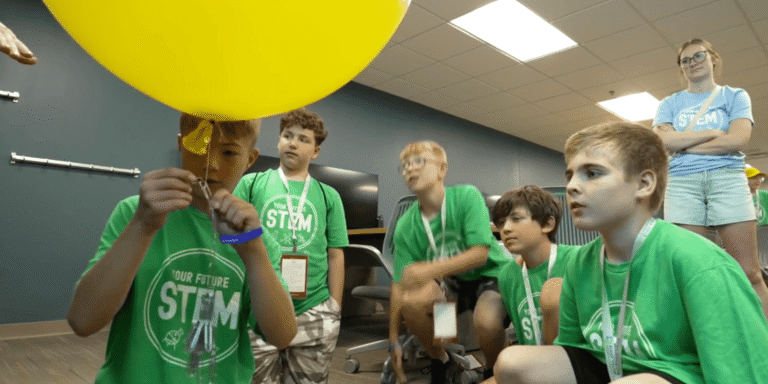
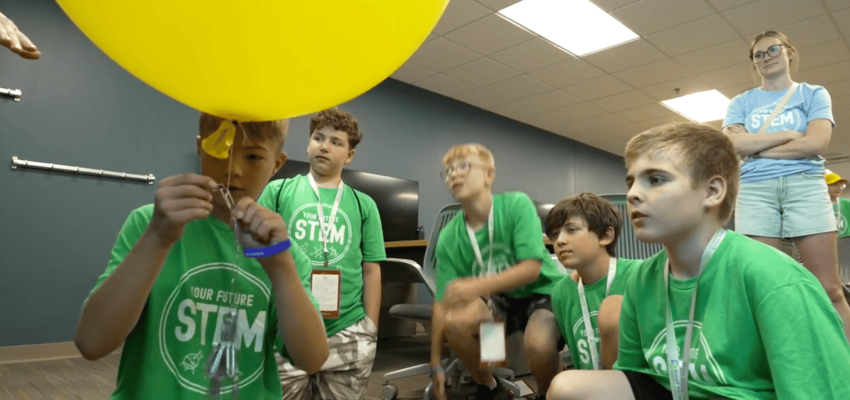
Imagine a vibrant summer camp buzzing with the energy of hundreds of young minds. This isn’t your typical summer break; it’s a place where blueprints come to life, code is written to solve real problems, and the mysteries of the universe are explored through hands-on discovery. This is the essence of modern **STEM education**, specifically tailored for middle schoolers – a critical age where interests are solidified and future pathways begin to take shape. These specialized camps are more than just a summer activity; they are incubators for tomorrow’s innovators, engineers, scientists, and AI pioneers.
STEM Education: Nurturing Future-Ready Minds
Often simplified as an acronym for Science, Technology, Engineering, and Mathematics, **STEM education** is, in reality, a holistic framework designed to foster a comprehensive set of capabilities. It’s about equipping individuals with the tools to understand the world around them, to question, to innovate, and to solve complex challenges. For middle schoolers, this approach is particularly impactful. This isn’t merely about memorizing facts or formulas; it’s about integrating these disciplines in a way that mirrors real-world problem-solving. Consider how a civil engineer designs a bridge: they apply physics (science), use CAD software (technology), understand structural integrity (engineering), and perform complex calculations (mathematics). True **STEM education** replicates this interdisciplinary synergy.
The push for robust STEM initiatives gained significant momentum in the late 20th and early 21st centuries, fueled by a growing recognition of its importance for national competitiveness and economic prosperity. Countries worldwide, observing the rapid advancements in technology and the increasing demand for a skilled workforce, began to invest heavily in programs designed to encourage students to pursue STEM fields. The U.S. Bureau of Labor Statistics, for instance, projects that occupations in STEM fields will grow by 10.8 percent from 2021 to 2031, compared to 4.9 percent for non-STEM occupations, underscoring the enduring relevance and escalating demand for these skills. This data highlights not just job growth, but the foundational shift in the global economy towards innovation-driven industries.
Middle school is a pivotal age for this immersion. During these years, young adolescents are curious, open to new ideas, and beginning to explore their identities and interests. Providing engaging **STEM education** experiences at this stage can be transformative, helping to demystify complex subjects and break down stereotypes. Historically, STEM fields have faced challenges with diversity and inclusion. Introducing hands-on, inspiring programs early can show students from all backgrounds that these fields are accessible, exciting, and full of opportunities for everyone. It’s about sparking that initial curiosity, moving beyond the abstract, and showing the tangible impact of science and technology in their own lives and communities.
Beyond the Classroom: The Experiential Learning Revolution
While traditional classroom settings provide foundational knowledge, the true magic of **STEM education** often unfolds in environments that prioritize hands-on, experiential learning. These specialized summer camps, like the ones inspiring this discussion, are prime examples of this revolution in education. They transform abstract concepts into tangible projects, allowing students to experiment, fail, iterate, and ultimately succeed in a supportive, dynamic setting.
Imagine a group of seventh-graders collaborating on building and programming a robot to navigate a maze. They aren’t just following instructions; they’re troubleshooting code, adjusting mechanical parts, and refining strategies based on real-time feedback. This process intrinsically teaches computational thinking, basic engineering principles, and collaborative problem-solving – all without feeling like a ‘lesson.’ Or consider students engaged in environmental science projects, analyzing water samples from a local stream, understanding ecosystems, and proposing sustainable solutions. Such activities connect learning directly to the world around them, giving purpose and relevance to scientific inquiry.
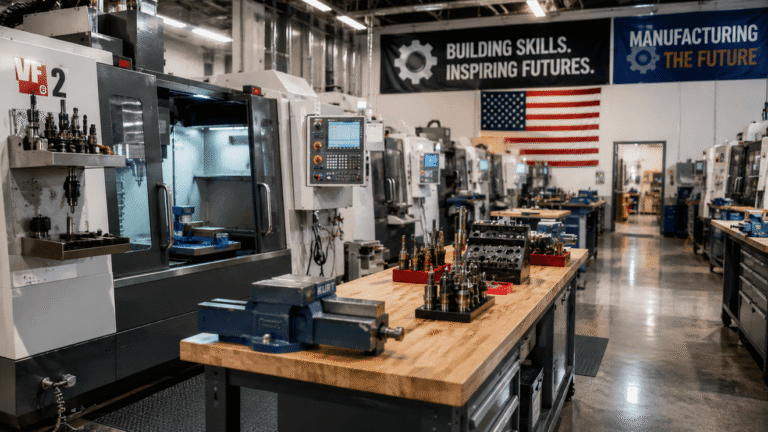
These experiences offer several profound benefits. Firstly, they deepen understanding and retention. When students actively engage with a concept, manipulate variables, and observe outcomes, the learning becomes embedded in their memory more effectively than simply reading about it. Secondly, they foster critical soft skills. Collaboration, communication, resilience in the face of failure, and creative problem-solving are naturally developed as students work together on challenging projects. Furthermore, these camps provide invaluable exposure to diverse career paths. By interacting with professionals—engineers, scientists, coders, and innovators—students gain firsthand insight into what these careers entail. They see real-world applications of the subjects they are studying, making the future feel less abstract and more attainable. This exposure can be particularly powerful in addressing local workforce needs, by showing students direct pathways to impactful roles within their own communities. For André Lacerda, it’s about making the connection between classroom learning and real-world impact palpable and inspiring.
Cultivating the AI Generation: Preparing for a Future of Innovation
As an AI specialist, I firmly believe that the most significant long-term impact of robust **STEM education** for middle schoolers lies in its ability to prepare them for an increasingly AI-driven world. The foundations built in these early years—logical reasoning, algorithmic thinking, data literacy, and ethical considerations—are the bedrock upon which future AI innovations will stand. We are not just training future coders; we are cultivating critical thinkers who can understand, utilize, and even develop the next generation of intelligent systems responsibly.
The global AI market is projected to grow exponentially, with some estimates placing its value in the trillions of dollars within the next decade. This growth will create countless new roles and transform existing ones. Roles in machine learning engineering, data science, AI ethics, and human-AI interaction design will demand individuals with a deep understanding of STEM principles. Early exposure to concepts like pattern recognition through simple coding games, understanding variables in physics experiments, or designing efficient solutions in engineering challenges, are all stepping stones towards complex AI concepts.
Moreover, these camps often introduce students to emerging technologies in an approachable way. Whether it’s robotics challenges that touch upon basic machine learning, virtual reality simulations that introduce spatial computing, or data analysis projects that hint at predictive modeling, the exposure is invaluable. It demystifies these powerful tools and transforms potential apprehension into excitement and mastery. The objective isn’t to turn every middle schooler into an AI developer, but rather to foster a generation that is AI-literate, capable of engaging thoughtfully with technology, and confident in their ability to adapt to rapid technological change.
Crucially, **STEM education** also instills a mindset of continuous learning and adaptation – skills that are absolutely essential in fields as dynamic as AI. Technologies evolve quickly, and the ability to embrace new knowledge, critically evaluate information, and solve problems creatively will always remain paramount. These programs, often facilitated by local businesses and academic institutions, also provide mentorship opportunities, allowing students to learn directly from those at the forefront of innovation. Such interactions can ignite a spark, showing young minds that a future in AI or advanced technology is not only possible but incredibly exciting and within their grasp.
The investment in comprehensive, hands-on **STEM education** for middle schoolers is not merely an educational expenditure; it is an investment in the future of our society, our economy, and our collective capacity for innovation. From fostering critical thinking and problem-solving to demystifying complex technologies and inspiring career pathways, these programs are laying the groundwork for a generation of curious, capable, and future-ready individuals. As we continue to navigate a world increasingly shaped by technological advancements, particularly in the realm of artificial intelligence, the importance of these foundational experiences cannot be overstated.
For me, André Lacerda, witnessing the enthusiasm and potential unearthed in these young minds is incredibly inspiring. It reinforces the belief that by providing accessible, engaging, and relevant **STEM education**, we are not just teaching science and math; we are empowering the architects of tomorrow. We are enabling them to dream bigger, build smarter, and lead us into a future where human ingenuity, amplified by technology, can solve some of the world’s most pressing challenges. Let us continue to champion these vital initiatives, ensuring every young person has the opportunity to discover their inner innovator and contribute to a brighter, more technologically advanced, and ethically conscious future.