
The landscape of employment is undergoing a profound transformation, driven by relentless technological innovation, evolving global economies, and a pervasive demand for new skills. In this era of rapid change, the concept of lifelong learning is no longer a mere aspiration but an imperative for both individuals and regional economies. Traditional educational institutions are increasingly called upon to extend their impact beyond conventional degree programs, becoming agile partners in preparing the current and future labor force for the challenges and opportunities ahead.
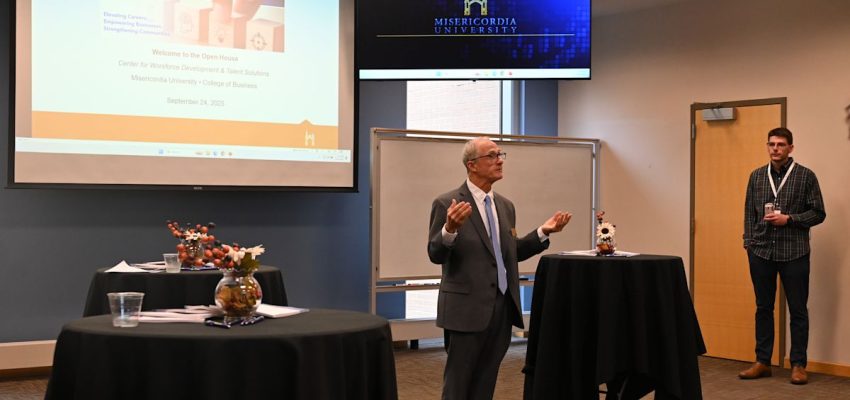
It is within this dynamic context that Misericordia University is making significant strides. On September 24, the university’s Center for Workforce Development and Talent Solutions opened its doors for an illuminating open house event. This gathering was more than just a showcase; it was a testament to Misericordia’s deepening commitment to fostering **workforce development** and enhancing career readiness across its community. The event drew a diverse cohort of attendees, including local residents eager to explore new career pathways, prominent business leaders seeking to cultivate skilled talent, and dedicated educators looking to forge collaborative partnerships. It signaled a clear vision: to proactively address skill gaps, foster economic vitality, and ensure that the region’s human capital remains robust and competitive in an increasingly automated and interconnected world.
Workforce Development: A New Era of Learning and Opportunity
The notion of **workforce development** has moved far beyond rudimentary job training. Today, it encompasses a holistic strategy designed to equip individuals with the adaptive skills necessary to thrive in an unpredictable professional environment. The Fourth Industrial Revolution, characterized by the convergence of artificial intelligence, automation, big data, and advanced robotics, is fundamentally altering job roles and creating entirely new industries. Reports from organizations like the World Economic Forum consistently highlight that a substantial portion of the global workforce will require significant reskilling or upskilling in the coming years just to remain relevant. This seismic shift necessitates a proactive, collaborative approach involving educational institutions, industry, and government.
Universities, traditionally bastions of academic rigor, are uniquely positioned to spearhead this movement. Their existing infrastructure, pedagogical expertise, and strong community ties make them ideal hubs for advanced career training. Misericordia University, through its Center for Workforce Development and Talent Solutions, exemplifies this adaptive vision. Rather than merely offering academic degrees, the Center focuses on demand-driven, competency-based programs designed to meet the immediate and projected needs of local industries. This includes everything from specialized technical certifications in emerging fields to enhancing critical soft skills such like problem-solving, critical thinking, and collaborative communication, which remain indispensable regardless of technological advancement.
The open house on September 24 served as a crucial platform to communicate this forward-thinking strategy. It allowed Misericordia to not only highlight its innovative programs but also to engage directly with stakeholders. Community members had the opportunity to speak with program coordinators, understand potential career trajectories, and enroll in courses that could redefine their professional futures. Business leaders, meanwhile, could explore how partnering with Misericordia could provide a steady pipeline of qualified candidates, helping them address talent shortages and foster innovation within their own organizations. This direct engagement is vital for ensuring that educational offerings remain aligned with real-world industry demands, creating a virtuous cycle of learning and employment.
Bridging the Gap: Misericordia’s Innovative Approach to Career Training
Misericordia University’s approach to career training is deeply rooted in responsiveness and relevance. Understanding that a one-size-fits-all model no longer suffices, the Center for Workforce Development and Talent Solutions crafts programs that are agile, practical, and directly applicable to current market needs. While the specifics of the programs were showcased at the open house, one can infer the breadth of their offerings based on common regional and national skill gaps.
Consider, for instance, the burgeoning demand for tech-savvy professionals. Many regions, including Misericordia’s, face shortages in areas like cybersecurity, data analytics, and full-stack web development. The university’s programs likely include intensive bootcamps or certificate courses in these high-growth sectors, designed to quickly transition individuals from various backgrounds into viable tech roles. These are not four-year degrees but focused, accelerated learning experiences that prioritize hands-on application and industry-standard tools. Furthermore, with the increasing integration of AI into business operations, skills in AI literacy, prompt engineering, and machine learning basics are becoming highly valued across diverse industries.
Beyond technology, healthcare remains a perennially vital sector. As the population ages and healthcare delivery evolves, there’s a constant need for certified allied health professionals, medical assistants, patient care technicians, and administrative support staff who understand modern healthcare systems. Misericordia, with its strong heritage in health sciences, is particularly well-equipped to offer programs that not only provide essential clinical and administrative skills but also instill a deep understanding of patient care and ethics. These programs often combine classroom instruction with practical clinical experiences, ensuring graduates are job-ready from day one.
The business world also presents a constant need for upskilling. Project management, digital marketing, supply chain logistics, and even enhanced leadership skills are crucial for organizations navigating complex markets. The Center likely offers programs that cater to existing professionals seeking to advance their careers, or individuals looking to enter these dynamic fields. These flexible learning formats, often delivered outside traditional academic schedules, are specifically designed to accommodate working adults and those balancing multiple responsibilities. The open house provided invaluable insight into these diverse pathways, allowing prospective students to envision how these tailored programs could accelerate their professional journeys and provide a tangible return on investment in their education.
The Ripple Effect: Impact on Individuals, Businesses, and the Regional Economy
The far-reaching impact of robust **workforce development** initiatives, like those championed by Misericordia University, extends far beyond individual career advancement. It creates a powerful ripple effect that strengthens local businesses and invigorates the entire regional economy. For individuals, these programs offer more than just a certificate or a new skill; they provide a renewed sense of purpose, increased earning potential, and enhanced job security in an uncertain world. They empower people to pivot careers, explore new passions, and achieve economic mobility that might otherwise seem out of reach. In an era where a college degree alone no longer guarantees career longevity, the ability to continually learn and adapt is the ultimate competitive advantage, and Misericordia is directly facilitating this.
For businesses, the benefits are equally profound. A skilled labor pool is the lifeblood of innovation and competitiveness. By partnering with institutions like Misericordia, companies gain access to a pipeline of meticulously trained professionals who are ready to contribute immediately. This reduces recruitment costs, minimizes training overhead, and allows businesses to focus on growth and strategic initiatives rather than constantly battling skill shortages. Furthermore, these partnerships foster a closer alignment between industry needs and educational offerings, ensuring that the training provided is always relevant and impactful. It’s a win-win scenario: businesses get the talent they need, and individuals get the skills that are in demand.
On a broader regional scale, proactive **workforce development** is a key determinant of economic prosperity. A region with a highly skilled and adaptable workforce is more attractive to new businesses seeking to relocate or expand, leading to job creation and increased investment. It fosters an environment of innovation, encourages entrepreneurship, and creates a more resilient economy capable of withstanding external shocks. Misericordia University’s commitment to this endeavor positions it as a vital economic engine, contributing significantly to the long-term health and vibrancy of its community. By investing in its people, the university is directly investing in the collective future of the region.
A Future Forged in Skill and Adaptation
The open house at Misericordia University’s Center for Workforce Development and Talent Solutions was more than a singular event; it was a powerful statement about the university’s enduring commitment to its community and its foresight in addressing the evolving demands of the 21st-century job market. As an AI specialist and tech enthusiast, I keenly observe how rapidly technology reshapes industries and job functions. It’s clear that the organizations that will thrive are those that embrace continuous learning and strategic skill development. Misericordia’s initiative perfectly embodies this forward-thinking approach, recognizing that education must be a dynamic, lifelong pursuit, tailored to the demands of a world where change is the only constant.
Looking ahead, the success of such initiatives will undoubtedly rely on continued collaboration between academia, industry, and local government. The pathways to meaningful employment are becoming increasingly diverse, and institutions like Misericordia University are at the forefront of forging these new routes. By empowering individuals with relevant, in-demand skills and providing businesses with a competitive edge, Misericordia is not just adapting to the future of work; it is actively shaping it, one career and one community success story at a time. The echoes of the September 24 event will resonate far beyond the campus walls, inspiring a new generation of learners and contributing to a more prosperous and skill-resilient region.