

In a world perpetually redefined by technological innovation, few forces wield as profound an influence as artificial intelligence. As an AI specialist, writer, and tech enthusiast, I’ve observed firsthand how rapidly AI is not merely enhancing existing capabilities but fundamentally reshaping the very fabric of our professional lives. The seismic shifts occurring in industries globally demand a fresh perspective on career development, preparation, and lifelong learning.
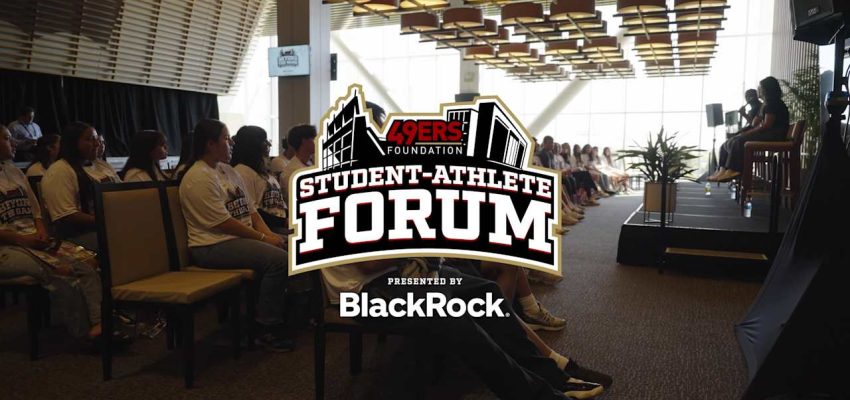
Think for a moment about the concept of a ‘Beyond the Game’ forum – a space where high school athletes are guided on how to translate their athletic discipline, teamwork, and strategic thinking into successful careers off the field. This insightful initiative, aimed at broadening horizons beyond a singular focus, offers a powerful metaphor for the current global professional landscape. Just as athletes must adapt their transferable skills for new arenas, so too must professionals across every sector prepare for a future where AI is not just a tool but an omnipresent collaborator, a strategic partner, and a catalyst for entirely new vocations. The true ‘game’ we are now playing is one of adaptability, foresight, and continuous skill evolution, particularly when considering the dynamic **Future of AI Careers**.
This article delves into how artificial intelligence is revolutionizing the employment market, the essential skills needed to thrive in this new era, and the pathways available for individuals and institutions to proactively engage with this transformative shift. It’s an exploration not of what AI will replace, but of what it will empower, create, and demand from us as we navigate an increasingly intelligent world.
Future of AI Careers: Beyond the Traditional Playbook
The most pervasive misconception about artificial intelligence is its role solely as a job destroyer. While it’s true that AI and automation will undoubtedly automate many repetitive, routine tasks, the narrative is far more nuanced and, indeed, optimistic. Major reports from institutions like the World Economic Forum (WEF) consistently highlight a dual impact: a significant displacement of certain job functions, but also the creation of an even greater number of new roles. The WEF’s ‘Future of Jobs Report 2023’ estimates that while 83 million jobs may be eliminated globally by 2027, 69 million new jobs are expected to emerge, leading to a net positive increase in employment opportunities, albeit with a substantial shift in skill demands.
This isn’t just about replacing manual labor; it’s about transforming cognitive tasks. AI excels at pattern recognition, data processing, and predictive analytics, augmenting human capabilities rather than simply supplanting them. Consequently, the **Future of AI Careers** leans heavily into roles that leverage distinctly human attributes – creativity, critical thinking, emotional intelligence, and complex problem-solving – often in conjunction with AI systems.
Consider the burgeoning field of ‘prompt engineering,’ a role barely imaginable a few years ago. Prompt engineers are essentially communicators and strategists, bridging the gap between human intent and AI’s capabilities. They craft precise instructions and queries to elicit optimal responses from large language models and other generative AI systems, a blend of linguistic prowess and technical understanding. Then there are AI ethicists, pivotal figures responsible for guiding the responsible and equitable development of AI, ensuring fairness, transparency, and accountability in algorithms. Their work is critical in preventing bias, protecting privacy, and ensuring AI serves humanity’s best interests. This role, far from technical coding, is deeply rooted in philosophy, law, and sociology.
Beyond these, the core technical roles in AI continue to expand: machine learning engineers, data scientists, AI researchers, natural language processing specialists, and computer vision engineers. These are the architects and builders of the AI revolution, requiring deep mathematical, statistical, and programming expertise. However, even these roles are evolving, demanding a broader understanding of real-world applications and societal impact. The healthcare sector, for instance, is seeing a surge in demand for AI specialists who understand medical diagnostics and patient care; finance needs AI experts adept at risk assessment and fraud detection; and education is looking for AI developers who can personalize learning experiences. Each of these illustrates how the **Future of AI Careers** is not monolithic, but diverse and interdisciplinary, requiring individuals to be proficient in both technology and a specific domain.
Cultivating Agility and Adaptability: The New Core Competencies
If the ‘Beyond the Game’ forum teaches athletes to leverage their inherent strengths for new challenges, then the AI era demands a similar strategic pivot from all professionals. The discipline, resilience, strategic thinking, and collaborative spirit honed on the sports field are strikingly analogous to the qualities now essential in the rapidly evolving AI landscape. In a world where the half-life of skills is shrinking, perhaps even to just a few years, continuous learning and profound adaptability are no longer optional but fundamental requirements.
Soft skills, once considered secondary to technical prowess, have ascended to paramount importance. Critical thinking and complex problem-solving are vital for navigating the intricate challenges that AI systems present, from debugging complex algorithms to designing ethical frameworks. Creativity and innovation become amplified when paired with AI; instead of replacing human artistry, AI can serve as a powerful co-creator, accelerating idea generation and exploration. Think of AI tools used in graphic design, music composition, or architectural planning – they don’t replace the artist but empower them to reach new frontiers.
Emotional intelligence and empathy are crucial for human-AI interaction design, ensuring that AI systems are intuitive, helpful, and considerate of human needs. As AI becomes more integrated into customer service, healthcare, and education, the ability to understand and respond to human emotions will differentiate successful applications from frustrating ones. Furthermore, collaboration and cross-functional teamwork are indispensable. Developing and deploying AI solutions rarely happens in a silo; it requires diverse teams comprising engineers, data scientists, ethicists, domain experts, and business leaders working synergistically. The ability to communicate effectively across these disciplines, to articulate complex technical concepts to non-technical stakeholders, and to work cohesively towards a shared vision is invaluable.
This necessitates a lifelong learning mindset. Educational institutions, professional organizations, and individuals must embrace a continuous cycle of reskilling and upskilling. Online platforms like Coursera, edX, and various corporate learning initiatives (Google AI, Microsoft Learn) offer accessible pathways to acquire new competencies in machine learning, data science, AI ethics, and more. Micro-credentials and specialized certifications are becoming increasingly recognized as valid indicators of expertise, complementing traditional degrees. The essence of thriving in the **Future of AI Careers** is not about knowing everything, but about possessing the agility to learn anything, to unlearn outdated paradigms, and to adapt to unforeseen technological advancements.
Empowering the Next Generation: Pathways into AI
Just as career forums provide invaluable guidance to aspiring professionals, structured pathways are crucial for steering the next generation towards the opportunities within AI. This isn’t just about encouraging more computer science majors; it’s about fostering a broader, more inclusive understanding of AI’s societal impact and its diverse career avenues. Educational reform plays a pivotal role here, moving beyond rote memorization to emphasize computational thinking, problem-solving, and practical application from an early age. Integrating AI concepts, even at a basic level, into various subjects – from science and mathematics to arts and humanities – can demystify the technology and spark interest.
Beyond formal education, initiatives that mirror the spirit of a career forum are essential. These could be tech-focused mentorship programs connecting students with AI professionals, hackathons that provide hands-on experience, or workshops that expose participants to the ethical dilemmas and societal implications of AI. Such forums bridge the gap between academic theory and real-world practice, offering insights into day-to-day work, networking opportunities, and exposure to diverse role models. They can highlight that the **Future of AI Careers** is not exclusive to coders but encompasses designers, writers, strategists, and ethicists.
The democratization of AI tools and learning resources is also a powerful equalizer. The proliferation of open-source frameworks like TensorFlow and PyTorch, coupled with free online courses and accessible cloud computing resources, means that anyone with an internet connection and a thirst for knowledge can begin their AI journey. This accessibility is vital for ensuring diversity and inclusion within the AI field. A truly robust AI future requires a multitude of perspectives, backgrounds, and experiences to prevent algorithmic bias and create technologies that benefit all segments of society. Initiatives focused on bringing AI literacy to underserved communities, empowering women in AI, and supporting minority groups in tech are not just socially responsible but strategically imperative for the healthy evolution of the field.
Conclusion
Artificial intelligence stands as a monumental force, not just in technological progress but in shaping human potential and career trajectories. The transition into an AI-powered world isn’t merely about adapting; it’s about embracing new possibilities, redefining our professional identities, and augmenting our capabilities with intelligent systems. The lessons from initiatives designed to guide individuals ‘beyond the game’ – preparing them for life’s next phase by leveraging inherent strengths and cultivating new ones – serve as an apt metaphor for our collective journey into the AI era.
The **Future of AI Careers** is not a deterministic path of automation but a dynamic landscape of collaboration, innovation, and continuous learning. It demands a proactive mindset, a commitment to lifelong skill development, and an unwavering belief in the unique value of human intellect and empathy. By cultivating agility, embracing interdisciplinary knowledge, and empowering the next generation with accessible pathways, we can collectively navigate this frontier, not as passive observers, but as active architects of a more intelligent, equitable, and prosperous future.










