
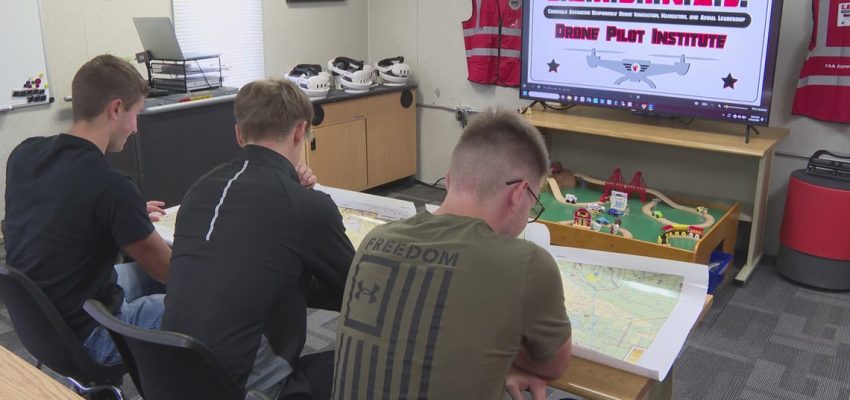

The sky, once a distant realm reserved for professional aviators, is rapidly becoming a dynamic new classroom. Across the globe, educational institutions are embracing the transformative potential of unmanned aerial vehicles (UAVs), commonly known as drones, by integrating **drone piloting** programs into their STEM curricula. This pivotal shift is not merely about teaching students to fly a gadget; it’s about equipping them with cutting-edge skills for a burgeoning industry, fostering critical thinking, and paving clear pathways to exciting career opportunities. As an AI specialist and tech enthusiast, I find this convergence of technology, education, and vocational training to be one of the most exciting developments in modern learning.
Historically, STEM education has focused on core sciences, technology, engineering, and mathematics in relatively traditional settings. However, the advent of accessible and powerful drone technology has introduced a highly interdisciplinary and hands-on learning experience that captivates students and prepares them for the real world. Programs, such as the one observed in some Ohio high schools, exemplify this forward-thinking approach, where students are not just learning theory but actively engaging with the practicalities of operating complex machinery, adhering to regulations, and understanding the vast applications of aerial robotics. This engagement is crucial for inspiring the next generation of innovators and problem-solvers.
### Drone Piloting: Navigating the Skies of Opportunity in STEM Education
The integration of drones into high school STEM programs represents a significant evolution in how we prepare students for the future. Drones are much more than remote-controlled toys; they are sophisticated platforms that blend elements of physics, electrical engineering, computer science, and data analysis. Learning **drone piloting** fundamentally grounds students in these disciplines, providing tangible applications for abstract concepts. For instance, understanding aerodynamics becomes crucial when planning flight paths, while grasping basic coding principles can open doors to programming autonomous flight sequences or customizing drone behaviors.
Consider the multifaceted skills students acquire: spatial reasoning improves as they navigate complex environments; problem-solving abilities are honed when troubleshooting technical issues; and a deep understanding of ethical considerations arises when discussing data privacy or responsible drone use. This holistic learning approach transcends traditional classroom boundaries, fostering a deeper, more contextual understanding of scientific and technological principles. Furthermore, the collaborative nature of many drone projects encourages teamwork and communication, essential skills in any professional environment. The global drone market, valued at an estimated $26.3 billion in 2022, is projected to reach over $100 billion by 2030, according to various market research reports, underscoring the immense economic potential and demand for skilled professionals in this field. This rapid expansion is not limited to any single sector but is distributed across agriculture, logistics, construction, public safety, and entertainment, each requiring specialized knowledge and highly competent drone operators.
From an AI perspective, drones are becoming increasingly intelligent, capable of autonomous navigation, object recognition, and complex data processing. Early exposure to **drone piloting** and its underlying technologies lays a foundational understanding for students who may later delve into advanced AI concepts such as machine learning for image recognition from drone footage, or developing AI algorithms for optimized drone swarm operations. This foundational knowledge is invaluable for aspiring engineers and scientists who will undoubtedly shape the future of autonomous systems.
### From Classroom to Cockpit: The Journey Towards FAA Certification
One of the most compelling aspects of these high school drone programs is their focus on preparing students for the Federal Aviation Administration (FAA) Part 107 Remote Pilot Certification. This certification is not merely an academic exercise; it is a legally required credential for anyone operating drones commercially in the United States. Achieving this certification while still in high school provides students with a significant head start, transforming their interest into a professional qualification long before they enter college or the workforce.
Earning the FAA Part 107 certificate requires a thorough understanding of aeronautical knowledge, including airspace regulations, weather patterns, drone performance limitations, emergency procedures, and crew resource management. It’s a rigorous test, demanding discipline and dedication. By integrating this preparation into the curriculum, schools are effectively bridging the gap between theoretical learning and professional accreditation. Students are taught not just how to fly, but how to fly legally, safely, and responsibly – a crucial distinction in a regulated industry. This commitment to practical, industry-recognized certification is a testament to the programs’ efficacy in creating genuinely career-ready graduates.
The benefits extend beyond mere certification. The process of studying for and passing the Part 107 exam instills a strong work ethic, attention to detail, and a commitment to safety. These are universal skills that benefit students regardless of their ultimate career path. Moreover, the sense of accomplishment derived from achieving such a demanding professional qualification at a young age can be profoundly motivating, boosting confidence and encouraging further pursuit of STEM fields. It also provides a tangible portfolio item – a professional license – that can be showcased on college applications or job résumés, immediately differentiating these students in a competitive landscape. For many, this certification marks their first official step into a professional career, highlighting the practical value of a **drone piloting** education.
### Beyond the Horizon: The Expanding Landscape of Drone Careers
The applications of drone technology are breathtakingly diverse and continue to expand at an exponential rate. Students emerging from these **drone piloting** programs are not just learning a niche skill; they are gaining access to a vast and rapidly evolving job market. The career paths opened by drone proficiency are dynamic and span numerous industries:
* **Agriculture:** Precision farming, crop health monitoring, livestock management, and targeted pesticide application. Drones provide invaluable data for optimizing yields and minimizing environmental impact.
* **Construction and Infrastructure:** Site surveying, progress monitoring, structural inspections of bridges, pipelines, and power lines, identifying defects that are dangerous or impossible for humans to access safely.
* **Public Safety:** Search and rescue operations, disaster response, wildfire mapping, evidence collection for law enforcement, and real-time situational awareness for emergency services. Drones save lives and improve response times.
* **Media and Entertainment:** Aerial photography and videography for filmmaking, journalism, real estate listings, and live event coverage, offering perspectives previously only achievable with expensive helicopters.
* **Environmental Monitoring:** Wildlife conservation, mapping pollution, assessing deforestation, and tracking climate change impacts.
* **Logistics and Delivery:** While still in nascent stages, drone delivery services are rapidly developing, promising faster and more efficient last-mile logistics for various goods, from medical supplies to consumer products.
* **Mapping and Surveying:** Creating high-resolution 3D models and maps for urban planning, geological studies, and land management.
Each of these fields requires not just the ability to fly a drone, but often supplementary skills in data analysis, geographic information systems (GIS), software operation, and industry-specific knowledge. A student proficient in **drone piloting** might specialize in using thermal cameras for energy audits in construction, or apply machine learning algorithms to analyze agricultural data for optimal fertilizer distribution. The opportunities are limited only by imagination and innovation, showcasing the profound impact a foundational education in this area can have. The versatility of drone technology ensures that skills acquired today will remain relevant and adaptable to future advancements.
### Shaping the Future: Why Early STEM Engagement Matters
The emergence of comprehensive **drone piloting** programs in high schools underscores a critical understanding: engaging students early with cutting-edge technologies is paramount for shaping a future-ready workforce. These programs do more than just impart technical skills; they cultivate curiosity, foster an innovative mindset, and demonstrate the tangible impact of STEM education on real-world challenges.
For many students, the hands-on nature of flying drones and troubleshooting problems can ignite a passion for STEM that might not be sparked by traditional classroom methods alone. It demystifies complex technologies, making them accessible and exciting. Moreover, by providing pathways to professional certification and diverse career fields, these programs address the growing demand for skilled labor in technology-driven industries, effectively bridging the skills gap.
These initiatives also exemplify modern pedagogical principles, emphasizing project-based learning, problem-solving, and interdisciplinary approaches. They encourage students to think like engineers, act like pilots, and analyze like scientists, all while engaging with a tool that is both captivating and incredibly powerful. The success of these programs lies in their ability to transform abstract concepts into concrete experiences, making learning relevant and impactful. They are not just teaching technology; they are teaching students how to think critically, adapt to new challenges, and contribute meaningfully to an increasingly technological world.
In an era where technological advancements are accelerating at an unprecedented pace, educational programs that embrace emerging fields like **drone piloting** are not just beneficial; they are essential. They empower students to look beyond conventional career paths and envision themselves as active participants in shaping the future of industries from agriculture to aerospace. As drone technology continues to evolve, intertwined with advancements in AI and automation, the foundational skills learned today will be the building blocks for tomorrow’s innovations.
The future is being built in our classrooms, one drone flight at a time. The remarkable vision of integrating advanced **drone piloting** education into high school curricula is a powerful testament to the potential of hands-on, career-focused STEM learning. By equipping students with FAA certifications and practical experience, these programs are not just preparing them for jobs; they are empowering them to become pioneers in a rapidly expanding technological frontier. The economic impact and societal benefits are clear: a generation of skilled, certified drone professionals ready to innovate and contribute across countless industries.
As we look to the horizon, it is evident that such progressive educational approaches are vital for nurturing the talent pool that will drive future innovation. Initiatives that prioritize practical skills alongside academic rigor, particularly in areas as dynamic as **drone piloting**, are crucial for maintaining a competitive edge in the global economy. By investing in these programs, we are investing in the ingenuity and capability of our youth, ensuring they are not just consumers of technology, but creators and leaders who will navigate and define the skies of tomorrow.










