

In an era defined by accelerating technological advancement, few forces are as transformative as artificial intelligence. From automating complex tasks to revolutionizing industries, AI is not just a tool; it’s a paradigm shift. As an AI specialist, writer, and tech enthusiast, I find myself constantly reflecting on one of the most crucial implications of this shift: its profound influence on education and the preparation of the next generation for the workforce of tomorrow. The skills that were once sufficient are rapidly evolving, giving way to new demands that challenge traditional pedagogical models. The future isn’t just coming; it’s being built in classrooms and innovation hubs today.
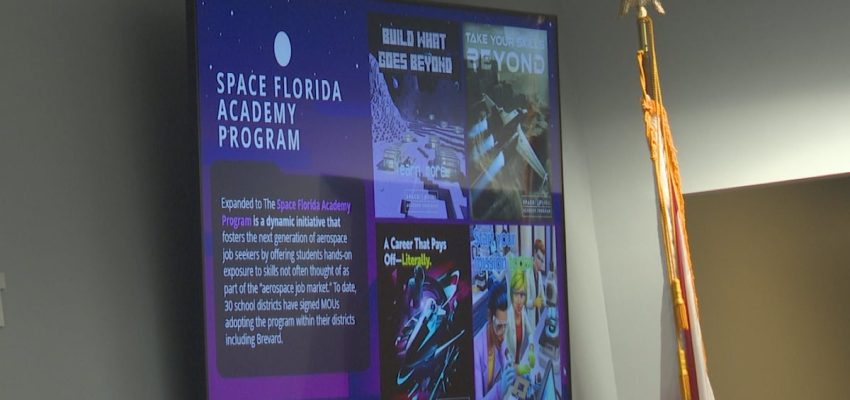
Consider the aerospace sector, a field synonymous with cutting-edge technology and rigorous demands. The recent partnership connecting Bay District Schools students to in-demand jobs in aerospace through the Space Florida Academy program exemplifies a critical trend: the proactive effort to align education with industry needs. While this particular initiative focuses on a specific high-tech domain, its underlying philosophy – preparing students for future-proof careers through specialized training and direct industry pathways – is universally relevant. It highlights the urgent need for every educational institution to rethink its curriculum, embrace emerging technologies, and forge robust partnerships to ensure students are not merely learning about the past, but are actively equipped to innovate in the future, particularly one increasingly dominated by AI.
AI’s Impact on Education: Preparing the Next Generation
The dawn of artificial intelligence heralds a significant re-evaluation of what constitutes an ‘in-demand’ skill. No longer sufficient are rote memorization and manual execution of tasks; AI systems are proving adept at these. Instead, the focus shifts to uniquely human capabilities and the ability to collaborate effectively with intelligent machines. This fundamental reorientation defines AI’s impact on education.
Industries across the board, from healthcare to finance, manufacturing to entertainment, are undergoing an AI-driven metamorphosis. The aerospace industry, for instance, is seeing AI deployed in autonomous flight systems, predictive maintenance for spacecraft, optimized flight paths, and sophisticated data analysis from space missions. These advancements don’t eliminate human roles; rather, they reshape them, demanding professionals who understand AI principles, can interpret algorithmic outputs, and are skilled in human-AI interaction. This new reality mandates that educational systems proactively cultivate skills such as critical thinking, complex problem-solving, creativity, adaptability, and emotional intelligence. Digital literacy extends beyond basic computer skills to include an understanding of data ethics, algorithmic bias, and the implications of AI on society.
Traditional education models, often characterized by standardized testing and a one-size-fits-all approach, struggle to keep pace with this rapid evolution. The linear progression from school to a lifelong career is being replaced by a dynamic cycle of continuous learning and reskilling. The imperative for educators is not just to teach content but to foster a growth mindset, curiosity, and the ability to learn autonomously. This is where AI’s impact on education becomes most profound: it’s not just about what we teach, but how we learn and adapt throughout our lives. According to a 2023 report by the World Economic Forum, 44% of workers’ core skills are expected to change in the next five years due to automation and AI, underscoring the urgency for educational reform.
Reimagining Learning Pathways for an AI-Driven World
To truly prepare students for an AI-driven future, we must reimagine learning pathways from the ground up. This involves leveraging AI itself as a tool for personalized and engaging education. Adaptive learning platforms, powered by AI, can tailor curriculum content and pace to individual student needs, identifying areas of strength and weakness and providing targeted support. Intelligent tutoring systems can offer real-time feedback and guidance, simulating a one-on-one learning experience at scale. This personalized approach is a cornerstone of enhancing AI’s impact on education, making learning more effective and accessible.
The curriculum must increasingly emphasize STEAM (Science, Technology, Engineering, Arts, and Mathematics) fields, integrating computational thinking and data literacy from an early age. Practical skills such as coding, data analysis, and an understanding of machine learning fundamentals are becoming as essential as traditional literacy and numeracy. Beyond technical prowess, there’s a growing need for ethical AI education – teaching students to critically evaluate AI systems, understand their societal implications, and develop solutions responsibly. Experiential learning, project-based assignments, and simulations that mimic real-world scenarios are crucial for applying theoretical knowledge and developing problem-solving capabilities.
Take the example of the Space Florida Academy. While focused on aerospace, such programs are exemplary in their approach to specialized, industry-aligned training. Students aren’t just learning physics; they’re engaging with real-world applications, developing skills that directly translate to jobs involving advanced materials, propulsion systems, and increasingly, AI-driven spacecraft operations. Future aerospace engineers will need to understand not only orbital mechanics but also how AI algorithms optimize fuel consumption or manage satellite constellations. This synergy between traditional disciplines and emerging technologies is key to maximizing AI’s impact on education across all sectors. However, as we embrace these innovations, we must also address the digital divide, ensuring equitable access to AI education and resources for all students, regardless of socioeconomic background.
Forging Strategic Alliances: Education, Industry, and Innovation
The pace of technological change means that educational institutions cannot, and should not, operate in isolation. Forging strategic alliances between academia and industry is paramount to ensuring curriculum relevance and preparing students for the ever-shifting landscape of AI-driven careers. These collaborations bridge the gap between theoretical knowledge and practical application, providing students with invaluable real-world experience, mentorship opportunities, and direct exposure to industry challenges and innovations. This collaborative spirit is essential for magnifying AI’s impact on education.
The partnership between Bay District Schools and Space Florida Academy is a prime illustration of such proactive measures. By connecting students directly to aerospace careers, it ensures that the skills being taught are precisely those needed by employers today and tomorrow. This model needs to be replicated and expanded across various sectors, especially for fields heavily influenced by AI. Imagine similar academies focusing on AI ethics, AI in healthcare, or AI in sustainable energy – each providing specialized training pathways and direct connections to burgeoning industries. These partnerships are vital in addressing the growing ‘skill gap,’ where the demands of the modern workforce outpace the output of traditional educational systems.
Governments and policymakers also play a crucial role in fostering innovation in education. This involves investing in AI research and development within educational contexts, incentivizing industry-academia collaborations, and developing policies that support flexible learning models and lifelong upskilling initiatives. Furthermore, as AI development becomes a global race, countries that strategically integrate AI into their educational frameworks will gain a significant competitive advantage in developing a future-ready workforce. It’s not enough to simply understand AI; we must actively shape its development and ensure our educational systems are dynamic enough to adapt to its evolving demands. The comprehensive approach to harnessing AI’s impact on education requires a concerted effort from all stakeholders.
In conclusion, the rise of artificial intelligence presents both an immense challenge and an unparalleled opportunity for educational reform. The shift towards an AI-driven economy demands a radical rethinking of how we educate and prepare future generations. From cultivating uniquely human skills like creativity and critical thinking to embracing personalized learning platforms powered by AI, and fostering robust partnerships between education and industry, the path forward is clear. Initiatives like the Space Florida Academy, while specific to aerospace, embody the essential proactive spirit needed across all sectors to ensure students are equipped for the jobs of tomorrow.
As André Lacerda, I believe passionately that embracing AI’s impact on education is not merely an option, but an imperative. It requires courage from educators to innovate, commitment from policymakers to invest, and adaptability from students to continuously learn. By working together, we can ensure that the next generation is not just prepared for the future, but empowered to define it, leveraging the power of AI responsibly and creatively for the betterment of society. The journey ahead is complex, but with foresight and collaborative action, we can transform our educational systems into vibrant incubators of innovation, ready for the challenges and opportunities of an AI-powered world.










