
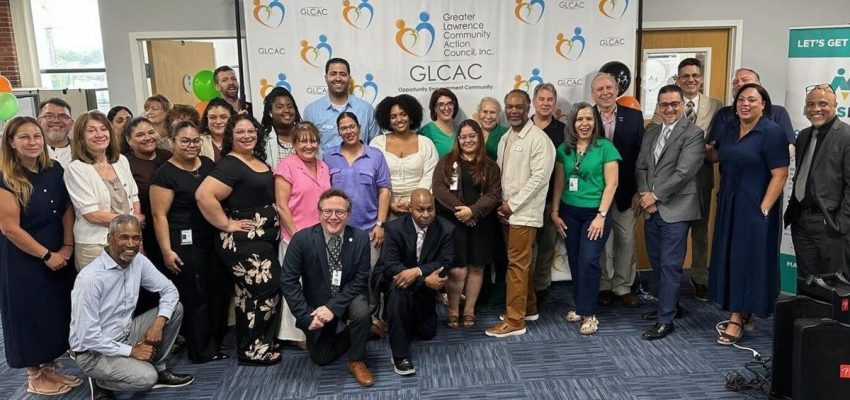

The world of work is in a perpetual state of flux, a dynamic arena constantly reshaped by technological innovation. For generations, institutions like regional career centers have served as vital anchors, offering guidance, resources, and pathways to employment. These centers, whether newly established or revitalized, have traditionally represented a tangible commitment to community growth and individual empowerment. Yet, as we stand on the precipice of an unparalleled technological revolution, the very concept of ‘career development’ is undergoing a profound redefinition. What does it mean to prepare for a career in an era where artificial intelligence is not just a tool, but a transformative force reshaping industries, automating tasks, and creating entirely new professional categories? This isn’t merely about adapting to new software; it’s about fundamentally rethinking human potential, skill acquisition, and the very structure of the global workforce. As André Lacerda, an AI specialist and tech enthusiast, I believe this pivotal moment calls for a deep dive into how AI is not just impacting jobs, but actively orchestrating an entirely new paradigm for career growth and personal fulfillment.
### AI-driven career development: Navigating the Future of Work
The notion of a ‘new regional career center’ in today’s context extends far beyond a physical location; it represents a conceptual shift, a new mental model for how individuals, institutions, and industries must collaborate to prepare for the future. Central to this evolution is **AI-driven career development**. Artificial intelligence, particularly in its generative forms, is rapidly altering job descriptions across virtually every sector. Routine, repetitive tasks, whether manual or cognitive, are increasingly susceptible to automation. This doesn’t necessarily signal an age of mass unemployment, but rather a significant redistribution of human effort and a heightened demand for uniquely human capabilities. Consider the legal profession, where AI can now analyze vast quantities of documents, predict litigation outcomes, and draft preliminary legal texts with unprecedented speed. Or manufacturing, where robotic process automation handles precision assembly, freeing human workers for quality control, machine maintenance, or complex problem-solving. These shifts underscore an urgent need for workers to not just learn *new* skills, but to proactively *unlearn* outdated ones and embrace a mindset of continuous adaptation. Traditional career services, once focused on matching existing skills to available jobs, must now evolve into dynamic hubs for predicting future skill needs, offering personalized upskilling pathways, and fostering a culture of lifelong learning. The emphasis shifts from simply finding a job to cultivating a resilient and adaptable career trajectory.
Data from the World Economic Forum’s ‘Future of Jobs Report 2023′ projects that 69 million new jobs will emerge by 2027, while 83 million existing jobs will be eliminated, leading to a net reduction of 14 million jobs. This churn highlights the imperative for robust **AI-driven career development** strategies that anticipate these shifts rather than merely reacting to them. The report also notes that 44% of workers’ core skills are expected to change in the next five years, making skills such as analytical thinking, creative thinking, and AI & big data literacy paramount. This isn’t just about technical proficiency; it encompasses a broader understanding of how AI functions, its ethical implications, and its potential to augment human capabilities. For instance, rather than fearing AI’s ability to write code, a developer might learn how to prompt AI effectively to generate boilerplate code, allowing them to focus on architectural design and innovative problem-solving. This symbiotic relationship between human and machine is where the true value lies, demanding a new breed of professionals who are fluent in both their domain expertise and the language of AI.
### The Evolving Skillset: Beyond Traditional Qualifications
As AI permeates more aspects of our professional lives, the ‘must-have’ skills for success are undergoing a dramatic transformation. Gone are the days when a single degree or a fixed set of technical competencies guaranteed a lifelong career path. Today, the most sought-after qualities often revolve around uniquely human attributes that AI, at least for now, struggles to replicate. Critical thinking, creativity, complex problem-solving, emotional intelligence, and interpersonal communication are becoming increasingly invaluable. These ‘soft skills,’ once considered secondary, are now primary drivers of success in a world where AI can handle many of the analytical heavy lifting. Consider a project manager: while AI can track progress, manage schedules, and even flag potential risks, the human project manager’s ability to motivate a diverse team, resolve conflicts, or inspire innovative solutions remains irreplaceable. Similarly, in customer service, while AI chatbots can handle routine queries, complex or emotionally charged interactions still demand the empathy and nuanced understanding of a human agent.
Beyond these human-centric skills, a new category of ‘AI literacy’ is emerging as critical. This isn’t about becoming an AI engineer, but rather understanding how to effectively interact with AI tools, interpret their outputs, and even ‘teach’ them. Skills like prompt engineering – the art of crafting precise and effective instructions for generative AI models – are becoming highly valued in fields from content creation to software development. Data literacy, the ability to understand, analyze, and communicate with data, is also paramount, as AI systems are only as good as the data they are trained on. Professionals across all sectors will need to be able to critically evaluate AI-generated insights, identify potential biases, and ensure the responsible deployment of these powerful tools. Educational institutions and career development programs must pivot to embed these skills throughout their curricula, moving beyond rote memorization to foster adaptive, critical, and ethically-minded thinkers capable of thriving in an AI-augmented world. The focus is no longer just on acquiring knowledge, but on developing the cognitive flexibility to apply that knowledge in novel, AI-infused contexts.
### Personalization at Scale: AI as Your Career Navigator
The promise of AI extends beyond merely changing what skills are needed; it also revolutionizes *how* those skills are acquired and how individuals navigate their career paths. Imagine a personalized career coach available 24/7, tailored precisely to your unique aspirations, current skill set, and market demands. This is the potential of **AI-driven career development**. AI algorithms can analyze vast amounts of data – from real-time job market trends and industry reports to individual learning styles and performance metrics – to offer highly customized guidance. For instance, an AI-powered platform could recommend specific online courses or certifications based on your current role, desired future position, and identified skill gaps. It could even simulate job interviews, provide instant feedback on your communication style, or help you refine your resume and cover letter for optimal impact. This level of personalization, once only accessible through expensive human consultants, can now be democratized, making sophisticated career guidance available to a much broader audience.
Furthermore, AI can help mitigate biases inherent in traditional hiring processes. While AI models themselves can reflect biases present in their training data, consciously designed and monitored AI systems can help standardized evaluations, focus on merit, and broaden candidate pools beyond traditional networks. This could open doors for diverse talent that might otherwise be overlooked. Companies like HireVue and Pymetrics are already using AI to assess candidate competencies and potential more objectively, analyzing factors like cognitive abilities and behavioral traits rather than relying solely on resumes or subjective interviews. However, it is crucial to approach these AI applications with a strong ethical framework, ensuring transparency, fairness, and accountability. The goal is not to replace human judgment but to augment it, providing a data-driven foundation for more equitable and effective career navigation. The beauty of **AI-driven career development** lies in its capacity to offer a dynamic, responsive, and deeply personal journey, evolving with the individual and the market simultaneously.
### Building the Workforce of Tomorrow: A Collaborative Ecosystem
The effective integration of AI into career development necessitates a collaborative ecosystem involving multiple stakeholders. Governments, educational institutions, private industry, and individuals must work in concert to build the workforce of tomorrow. Governments have a crucial role in shaping policy, investing in digital infrastructure, and funding reskilling initiatives. Programs like national digital literacy campaigns or subsidies for AI-related training can ensure that economic growth is inclusive and that no segment of the population is left behind. Educational institutions, from K-12 to universities and vocational schools, must fundamentally rethink their curricula to embed AI literacy, computational thinking, and the development of human-centric skills. This means moving beyond siloed disciplines and fostering interdisciplinary approaches that reflect the complex realities of the modern workplace. Practical, project-based learning, often in partnership with industry, will be key to preparing students for immediate impact.
Private industry, on its part, must play an active role not just as consumers of talent, but as co-creators of future skills. Companies can invest in their employees’ continuous learning, offer apprenticeships in AI-related fields, and collaborate with educational institutions to develop relevant training programs. Many forward-thinking companies are already establishing internal academies and partnerships to upskill their workforce, recognizing that investing in human capital is paramount for long-term competitiveness. Ultimately, the individual holds the most significant responsibility. A proactive mindset, a commitment to lifelong learning, and a willingness to adapt are non-negotiable in this rapidly evolving landscape. The ‘new regional career center’ is thus not merely a physical building; it is a networked ecosystem of knowledge, resources, and opportunities designed to empower individuals to thrive amidst the AI revolution. It is a testament to our collective capacity to innovate and adapt, ensuring that technological progress serves human flourishing.
The profound impact of artificial intelligence on the world of work is undeniable, ushering in an era that demands a radical rethinking of career development. The traditional model of fixed career paths and static skill sets is giving way to a dynamic, iterative journey of continuous learning and adaptation. As we’ve explored, **AI-driven career development** offers an unprecedented opportunity for personalized growth, skill acquisition, and equitable access to professional opportunities. It challenges us to embrace a future where human ingenuity is augmented by intelligent machines, leading to new forms of productivity, creativity, and problem-solving.
The ‘new career center’ is, therefore, more than just a place; it’s a paradigm – a collaborative, digitally enhanced framework built to empower individuals to navigate the complexities and embrace the possibilities of the AI age. By fostering critical thinking, cultivating uniquely human skills, and leveraging AI as a powerful tool for personalized guidance, we can collectively forge a future where careers are not just secure, but deeply fulfilling and perpetually evolving. The journey ahead requires foresight, collaboration, and an unwavering commitment to human potential, ensuring that as AI advances, so too does our capacity to thrive within an ever-changing professional landscape.










