

In an era defined by relentless technological advancement, few sectors are undergoing as profound a transformation as manufacturing. Once synonymous with assembly lines and repetitive tasks, modern factories are now vibrant ecosystems of automation, data analytics, and artificial intelligence. This shift isn’t just about efficiency; it’s about redefining what’s possible, creating new industries, and presenting unprecedented opportunities for innovation. As an AI specialist and fervent tech enthusiast, I’ve witnessed firsthand how these intelligent systems are not merely augmenting human capabilities but creating entirely new paradigms for production. Yet, amidst this technological surge, a critical question arises: how do we ensure the human workforce is prepared, skilled, and empowered to thrive in this future of manufacturing? The answer, I believe, lies in dedicated educational initiatives and strategic investments in human potential, exemplified by organizations like the CCAI Finishing Education Foundation.
The journey towards intelligent factories is not a solitary path for machines. It requires a synergy between cutting-edge technology and a highly skilled, adaptable human workforce. This article delves into how artificial intelligence is reshaping manufacturing, the imperative for workforce development, and the crucial role that educational foundations play in cultivating the talent that will drive the next industrial revolution. It’s a story of innovation, opportunity, and the enduring power of human ingenuity guided by education.
AI in manufacturing: A Paradigm Shift
The integration of artificial intelligence into industrial processes represents more than just an incremental upgrade; it is a fundamental re-imagining of how goods are designed, produced, and delivered. This paradigm shift, often referred to as Industry 4.0 or the Fourth Industrial Revolution, leverages data, connectivity, and intelligent algorithms to create what we now call smart factories. These are environments where machines communicate, decisions are data-driven, and operations are optimized with a level of precision previously unimaginable. The global market for AI in manufacturing is projected to grow significantly, with some estimates placing it at over $35 billion by 2028, underscoring its pivotal role in future economic growth and industrial competitiveness.
Consider the myriad ways AI is being deployed. In product design, generative AI tools can explore thousands of design variations, optimizing for material usage, performance, and manufacturability far beyond human capacity. For predictive maintenance, AI algorithms analyze sensor data from machinery to anticipate failures before they occur, drastically reducing downtime and maintenance costs. This proactive approach ensures operational continuity and extends the lifespan of expensive equipment. Automated quality inspection systems, powered by computer vision and machine learning, can detect defects at microscopic levels, ensuring product consistency and integrity at scales and speeds impossible for human inspection teams alone. Furthermore, in areas like supply chain management, AI optimizes logistics, predicts demand fluctuations, and enhances resilience against disruptions, creating more robust and responsive global networks. Each of these applications contributes to a more efficient, sustainable, and adaptive manufacturing landscape, solidifying the importance of expertise in AI in manufacturing.
Beyond the factory floor, AI’s influence extends to robotic process automation (RPA) in administrative tasks, improving efficiency in back-office operations, and enhancing overall enterprise resource planning (ERP) systems. The ability of AI to process vast datasets and extract actionable insights is transforming decision-making at every level, from strategic planning to real-time production adjustments. This pervasive integration means that understanding and leveraging industrial AI is no longer a niche skill but a fundamental requirement for anyone aspiring to lead or innovate within the manufacturing sector.
Reshaping the Workforce: Skills for the Intelligent Factory
The rise of advanced manufacturing and the pervasive influence of artificial intelligence naturally lead to questions about the future of work. While concerns about job displacement are valid and warrant careful consideration, a more nuanced perspective reveals a significant shift in job roles and the creation of entirely new career paths. The intelligent factory doesn’t eliminate the need for human talent; it elevates it, demanding a workforce with different, often more sophisticated, skills. We are moving from an era of purely manual labor to one of human-machine collaboration, where AI augments human decision-making and handles repetitive, dangerous, or physically demanding tasks.
This transformation necessitates a new skill set. Technicians and engineers no longer just operate machines; they program, monitor, and troubleshoot AI systems and robotic platforms. They need proficiency in data analytics to interpret the insights generated by AI, a strong grasp of cybersecurity to protect interconnected systems, and critical thinking to navigate complex automation challenges. Roles such as AI engineers, data scientists specializing in industrial applications, robotics technicians, human-robot interaction specialists, and even AI ethicists are becoming increasingly crucial. These positions require a blend of technical acumen, problem-solving capabilities, and an understanding of both the manufacturing process and the underlying AI algorithms. Moreover, soft skills like adaptability, continuous learning, and interdisciplinary collaboration are paramount, as the pace of technological change shows no signs of slowing. Preparing for a future with more AI in manufacturing means embracing this evolving skill matrix.
The gap between the skills currently possessed by the workforce and those required by modern, AI-driven manufacturing is a pressing challenge. Addressing this skills gap is not merely a matter of retraining but involves fundamentally rethinking educational pipelines, from K-12 STEM initiatives to vocational training and university programs. Industry partnerships, apprenticeships, and specialized certifications play a crucial role in providing hands-on experience and tailored instruction. It is imperative that we equip individuals not just with technical knowledge, but with the capacity for lifelong learning, enabling them to adapt to future innovations and maintain relevance in a dynamic industrial landscape. This human-centric approach ensures that technology serves to empower, rather than marginalize, the workforce.
Cultivating Tomorrow’s Innovators: The Role of Education and Inclusivity
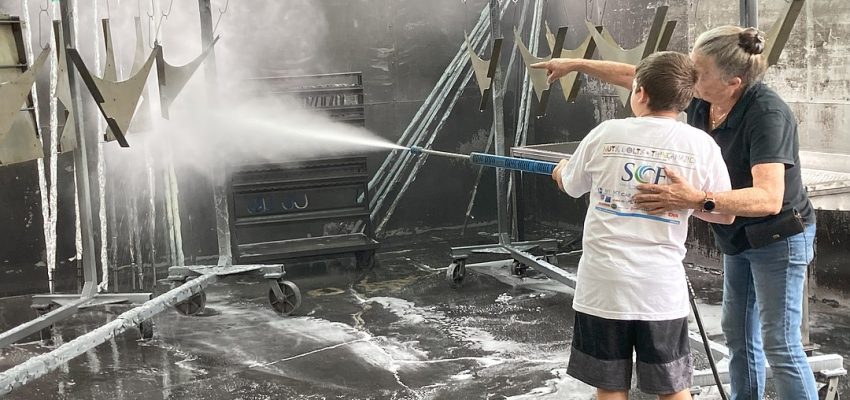
Recognizing the profound implications of this industrial evolution, proactive measures are essential to ensure a smooth transition and equitable access to the opportunities presented by AI. This is where the work of foundations like the CCAI Finishing Education Foundation becomes not just valuable, but absolutely critical. By offering camp and scholarship opportunities, such organizations are directly addressing the imperative of workforce development, focusing on two key demographics: students and women. These initiatives are not merely charitable acts; they are strategic investments in the future economic resilience and innovative capacity of the manufacturing sector. Providing early exposure to STEM fields and advanced manufacturing concepts through camps can spark interest and demystify careers that might otherwise seem inaccessible or overly technical. For many students, these experiences are the first touchpoints with robotics, programming, data science, and advanced machinery, planting the seeds for future specialization in areas like AI in manufacturing.
Scholarship opportunities, on the other hand, are vital in breaking down financial barriers that often prevent talented individuals from pursuing higher education or specialized training in these high-demand fields. For women, in particular, who have historically been underrepresented in manufacturing and STEM, targeted scholarships and mentorship programs can be transformative. Increasing diversity in these critical sectors isn’t just about equity; it’s about fostering innovation. Diverse teams bring varied perspectives, problem-solving approaches, and creativity, leading to more robust AI solutions and a broader range of industrial innovations. Studies consistently show that companies with diverse leadership and workforces outperform their less diverse counterparts, particularly in areas requiring complex problem-solving and innovation.
Beyond initial entry, these foundations contribute to building a continuous learning culture. They facilitate access to certifications in advanced technologies, vocational training programs, and even university-level degrees that focus on the intersection of engineering, computer science, and manufacturing. These educational pathways are designed to cultivate a workforce that is not only proficient in current AI tools but also possesses the foundational knowledge to adapt to future technological shifts. From understanding machine learning algorithms for predictive maintenance to designing human-robot interfaces for collaborative robots, the skills fostered by these programs are directly applicable to the challenges and opportunities presented by modern industrial environments.
Moreover, the emphasis on practical, hands-on experience through camps and workshops is paramount. It allows participants to move beyond theoretical knowledge and engage with real-world applications of AI, robotics, and automation. This experiential learning approach helps bridge the gap between academic concepts and industrial reality, making graduates job-ready and confident in their abilities to contribute effectively from day one. In essence, these programs are crafting the architects and operators of tomorrow’s smart factories, ensuring that the human element remains central to the evolution of manufacturing.
Navigating the Broader Societal and Ethical Landscape
As we embrace the transformative potential of AI in manufacturing, it is also crucial to address the broader societal and ethical considerations. The pervasive use of AI brings with it questions of data privacy, algorithmic bias, and the equitable distribution of economic benefits. Manufacturers and technology developers must collaborate with policymakers and ethicists to establish robust frameworks that ensure AI is developed and deployed responsibly. This includes designing AI systems that are transparent, fair, and accountable, and implementing strong cybersecurity measures to protect sensitive operational data.
Furthermore, the societal impact of automation and job displacement, while partially offset by job creation, requires proactive strategies at a systemic level. Governments, educational institutions, and industries must work hand-in-hand to implement comprehensive reskilling and upskilling programs for workers whose roles are most affected by automation. Social safety nets and transitional support mechanisms are also vital to ensure that no segment of the workforce is left behind in this rapid industrial transformation. The goal should be to harness AI’s power to create a more prosperous and sustainable future for all, not just a privileged few.
The future of manufacturing, driven by artificial intelligence, is undeniably exciting and brimming with potential. From optimizing production lines to revolutionizing product design, AI is setting new benchmarks for efficiency, innovation, and sustainability. Yet, the true success of this industrial revolution hinges not just on the sophistication of our machines, but on the preparedness and adaptability of our human capital. The symbiotic relationship between cutting-edge technology and a highly skilled, diverse workforce is the bedrock upon which the smart factories of tomorrow will be built.
Organizations like the CCAI Finishing Education Foundation are playing an indispensable role in cultivating this future-ready workforce. By providing essential educational opportunities, nurturing talent, and championing diversity, they are ensuring that students and women are empowered to not only participate in but also lead the advancements in AI in manufacturing. As André Lacerda, I firmly believe that investing in human potential through education is the smartest strategy for navigating the complexities and harnessing the full promise of our AI-driven industrial future. It is through these dedicated efforts that we can forge a manufacturing landscape that is not only technologically advanced but also equitable, inclusive, and truly prosperous for everyone.










