

In an era defined by rapid technological advancement, the landscape of nearly every profession is undergoing a profound transformation. Few fields exemplify this shift more dynamically than healthcare. The future of medicine, diagnostics, and patient care is not just about what we know, but how we apply cutting-edge tools, particularly artificial intelligence. For high school students on the cusp of defining their academic and professional paths, understanding these evolving dynamics is paramount.
It is within this context that initiatives designed to offer early, hands-on exposure to the medical world become invaluable. These programs don’t just spark interest; they provide a crucial glimpse into the practical realities and future potential of a demanding yet incredibly rewarding sector. One such commendable effort recently took place at King’s College in Wilkes-Barre, where aspiring young minds immersed themselves in the vibrant world of health sciences during the institution’s fourth annual health sciences camp. This experience serves as a powerful reminder of how foundational learning, combined with foresight, can prepare the next generation for the complex and technologically driven challenges of tomorrow’s healthcare.
Health Science Careers: Cultivating Tomorrow’s Innovators Today
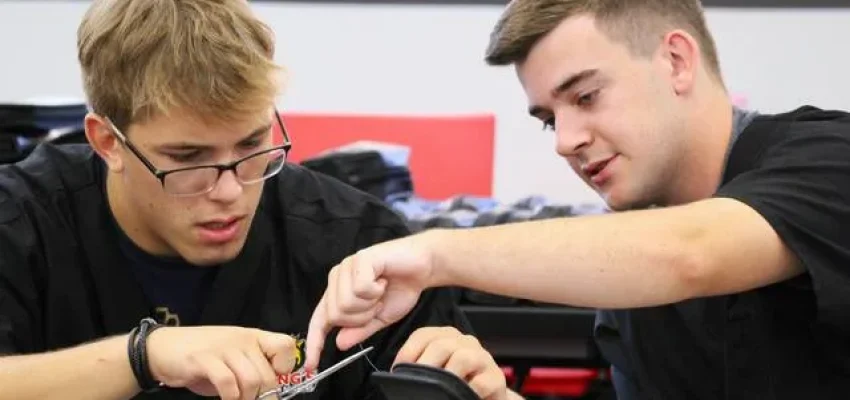
The summer camp at King’s College offered high school students a tangible taste of what it means to work in various aspects of healthcare. While the original report highlights the overall experience, it’s easy to imagine the breadth of activities these young participants engaged in. From simulating basic medical procedures and understanding human anatomy to exploring diagnostic tools and laboratory techniques, such programs bridge the gap between abstract textbook knowledge and real-world application. These immersive experiences are critical because they allow students to not only visualize themselves in medical roles but also to develop a genuine passion for the field.
The demand for skilled professionals in various health science careers continues to grow globally. According to the U.S. Bureau of Labor Statistics, healthcare occupations are projected to add about 1.8 million new jobs over the next decade, much faster than the average for all occupations. This surge is driven by an aging global population, increased prevalence of chronic diseases, and continuous advancements in medical technology and treatments. This means that programs like the King’s College camp are not just extracurricular activities; they are vital pipelines for nurturing the talent that will meet this escalating need.
Beyond the traditional roles of doctors and nurses, the spectrum of health science careers is incredibly diverse. It encompasses highly specialized fields such as physical therapy, occupational therapy, medical imaging technology, clinical laboratory science, public health, pharmacy, and biomedical engineering. Each of these professions requires a unique blend of scientific understanding, critical thinking, problem-solving skills, and often, a deep sense of empathy. Early exposure helps students identify which specific niche within the expansive healthcare ecosystem might best align with their interests and aptitudes, long before they commit to a university major.
Moreover, these camps often introduce students to the interdisciplinary nature of modern healthcare. They learn that a patient’s journey involves a team of professionals, each contributing their specialized expertise. This collaborative spirit is increasingly important, especially as healthcare systems become more integrated and data-driven. Understanding teamwork from an early age is a soft skill that will serve them well, regardless of which of the many challenging health science careers they eventually pursue.
The Digital Revolution in Healthcare: Where AI Meets Anatomy
While a foundational understanding of anatomy, physiology, and basic clinical skills remains indispensable, the future trajectory of health science careers is inextricably linked to technological innovation, particularly the rise of artificial intelligence. As an AI specialist, I observe with fascination how rapidly AI is moving from theoretical concept to practical implementation across various medical domains. What students experience in camps today will undoubtedly be augmented by AI in their professional lives tomorrow.
Consider the realm of diagnostics. AI algorithms are already proving remarkably adept at analyzing medical images, such as X-rays, MRIs, and CT scans, often identifying subtle patterns indicative of disease that might elude the human eye. In pathology, AI can scrutinize tissue samples for cancerous cells with unprecedented speed and accuracy. This doesn’t replace the radiologist or pathologist, but rather empowers them, enabling earlier detection, more precise diagnoses, and ultimately, better patient outcomes. The future professional in medical imaging or laboratory science will need to be proficient not just in operating equipment, but in interpreting and leveraging AI-driven insights.
Personalized medicine is another area where AI is a game-changer. By analyzing vast datasets including genetic information, patient history, lifestyle factors, and responses to various treatments, AI can help tailor therapeutic approaches to individual patients. This moves away from a one-size-fits-all model towards highly customized care, optimizing drug dosages, predicting adverse reactions, and identifying the most effective treatment pathways. Students entering pharmacy or clinical research will find AI tools essential for navigating this complex data landscape.
In drug discovery and development, AI is dramatically accelerating the pace of innovation. From identifying potential drug candidates to predicting their efficacy and toxicity, AI can sift through molecular databases and simulate interactions far quicker than traditional methods. This significantly reduces the time and cost associated with bringing new medicines to market, offering hope for previously untreatable conditions. Biomedical engineers and pharmaceutical scientists will increasingly rely on AI to drive their research forward.
Even in surgical settings, robotics, often powered by AI, is enhancing precision and minimizing invasiveness, leading to quicker recovery times for patients. Robotic surgery systems allow surgeons to perform complex procedures with greater dexterity and control. Public health initiatives also benefit immensely from AI, which can predict disease outbreaks, model the spread of epidemics, optimize resource allocation, and identify populations at risk, enabling proactive interventions. The breadth of AI’s impact means that virtually all health science careers will necessitate a certain level of digital literacy and an understanding of how to collaborate with intelligent systems.
Bridging the Gap: Preparing for the AI-Powered Medical Frontier
The integration of AI into healthcare is not just a technological shift; it’s a paradigm shift requiring a new set of skills and an adapted mindset. For students exploring health science careers, it’s no longer enough to be proficient in biology and chemistry alone. They must also cultivate critical thinking skills, adaptability, and an understanding of data analytics and computational tools. Programs like the King’s College camp, by fostering curiosity and foundational scientific knowledge, lay an excellent groundwork, even if they don’t explicitly delve into AI.
The next generation of healthcare professionals will operate at the intersection of human empathy and artificial intelligence. They will need to understand the ethical implications of AI in medicine – issues of data privacy, algorithmic bias, and accountability. Discussions around these complex topics should ideally begin early, encouraging students to think critically about the societal impact of the technologies they will eventually wield. The goal isn’t to turn every future nurse into a data scientist, but to ensure they are all informed users and critical evaluators of AI tools.
Interdisciplinary education becomes paramount. Future doctors might benefit from understanding basic programming or data visualization. Pharmacists might analyze AI-driven clinical trial data. Therapists might utilize AI-powered diagnostic tools to personalize rehabilitation plans. This convergence demands educational pathways that encourage exploration across traditional academic silos, fostering a holistic understanding of the patient journey within a technologically advanced framework. The human element, however, will always remain irreplaceable. While AI can process information, provide insights, and automate tasks, the compassion, critical judgment in ambiguous situations, and the nuanced communication required for patient care are uniquely human attributes that will only grow in importance.
The journey into health science careers is embarking on its most exciting chapter yet. For those in high school today, the opportunities are boundless, provided they embrace both the timeless principles of care and the revolutionary potential of emerging technologies. Early exposure, like that offered at King’s College, is more than just a summer activity; it’s an investment in a future where human ingenuity and artificial intelligence converge to heal, innovate, and improve lives on an unprecedented scale.
As we look to the horizon, the synergy between human expertise and intelligent machines will define the efficacy and reach of healthcare. It is imperative that we continue to support and expand programs that not only introduce students to the fundamental aspects of health science careers but also inspire them to become pioneers in an AI-augmented medical frontier. The challenges are significant, but the potential rewards – healthier communities and more fulfilling lives – are immeasurable.










