
In an era defined by rapid technological advancement and dynamic economic shifts, the concept of a ‘job for life’ has largely faded into history. Today, the mantra is continuous learning, adaptability, and the relentless pursuit of new skills. As industries evolve at an unprecedented pace, driven largely by the transformative power of artificial intelligence, societies face a critical challenge: how to equip their workforces not just to survive, but to thrive in this new landscape. It’s a question that demands proactive solutions, strategic partnerships, and a deep understanding of future demands.
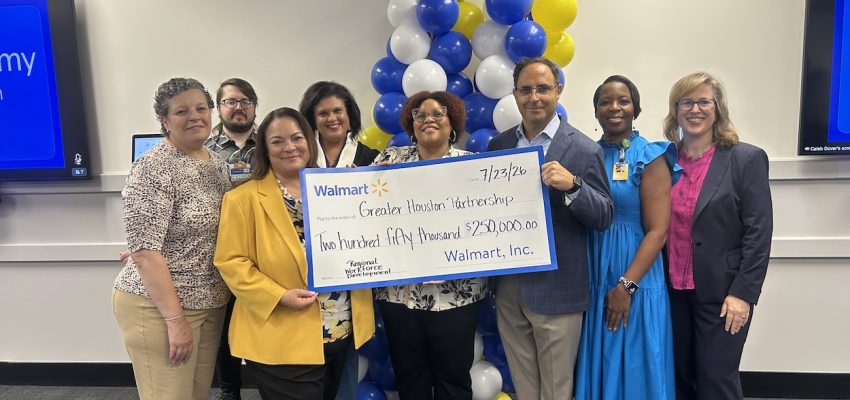
It is within this context that we observe significant initiatives designed to bridge the skills gap and empower individuals. One such noteworthy effort comes from Walmart, a titan of industry whose reach extends far beyond retail. Their recent announcement of a multi-year workforce development investment in Houston, part of their ‘Walmart for Good’ broader philanthropic and community engagement efforts, stands as a powerful testament to the recognition that corporate responsibility now extends to cultivating the talent pipeline for an entire economy. This isn’t merely about job creation; it’s about fostering ‘higher-quality careers’ – roles that offer stability, growth, and greater economic mobility. As an AI specialist and tech enthusiast, I find these initiatives particularly compelling, as they often lay the groundwork for how emerging technologies, including AI, can be harnessed to sculpt a more resilient and prosperous future for workers.
Workforce Development in Houston: A Blueprint for the Future Economy
Houston, a vibrant metropolis known globally for its energy sector, space exploration, and medical advancements, finds itself at a pivotal juncture. While its economic engine has historically been robust, the city, like many others, grapples with the imperative to diversify and modernize its labor force. The energy transition, coupled with the burgeoning tech and healthcare sectors, means that the skills in demand are shifting. Recognizing this, Walmart’s investment in Workforce Development in Houston is not just a localized effort but a strategic move that reflects a broader understanding of national economic trends.
This multi-year commitment, channeled through Walmart for Good, aims to provide Houston workers with the tools and training necessary to adapt to these changes. The core objective is to help individuals build in-demand skills and connect them to career pathways that promise not just employment, but genuine advancement. For a city like Houston, where approximately 2.3 million people are employed across various sectors, ensuring a robust and adaptable workforce is paramount to sustaining its competitive edge. Data from the Bureau of Labor Statistics consistently highlights the shifting nature of employment, with demand for roles requiring digital literacy, critical thinking, and advanced technical skills growing significantly faster than others.
Consider the landscape of Houston’s economy. While oil and gas remain central, the city has seen significant growth in its innovation ecosystem, with a flourishing startup scene and increasing investments in areas like renewable energy, biotech, and digital services. This diversification is positive, but it creates a simultaneous challenge: ensuring that the existing workforce can transition into these new, often higher-paying, roles. Initiatives like Walmart’s are crucial because they directly address this gap, providing targeted training programs that can range from basic digital literacy to advanced coding or specialized technical certifications. These programs are often designed in collaboration with local community colleges, vocational schools, and non-profit organizations, creating a localized ecosystem of learning and opportunity. The intent is clear: transform entry-level positions into stepping stones for meaningful career progression.
Navigating the Shifting Sands of the Job Market with AI
The imperative for robust Workforce Development in Houston is magnified by the accelerating influence of artificial intelligence across virtually every industry. While some view AI with trepidation, fearing job displacement, a more nuanced perspective reveals its potential as a powerful tool for augmentation and transformation. AI isn’t just automating tasks; it’s reshaping the very definition of work, creating new categories of jobs and demanding new forms of human expertise. For example, AI algorithms can analyze vast datasets to identify emerging skill gaps in real-time, allowing training programs to be far more responsive to market needs than ever before. This data-driven approach is a game-changer for effective workforce planning.
Furthermore, AI-powered learning platforms are revolutionizing how individuals acquire new skills. Personalized learning paths, adaptive curricula that adjust to a learner’s pace and comprehension, and virtual reality simulations for hands-on training are just a few examples of how AI is making education more accessible and effective. Imagine a warehouse worker in Houston, looking to transition into a data analysis role. An AI-driven platform could assess their current skills, recommend specific online courses, provide interactive exercises, and even connect them with mentors or job opportunities, all tailored to their individual journey. This hyper-personalization accelerates the upskilling process and makes ‘higher-quality careers’ more attainable.
The impact of AI also extends to job matching. Advanced algorithms can now connect job seekers with opportunities that align not only with their current skills but also with their potential and aptitude for growth, often uncovering hidden talents or transferable skills that traditional recruitment methods might miss. This is particularly vital in a diverse metropolitan area like Houston, where talent pools are rich but sometimes fragmented. By leveraging AI to optimize talent discovery and development, initiatives focused on Workforce Development in Houston can significantly enhance efficiency and equity in the labor market.
Moreover, AI is fostering the growth of ‘human-in-the-loop’ jobs, where individuals work collaboratively with AI systems. This requires a new blend of technical proficiency, critical thinking, and ‘soft skills’ like problem-solving, creativity, and emotional intelligence – abilities that AI, for all its prowess, struggles to replicate. Training programs must therefore evolve to cultivate not just technical know-how but also these uniquely human attributes, preparing workers for roles where they manage, interpret, and leverage AI outputs.
Cultivating a Future-Ready Workforce: Beyond Technical Skills
While technical skills are undeniably crucial, true success in the modern economy, particularly as influenced by AI, demands a broader repertoire. The investment in Workforce Development in Houston goes beyond teaching specific software or operational procedures; it encompasses a holistic approach to career readiness. This includes fostering crucial soft skills such as communication, collaboration, adaptability, and resilience. As automation handles more routine tasks, the premium on human interaction, complex problem-solving, and innovative thinking only increases.
Consider the evolving retail sector, where Walmart itself operates. While AI optimizes inventory, logistics, and customer service, human associates are increasingly focused on complex customer interactions, brand representation, and strategic decision-making. The skills needed for these roles are often less about manual tasks and more about empathy, strategic thinking, and the ability to leverage technology effectively. Training programs must reflect this shift, incorporating modules on critical thinking, ethical decision-making (especially relevant when interacting with AI systems), and inter-personal communication.
Another crucial aspect of modern workforce development is ensuring equitable access. Digital literacy, for instance, is no longer a luxury but a fundamental requirement. Initiatives must proactively address the digital divide, providing foundational training to individuals who may not have had prior exposure to technology. This includes everything from basic computer proficiency to understanding cybersecurity best practices. By so doing, these programs ensure that the benefits of technological advancement and economic growth are shared broadly across all segments of the population, fostering true economic inclusion. The ‘Walmart for Good’ ethos likely extends to ensuring that these training opportunities are accessible to diverse communities within Houston, helping to uplift entire neighborhoods and families.
The success of such investments relies heavily on strong partnerships. Walmart, as a major corporate entity, often collaborates with local government agencies, educational institutions like Houston Community College, and non-profit organizations dedicated to workforce empowerment. These collaborations are vital because they combine corporate resources with local expertise, ensuring that training programs are relevant, culturally sensitive, and effectively address the specific needs of the community. It’s a symbiotic relationship: corporations gain access to a skilled talent pool, and communities gain improved economic prospects and social mobility.
The long-term impact of a sustained investment in Workforce Development in Houston cannot be overstated. It contributes to a more skilled, adaptable, and resilient labor force, which in turn attracts further business investment, fosters innovation, and strengthens the regional economy. It creates a virtuous cycle where upskilled workers drive productivity and economic growth, leading to more opportunities for future generations. This strategic foresight, particularly when informed by an understanding of AI’s transformative potential, is what will truly define the future of work in leading cities like Houston.
The journey towards a future-ready workforce is continuous, demanding constant evaluation, adaptation, and sustained investment. Walmart’s initiative in Houston serves as a powerful model for how large organizations can play a pivotal role in societal advancement, moving beyond traditional business functions to actively shape the economic landscape. By focusing on skill-building and higher-quality careers, they are not just filling jobs; they are investing in human potential.
As AI continues its inexorable march forward, the emphasis on human-centric skills, lifelong learning, and equitable access to education will only intensify. The success of initiatives like the Workforce Development in Houston project will be measured not just in immediate job placements, but in the long-term resilience and prosperity they foster for individuals and communities alike. It’s a testament to the idea that technology, when strategically harnessed and coupled with human ingenuity and compassion, can truly pave the way for a brighter, more equitable future of work.