
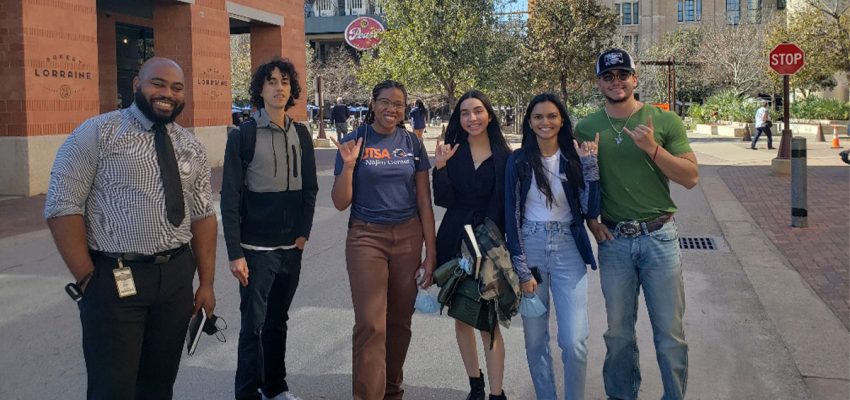

The evolving global landscape, rapidly reshaped by technological advancements and the pervasive influence of artificial intelligence, demands a new paradigm in education. No longer sufficient are purely theoretical frameworks; today’s students need direct, practical engagement that bridges the gap between academia and the professional world. As an AI specialist and tech enthusiast, I’ve observed firsthand how vital hands-on experience is in preparing the next generation for roles that are constantly redefined. It is with this understanding that I find particular significance in recent news: UT San Antonio has been recognized with the prestigious 2025 Star Award for its groundbreaking Najim Strategist Program. This honor underscores a profound commitment to equipping students not just with knowledge, but with the practical acumen and adaptability essential for thriving in the dynamic digital age. This is more than just an award; it’s a testament to a forward-thinking approach to education that prioritizes the future success of its students in an increasingly competitive and AI-driven job market. It showcases how innovative **career readiness programming** is setting a new standard for higher education.
### Career Readiness Programming: The Najim Strategist Program’s Blueprint for Success
The recognition of UT San Antonio’s Najim Strategist Program with the 2025 Star Award marks a significant moment, highlighting an exemplary model for modern educational institutions in preparing students for today’s complex workforce. This statewide honor affirms the program’s innovative approach to **career readiness programming**, a meticulously designed initiative focused on hands-on, project-based learning. It skillfully deviates from traditional lecture-based models, immersing students directly in real-world challenges that mirror professional demands.
At the core of the Najim program, students actively collaborate on projects commissioned by external partners—from local businesses and non-profits to internal university departments. Participants, often working in interdisciplinary teams, are tasked with solving genuine problems, whether developing marketing strategies for startups or optimizing operational processes for established organizations. This active engagement allows them to apply theoretical knowledge, fostering a deeper understanding and retention of concepts.
The program’s methodology emphasizes experiential learning, where students don’t just learn *about* project management; they *manage* projects. They communicate with real clients, stakeholders, and team members, cultivating critical thinking, problem-solving, collaboration, adaptability, and effective communication. These “power skills” are increasingly vital across all sectors, particularly in tech and AI, where rapid change is constant. Strategic mentorship and professional development components further enhance this. Students receive guidance from faculty and industry professionals, gaining invaluable insights and networking opportunities crucial for transitioning from academia to careers. This innovative approach to **career readiness programming** is a shining example of how universities can create truly impactful educational experiences, benefiting students, employers, and the wider economy.
### Navigating the Future: Why Hands-On Skills Are Indispensable in the AI Era
The importance of programs like Najim cannot be overstated, especially when viewed through the lens of a rapidly transforming global economy powered by artificial intelligence. We are in an era where industries are being reimagined, routine tasks automated, and the demand for uniquely human skills—creativity, critical thinking, complex problem-solving, and emotional intelligence—is skyrocketing. In this context, effective **career readiness programming** forms the bedrock for future professional success.
Traditional education, while providing foundational knowledge, often struggles to keep pace with swift technological innovations. Universities must bridge this gap, ensuring their curricula and experiential offerings reflect current and future workforce needs. Consider fields like data science, machine learning, and AI ethics. These require applying algorithms, managing complex datasets, and evaluating societal implications. A project-based model, like UTSA’s, directly addresses this by immersing students in meaningful, practical engagement—for example, using AI to analyze urban traffic or developing a smart health monitoring prototype.
Moreover, the modern workplace is inherently collaborative. Success hinges on teamwork, cross-functional communication, and integrating diverse perspectives. The Najim Strategist Program’s emphasis on group projects teaches negotiation, compromise, delegation, and leadership within a team—skills AI cannot replicate. Cultivating these uniquely human capabilities through immersive experiences is paramount. The shift towards agile work and the gig economy also underscores the value of practical competencies. Graduates are expected to be self-starters, managing projects from conception to completion. A LinkedIn study highlighted problem-solving and collaboration as top in-demand skills globally. Such robust **career readiness programming** directly addresses these market demands, building resilience and preparing students to navigate obstacles and pivot through challenges.
### Charting the Course: UT San Antonio’s Vision for Educational Innovation
UT San Antonio’s commitment to pioneering educational approaches, exemplified by the Najim Strategist Program and its well-deserved Star Award, signals a crucial shift in higher education. Universities are evolving to provide education that is not just academically rigorous but profoundly relevant to the 21st-century workforce. For institutions like UTSA, this means embedding practical experience, interdisciplinary collaboration, and a future-focused mindset into their core offerings.
The strategic vision behind initiatives like the Najim program extends beyond simply securing jobs; it aims to cultivate innovators, leaders, and ethical global citizens. In an era where AI algorithms drive complex decisions, understanding the ethical implications of technology is as crucial as technical proficiency. Project-based learning environments often incorporate discussions around data privacy, bias in AI, and responsible innovation, providing students a holistic understanding of their future roles. This integrated approach ensures graduates are not just skilled technicians but thoughtful contributors to society, capable of shaping the ethical landscape of emerging technologies.
Moreover, the success of such **career readiness programming** relies on strong academia-industry partnerships. UTSA’s engagement with external partners for real-world projects exemplifies this synergy, offering students authentic learning experiences while businesses tap into fresh talent and innovative perspectives. This fosters a symbiotic relationship benefiting both education and the regional economy, ensuring a steady supply of well-prepared talent for critical sectors, especially those leveraging advanced AI. Looking ahead, the work landscape will continue to be reshaped by AI, robotics, and automation. Programs like Najim lay the groundwork for adaptability, teaching students not just fixed skills, but the meta-skills of learning how to learn, critical thinking, and problem-solving—enduring competencies for navigating future career transitions. This forward-thinking approach cements UT San Antonio’s reputation as a leader in educational innovation, fostering professionals ready to meet the challenges and opportunities of the AI age head-on.
The recognition of UT San Antonio’s Najim Strategist Program with the 2025 Star Award serves as a powerful affirmation of the critical role that innovative **career readiness programming** plays in contemporary higher education. In a world increasingly shaped by artificial intelligence and rapid technological shifts, the traditional models of learning are simply no longer sufficient. Programs that immerse students in real-world challenges, cultivate essential soft skills, and foster an adaptable mindset are not just beneficial; they are imperative. UTSA has demonstrated a profound understanding of this imperative, proactively equipping its students with the practical acumen, collaborative spirit, and resilient problem-solving abilities necessary to navigate and thrive in the dynamic professional landscapes of tomorrow.
As we look to the future, the lessons learned from programs like Najim will become even more pronounced. The demand for human creativity, ethical reasoning, and complex strategic thinking will only intensify as AI continues to automate routine tasks. Institutions that prioritize hands-on, project-based learning are not merely preparing students for their first job; they are empowering them to become lifelong learners, innovators, and leaders capable of shaping the future rather than merely reacting to it. UT San Antonio, through its exemplary **career readiness programming**, is not just setting a benchmark for educational excellence in Texas, but is also contributing significantly to the global conversation on how best to educate the workforce of the AI age. Its success offers a compelling blueprint for how education can truly empower the next generation to succeed in an ever-evolving world.










