
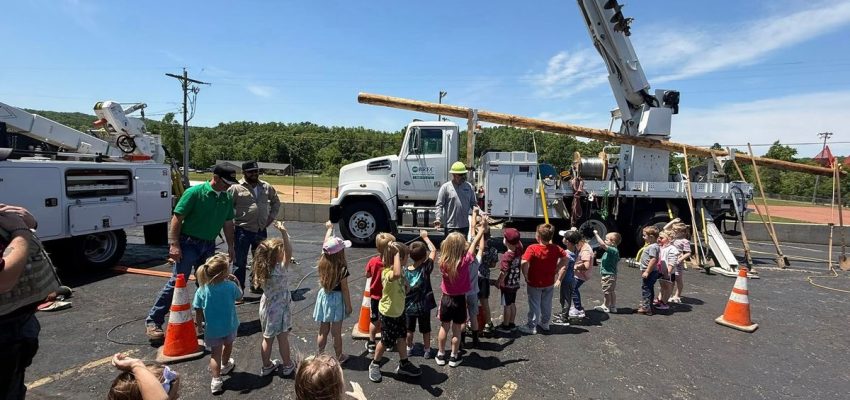

In an era defined by rapid technological advancement and a constantly evolving job market, the seeds of future aspirations are often sown surprisingly early. While we often think of career planning as a high school or college endeavor, the truth is that curiosity about the professional world begins much sooner. Events like the recent one at South Iron Elementary, where students connected with local professionals, serve as powerful reminders of the profound impact an Elementary Career Day can have. These invaluable initiatives aren’t just about showing children what jobs exist; they are about igniting imagination, fostering a sense of possibility, and subtly preparing the next generation for a future we are still building.
As an AI specialist and someone deeply invested in the intersection of technology and human potential, I believe that exposing young minds to a diverse array of professions is more critical now than ever. It’s about demystifying work, showcasing the tangible applications of classroom learning, and cultivating the foundational skills of critical thinking and adaptability that will serve them well, regardless of the career path they ultimately choose in a world increasingly shaped by artificial intelligence and automation.
Elementary Career Day: Paving the Path for Future Innovators
The concept of an Elementary Career Day is elegantly simple yet incredibly effective. It brings the ‘real world’ directly into the classroom, allowing children to interact with individuals who embody a variety of professions. At South Iron Elementary, this included representatives from vital sectors like healthcare, banking, manufacturing, and utilities. Such an event goes far beyond a textbook description of a job; it offers a living, breathing demonstration of what these roles entail.
Imagine a young student, perhaps shy and uncertain about their future, suddenly seeing a paramedic explain how they save lives, or a banker demystifying how money works. These interactions are transformative. They challenge preconceived notions and expand horizons. Many children grow up with a limited view of career options, often restricted to what they see in their immediate family or media. An Elementary Career Day shatters these limitations, introducing them to roles they might never have considered, from mechanical engineers building critical infrastructure to nurses providing compassionate care. Data from organizations like Junior Achievement consistently shows that early exposure to career options significantly impacts a child’s understanding of work ethic, financial literacy, and goal setting. These aren’t just one-off experiences; they are pivotal moments that can shape a child’s educational trajectory and future choices.
Beyond simply showcasing professions, these events offer a tangible link between classroom subjects and real-world application. When a student sees an engineer discussing the principles of design, the abstract concepts of math and physics suddenly become relevant. When a healthcare professional talks about diagnostics, the importance of science class becomes abundantly clear. This practical context can be a powerful motivator, transforming abstract lessons into concrete tools for future success. It also begins to instill an understanding of community interdependence, showing how diverse professions contribute to the fabric of society.
Beyond the Classroom Walls: The Power of Real-World Engagement
The value of an Elementary Career Day extends far beyond simply listing job titles. It’s about the quality of engagement and the rich, sensory experience it provides. Unlike reading about a profession in a book or watching a video, direct interaction offers unparalleled opportunities for learning. Children can ask questions directly, touch tools of the trade, and hear personal anecdotes about the challenges and rewards of a particular career. This experiential learning is crucial for developing a deeper understanding and appreciation for different roles.
Consider the impact of a hands-on demonstration. A utility worker might bring safety gear and explain how electricity reaches homes, turning an invisible force into a tangible service. A manufacturing professional might show a small component, explaining the intricate process of its creation. These interactions foster active learning and critical thinking. They encourage students to think about problems and solutions, to connect cause and effect, and to understand the vast network of skills and professions required to make the world function.
Moreover, these career days cultivate essential soft skills. Students learn to listen attentively, formulate questions, and engage respectfully with adults from outside their immediate school environment. These are foundational communication and interpersonal skills that are vital in any future career, whether it’s collaborating on a complex AI project or leading a team in a traditional industry. The exposure to diverse personalities and backgrounds also promotes empathy and broadens social understanding, preparing students to be well-rounded, contributing members of a diverse workforce.
The role models presented at an Elementary Career Day are also incredibly powerful. Seeing individuals from various backgrounds succeeding in their professions can inspire children who might not otherwise have seen such examples. It breaks down stereotypes and shows that passion and hard work can lead to fulfilling careers in countless fields. This type of community engagement also strengthens the bond between schools and local businesses, creating a symbiotic relationship that benefits both students and the broader community by fostering a future talent pipeline.
Navigating the Evolving Landscape: Preparing for the Future of Work
As we look to the future, the world of work is undergoing unprecedented transformation, largely driven by technological advancements, particularly in artificial intelligence. While traditional professions remain vital, the nature of many roles is shifting, and entirely new careers are emerging. This makes the foundational exposure provided by an Elementary Career Day even more critical.
It’s not about pushing elementary students into tech careers, but rather equipping them with the mindset and transferable skills necessary to thrive in an unpredictable future. When children meet a diverse group of professionals, they begin to understand that careers involve problem-solving, creativity, collaboration, and continuous learning—qualities that are universally valued and increasingly important in an AI-powered world. For instance, a healthcare professional might explain how technology aids in diagnostics, or a manufacturing expert might touch upon automation in production. These subtle introductions can pique curiosity about the tools and systems that will shape their future.
The transversal skills fostered during an Elementary Career Day — communication, critical thinking, adaptability, and curiosity — are precisely the skills that will empower individuals to navigate the shifts brought about by AI. While AI excels at repetitive tasks and data analysis, uniquely human attributes like creativity, emotional intelligence, and complex ethical reasoning will become even more valuable. An event that connects students with diverse professionals implicitly reinforces the importance of these human-centric skills, showing how they are applied across various fields, from patient care to financial strategy.
Furthermore, early exposure to different industries can help demystify the professional world, making it less intimidating as students grow older. It builds a sense of agency, allowing children to see themselves as active participants in the economy rather than passive recipients of an uncertain future. This empowerment is crucial for fostering a generation of innovators and problem-solvers who are not only ready to adapt to technological change but also to harness it for positive impact.
In conclusion, the simple yet profound concept of an Elementary Career Day holds immense power. It is a testament to the idea that investing in our youngest learners, by connecting them with the vibrant tapestry of local professions, is an investment in our collective future. These events go beyond mere exposure; they ignite curiosity, build foundational skills, and offer a glimpse into the endless possibilities that await. By fostering a deeper understanding of the world of work from an early age, we empower children to dream bigger, set more ambitious goals, and ultimately, to shape their own meaningful contributions to society.
As we continue to navigate a world transformed by technology and AI, nurturing adaptable, creative, and informed citizens becomes paramount. An Elementary Career Day serves as a crucial stepping stone in this journey, preparing students not just for specific jobs, but for a lifetime of learning, innovation, and engagement in a dynamic global landscape. The benefits ripple outwards, strengthening communities and inspiring the next generation of thinkers, doers, and leaders who will undoubtedly shape tomorrow’s world.










