
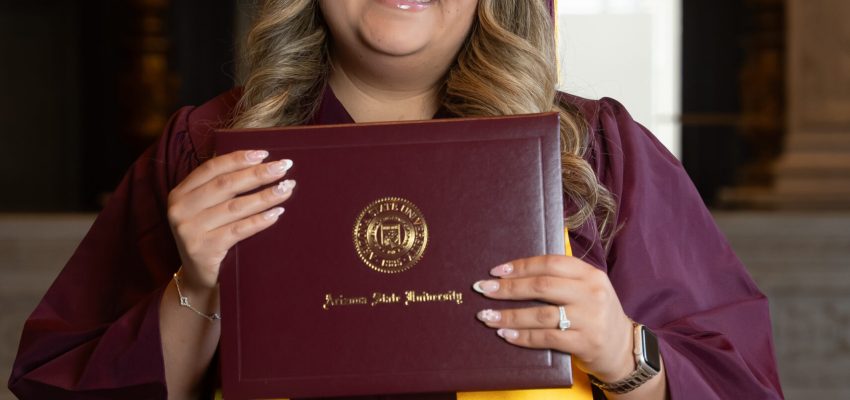

In the whirlwind of modern life, where professional ambitions clash with personal responsibilities and the relentless pursuit of knowledge, the concept of ‘balance’ often feels like a mythical creature. We are constantly striving, learning, adapting, and innovating, all while navigating the intricate tapestry of our daily existence. For many, the dream of advancing a career, mastering new skills, and nurturing a fulfilling personal life simultaneously seems an insurmountable challenge. Yet, what if an intelligent companion could help orchestrate this symphony of aspirations, transforming seemingly impossible feats into attainable milestones? Welcome to the era where artificial intelligence (AI) isn’t just a tool for industrial automation or complex data analysis; it’s rapidly becoming our most potent ally in the quest for personal growth and holistic well-being.
As an AI specialist and tech enthusiast, I’ve witnessed firsthand the incredible evolution of AI from academic theory to a transformative force touching every facet of human endeavor. Its potential to empower individuals, enabling them to achieve what once required extraordinary effort or privilege, is truly boundless. The narrative of balancing demanding roles – career, family, and education – is a universal one, often painted with stories of resilience and sacrifice. Imagine, then, a world where this journey is not just supported, but actively accelerated and personalized by intelligent systems designed to understand your unique needs, goals, and even your learning style. This is the promise of **AI for personal development**, a paradigm shift that could redefine how we approach self-improvement and life management.
### AI for Personal Development: Navigating the Modern Human Experience
The landscape of the 21st century demands more from us than ever before. The global economy is in a constant state of flux, rendering static skill sets obsolete at an accelerating pace. According to a 2023 report by the World Economic Forum, 44% of workers’ core skills will change in the next five years, underscoring the critical need for continuous learning. Professionals must not only excel in their chosen fields but also become lifelong learners, agile problem-solvers, and emotionally intelligent communicators. Adding to this, the responsibilities of family, community, and personal well-being often compete for our finite time and energy. It’s a complex equation, but AI offers a powerful variable.
Consider the realm of learning and education. Traditional educational models, while foundational, often struggle with scalability and personalization. AI-powered platforms are revolutionizing this by offering adaptive learning experiences. These systems analyze a student’s performance, identify knowledge gaps, and dynamically adjust the curriculum, pace, and even the format of instruction to maximize comprehension and retention. Duolingo, for instance, uses AI to tailor language lessons based on individual progress, making language acquisition more efficient and engaging. Similarly, online course providers are integrating AI tutors that can answer questions, provide feedback, and guide learners through complex topics, simulating a personalized mentorship experience that echoes the benefits of hybrid learning models but with an unprecedented level of customization. This makes advanced degrees or certifications, once a daunting commitment, far more accessible to individuals juggling multiple responsibilities, democratizing the pursuit of knowledge.
Beyond formal education, **AI for personal development** extends deeply into career advancement. AI tools can analyze your resume and LinkedIn profile, suggesting optimizations for specific job roles, identifying skill gaps, and recommending relevant training courses. Imagine an AI career coach that not only helps you prepare for interviews with realistic simulations and real-time feedback on your communication style but also maps potential career paths based on your strengths, interests, and market demands. Platforms are emerging that use machine learning to match professionals with mentors, networking opportunities, and even project-based work that aligns with their development goals. This proactive guidance can be invaluable for navigating an increasingly complex job market, ensuring that every step taken is a strategic move towards professional fulfillment.
Productivity and time management are other areas where AI shines. Smart calendars and scheduling assistants can optimize your day, intelligently blocking out time for deep work, meetings, and even personal tasks, learning your habits over time to predict your most productive hours. AI-powered note-taking tools can transcribe meetings, summarize key discussion points, and even assign action items, freeing up mental bandwidth for strategic thinking rather than administrative minutiae. For those managing complex projects or multiple teams, AI can analyze workflows, identify bottlenecks, and suggest improvements, ensuring resources are optimally allocated and deadlines are met. This kind of sophisticated assistance allows individuals to not just save time, but to invest it more wisely in high-value activities, whether professional or personal.
Moreover, the role of AI in fostering well-being and mental health is rapidly expanding. AI-driven apps offer personalized meditation guides, sleep cycle tracking, and mood analysis, providing insights and interventions tailored to individual needs. Chatbots powered by advanced natural language processing can offer a non-judgmental space for individuals to express their thoughts and feelings, providing guided exercises or connecting them with professional resources. While these tools are not substitutes for human therapists, they offer accessible, immediate support, particularly for those who might otherwise lack access to mental health resources. The ability of AI to monitor patterns and provide early warnings for potential burnout or stress makes it a powerful partner in maintaining a healthy equilibrium.
Finally, for creatives, **AI for personal development** can act as a tireless muse and a powerful assistant. AI can generate ideas, help structure narratives, suggest stylistic variations, or even assist in the technical execution of creative projects, from writing code to composing music. This collaborative approach allows artists, writers, and innovators to overcome creative blocks and explore new dimensions of their craft, pushing the boundaries of what’s possible and accelerating their artistic growth.
### The Evolution of Personalized Growth: Beyond Traditional Methods
The concept of self-improvement is as old as humanity itself, yet the methods for achieving it have undergone continuous evolution. From ancient philosophical teachings to modern self-help literature, the pursuit of growth has historically relied on generalized advice and one-size-fits-all frameworks. While valuable, these traditional approaches often fall short in addressing the profound individuality of each person’s journey. This is where AI truly differentiates itself, ushering in an era of hyper-personalized growth that was previously unimaginable.
At the heart of AI’s capability for personalization lies its mastery of data. Through sophisticated machine learning algorithms and natural language processing (NLP), AI systems can ingest vast amounts of information about an individual – their learning style, professional history, personal preferences, daily habits, and even emotional responses – and then synthesize this data into actionable insights. Unlike a human coach who might work with a limited number of clients and rely on anecdotal evidence, AI can analyze millions of data points, identifying subtle patterns and correlations that inform truly bespoke recommendations. For instance, an AI tutor can discern not just *what* a student got wrong, but *why* they struggled, adapting future lessons accordingly.
This data-driven approach extends to every aspect of personal development. For health and fitness, AI-powered wearables and apps track sleep, activity levels, heart rate, and even nutritional intake, offering personalized workout plans and dietary suggestions that evolve with the user’s progress. The global market for AI in fitness and wellness is projected to grow significantly, demonstrating the increasing reliance on smart systems for health management. In financial planning, AI advisors can analyze spending habits, investment goals, and risk tolerance to create tailored financial strategies, continuously adjusting them in response to market changes or personal circumstances. This level of dynamic, adaptive guidance empowers individuals to make informed decisions that align precisely with their unique life goals.
Moreover, AI democratizes access to high-quality development resources. Historically, elite coaching, personalized tutoring, and comprehensive career counseling were often expensive and exclusive. AI tools, often available as affordable apps or integrated features in existing platforms, make expert-level guidance accessible to a much broader audience. This accessibility breaks down socio-economic barriers to personal growth, enabling more individuals to pursue their aspirations regardless of their financial or geographical constraints. The flexibility offered by AI – available 24/7, on demand – also caters perfectly to the demands of a busy schedule, allowing learning and growth to fit seamlessly into the crevices of a packed life, rather than requiring major re-structuring.
The continuous adaptation of AI systems is another key differentiator. Unlike a static textbook or a completed course, AI platforms are designed to learn and evolve. As new research emerges, as market conditions shift, or as an individual’s goals change, the AI can rapidly update its recommendations and resources. This ensures that the guidance provided remains perpetually relevant and cutting-edge, fostering a continuous loop of learning and improvement that is responsive to both individual and external dynamics. This dynamic nature elevates **AI for personal development** from a mere tool to a truly adaptive and lifelong companion.
### Embracing the AI Co-Pilot: A Future of Enhanced Human Potential
As we look towards the horizon, it’s clear that the relationship between humanity and AI will continue to deepen and diversify. The vision is not one where AI replaces human effort or ingenuity, but rather where it serves as a powerful co-pilot, augmenting our capabilities and freeing us to focus on higher-order thinking, creativity, and human connection. The future of **AI for personal development** is about creating a symbiotic partnership, where the strengths of AI—its analytical power, speed, and endless capacity for data processing—complement our uniquely human attributes: intuition, empathy, and the ability to define purpose.
However, embracing this future also requires thoughtful consideration of the ethical implications. Data privacy, algorithmic bias, and the potential for over-reliance on AI are critical discussions that must accompany its integration into personal growth. Developers and users alike must prioritize transparency, ensure data security, and implement safeguards against algorithmic bias to build trust and ensure equitable access. The ultimate goal is to empower individuals, not to cede agency or critical thinking to machines. Human oversight and a healthy degree of skepticism will always remain paramount.
Imagine an even more integrated future: AI systems that not only help you learn new skills but also anticipate your needs, perhaps suggesting a mindfulness break when it detects rising stress levels from your biometrics, or proactively flagging a valuable networking opportunity based on your career trajectory and recent industry news. Such intelligent agents would function as highly personalized digital twins, constantly learning from your experiences and adapting to your evolving self, offering tailored support at every turn. They could help us cultivate resilience, foster deeper connections, and explore our passions with unprecedented efficiency.
André Lacerda, as an AI specialist, I firmly believe that this intelligent co-piloting is the path to unlocking unprecedented human potential. It’s about leveraging technology to transcend limitations, allowing us to pursue more ambitious goals, manage complex lives with greater ease, and cultivate a deeper understanding of ourselves. The journey of personal growth will always be uniquely human, driven by our inherent desire to learn, adapt, and improve. But with AI as our trusted companion, that journey can be more efficient, more personalized, and ultimately, more fulfilling than ever before.
In conclusion, the integration of artificial intelligence into our personal development journeys represents a profound shift, offering bespoke solutions to the universal challenges of balancing a demanding career, continuous learning, and a rich personal life. From personalized education and career coaching to enhanced productivity and mental wellness, AI stands ready to serve as an invaluable partner, transforming how we pursue growth and achieve our ambitions. It’s a testament to human ingenuity that we can create tools so sophisticated they can help us become better versions of ourselves.
As we move forward, the intelligent application of **AI for personal development** will not only make achieving our goals more accessible but will also redefine what is possible for the modern individual. It’s an exciting future where technology amplifies our human spirit, empowering us to compose our life’s symphony with harmony and precision, making the mythical ‘balance’ not just a possibility, but a tangible reality for all who choose to embrace this transformative advantage. The era of the AI co-pilot is here, and it promises to guide us towards a future of unprecedented personal and collective flourishing.










