

In a world increasingly driven by instantaneous results, where technological breakthroughs promise immediate gratification and iterative development cycles are measured in sprints, there remains an enduring power in the long game. We often marvel at the sudden emergence of a groundbreaking AI model or a revolutionary software platform, but beneath the surface lies years, sometimes decades, of meticulous data collection, rigorous testing, and an unwavering commitment to a long-term vision. This philosophy, so central to innovation in artificial intelligence, finds a striking parallel in the human narrative of perseverance, nowhere more vividly exemplified than in the extraordinary career trajectory of Bryan Torres.
His story isn’t just about a baseball player’s debut; it’s a profound case study in resilience engineering, a testament to the power of the human spirit to continuously optimize, adapt, and ultimately thrive against seemingly insurmountable odds. For André Lacerda, an AI specialist and tech enthusiast, Torres’ ascent offers more than just sporting drama; it provides a compelling framework for understanding the intricate interplay of dedication, strategic patience, and the eventual, undeniable triumph of sustained effort. It challenges the conventional wisdom that success must arrive swiftly, reminding us that sometimes, the most significant breakthroughs are the ones that are forged over an extended, often arduous, timeline.
### Bryan Torres’ Remarkable Journey: A Decade in Development
To fully appreciate the significance of Bryan Torres’ MLB debut, one must first grasp the sheer scale of the commitment it represented. Eleven years. In professional baseball, particularly in the minor leagues, this duration is less a typical progression and more an epic saga. Many players enter the professional system with dreams of the big leagues, but the vast majority are filtered out within a few seasons. The competitive landscape is brutal, with thousands of prospects vying for a mere handful of spots at the pinnacle of the sport. Torres, hailing from Puerto Rico, began his professional career as a fresh-faced hopeful, likely envisioning a quicker ascent. Yet, his path was anything but linear.
His early years were spent in the crucible of Rookie ball within the Milwaukee Brewers’ organization. Toiling for five seasons at this foundational level is an anomaly. Rookie ball is designed as an entry point, a learning ground where raw talent is honed. Spending half a decade there can be soul-crushing, a constant whisper of doubt suggesting that perhaps one’s potential has plateaued. Each year, new, younger, often flashier prospects arrive, pushing those like Torres further down the depth chart. It’s a relentless test of not just physical skill, but immense mental fortitude. Every swing, every pitch, every fielding play becomes a data point in a vast, complex system of evaluation, and for years, those data points, while showing promise, didn’t quite trigger the algorithm for promotion to higher minor league tiers.
Then came 2020, a year that brought the world to a standstill and professional sports with it. The COVID-19 pandemic effectively canceled the minor league season, plunging countless athletes into a year of uncertainty and “limbo.” For a player already navigating a lengthy minor league career, this disruption was particularly poignant. It wasn’t just a lost year of development; it was a year without games, without the regular rhythm of competition that defines a baseball player’s existence. It was during this period, seven years into his professional journey, that Torres confronted the existential question: was it time to call it quits? This critical decision node, where the accumulated cost of dedication weighs heavily against uncertain future returns, is one faced by countless individuals in high-stakes, long-term endeavors. That he chose to persist, to re-engage with the system, speaks volumes about his inherent drive and belief in his own capabilities, a belief that must have been fueled by an internal, unyielding commitment to his craft.
### Optimizing the Human Algorithm: Strategic Persistence and Adaptive Evolution
What enables an individual to navigate such a prolonged and challenging development cycle? It’s more than just raw talent; it’s a strategic optimization of the “human algorithm.” For Bryan Torres, this involved continuous skill acquisition and refinement, a perpetual iterative process of identifying marginal gains and implementing adjustments. In baseball, this means everything from refining batting mechanics to improving defensive footwork, enhancing base-running instincts, and maintaining peak physical conditioning. Each aspect, seemingly small on its own, contributes to the overall performance envelope.
The minor league system, despite its gruelling nature, is designed to foster this iterative development. Coaches act as human feedback loops, providing constant input based on performance data. Torres would have absorbed countless hours of instruction, analyzed game film, and spent innumerable moments in the batting cage or on the practice field, striving for incremental improvements. This process is akin to the continuous integration and deployment (CI/CD) pipelines in software development, where small, frequent updates are made, tested, and integrated to improve the overall system. Torres was, in essence, continuously deploying updated versions of his skills, hoping each iteration would push him closer to the main branch of MLB.
Beyond the physical and technical aspects, the mental game is paramount. Strategic persistence in such a prolonged journey demands an exceptional level of mental fortitude. It’s the ability to shrug off slumps, to learn from errors without succumbing to despair, and to maintain a positive outlook when others might have given up. This “non-quantifiable algorithm parameter” – grit, resilience, mental toughness – is often the differentiating factor between those who merely participate and those who eventually succeed. Torres’ ability to repeatedly reset, recalibrate, and re-engage, particularly after the pandemic hiatus, highlights a profound self-awareness and an almost stoic determination. It’s a testament to the idea that true success is not always about rapid ascent, but often about sustained, unwavering effort in the face of adversity, a quality that mirrors the dedication required to push the boundaries of AI research over many years.
### The Unveiling of a Legacy: The MLB Debut as a ‘Proof of Concept’
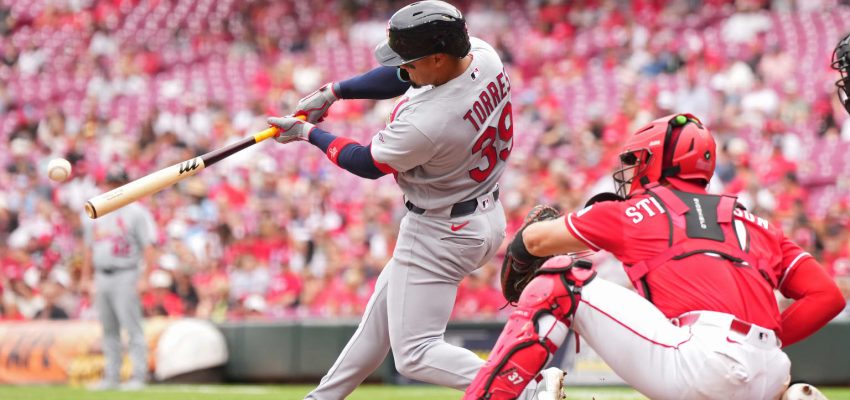
The call-up to the major leagues is often sudden, a moment of euphoric validation after years of quiet labor. For Bryan Torres, that call represented the ultimate ‘proof of concept’ – that all the data points, all the iterations, all the unseen effort had finally compiled into a successful execution. On his debut in Cincinnati, the culmination of 11 years of professional commitment was laid bare on a grand stage. The pressure would have been immense, a lifetime of hopes resting on a single performance.
And he delivered. Reaching base three times, including a significant home run, was not merely a good statistical outing; it was a resounding affirmation of his prolonged belief. The home run, a moment of pure, unadulterated triumph, wasn’t just a physical act; it was a potent symbol, a declarative statement that his journey, however protracted, was valid and valuable. It was a “pivotal data point” that reshaped his entire career narrative, transforming him from a long-shot journeyman into an MLB player who immediately made an impact. This debut wasn’t just a personal victory; it was a powerful story for every aspiring athlete and, indeed, every individual toiling away in obscurity, demonstrating that the system, however unforgiving, can eventually reward sustained excellence.
His performance sent a ripple through the baseball world, serving as a powerful reminder that talent can blossom at various stages and that the pursuit of mastery is not confined to a strict timeline. It challenges organizations to look beyond immediate metrics and recognize the potential in players who demonstrate consistent improvement and unwavering dedication, regardless of their age or time spent in the minor league system. Much like the discovery of a new, highly efficient algorithm that has been quietly developed for years, Torres’ debut was a sudden, impactful revelation that had been building for over a decade. It proved that sometimes, the most profound innovations, or in this case, the most inspiring human achievements, are the ones that take the longest to mature, often requiring a patient nurturing process before they are ready to be unveiled to the world.
Bryan Torres’ story transcends the confines of a baseball diamond. It’s an eloquent narrative for anyone involved in long-term projects, particularly in the demanding fields of technology and artificial intelligence. His 11-year odyssey, marked by setbacks, self-doubt, and an unwavering commitment to his craft, is a masterclass in persistence. It teaches us that success is not always about the shortest path or the quickest algorithm; sometimes, it’s about the iterative refinement, the resilience in the face of systemic challenges, and the profound belief in a future state that others might deem improbable.
In a culture that often celebrates overnight successes, Torres reminds us of the quiet power of the long game. His debut, a dramatic home run after years of relentless effort, is more than just a highlight reel moment; it’s a beacon of inspiration, a tangible representation of what can be achieved when human will aligns with strategic patience. It reinforces the idea that true innovation, whether in AI or in athletic endeavors, often requires an unwavering commitment to the process, understanding that the most rewarding breakthroughs frequently demand the deepest reserves of time, effort, and unyielding dedication.










