
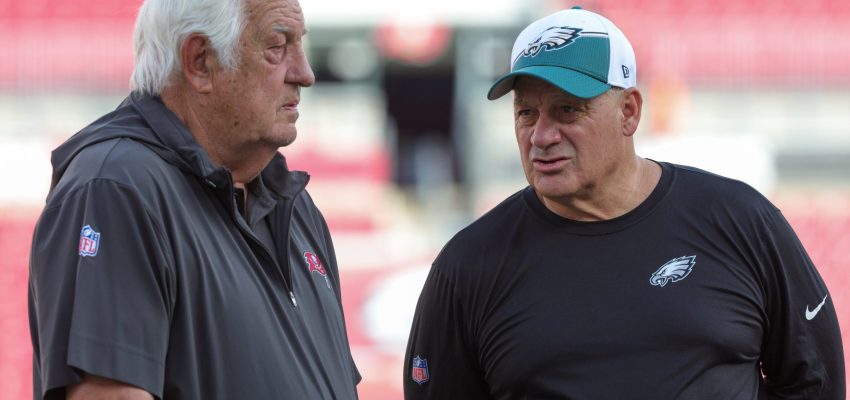

In the annals of professional football, certain names resonate with an almost mythical quality, not just for their athletic prowess but for their enduring dedication behind the scenes. Today, we turn our attention to one such figure, a man whose influence spans generations and whose knowledge has helped sculpt some of the game’s brightest stars: Tom Moore. After an astonishing 62 years contributing to the sport he loves, the revered coach has announced his retirement, drawing a curtain on a chapter that is truly unprecedented in its longevity and impact. This isn’t just the end of a job; it’s the culmination of an extraordinary journey, a testament to passion, adaptability, and unwavering commitment to the intricacies of the game.
For over six decades, Moore has been a fixture on the sidelines, a strategic mind observing the evolution of football from its more nascent stages to the hyper-analytic spectacle it is today. His retirement marks a significant moment, prompting reflection on a career that saw him mentor Hall of Fame talents, contribute to Super Bowl victories, and become a living encyclopedia of offensive football. In an era where coaching tenures are often fleeting, Tom Moore stands as a towering anomaly, a figure whose presence has been a constant source of wisdom and stability for multiple franchises. As we bid farewell to an icon, let’s delve into the remarkable trajectory of an individual who didn’t just witness history, but actively shaped it, defining what it means to have an impactful and enduring
NFL coaching career.
NFL coaching career: A Journey Through Decades
Tom Moore’s journey in football began in 1962, a time when the NFL looked vastly different from the modern league we recognize today. His formative years were spent honing his craft at the collegiate level, learning the fundamentals and intricacies of the game far from the bright lights of professional stadiums. This grassroots experience provided him with a deep understanding of player development and strategic implementation, skills that would serve him well throughout his storied future. It was a methodical ascent, built on a foundation of hard work and an insatiable desire to understand every nuance of the sport. His early collegiate coaching roles included stints at Iowa, Dayton, and Minnesota, where he laid the groundwork for a philosophy rooted in precision and player empowerment.
His transition to the professional ranks came in 1977, when he joined Chuck Noll’s legendary Pittsburgh Steelers staff. This was a pivotal moment, as Moore stepped onto the grandest stage of American football, contributing to one of the most dominant dynasties in NFL history. Working alongside Hall of Fame talents like Lynn Swann and John Stallworth, Moore quickly established himself as a keen evaluator of talent and an effective communicator. His ability to connect with players, understand their strengths, and refine their techniques became a hallmark of his approach. Over the next two decades, Moore moved through various organizations, including the Minnesota Vikings, New Orleans Saints, and New York Jets, steadily building his reputation as an offensive guru, particularly with wide receivers. Each stop added layers to his expertise, allowing him to adapt to different offensive schemes and personnel, a testament to his versatility within a demanding
NFL coaching career.
His time with the Vikings in the late 1980s and early 1990s further solidified his status, where he helped mold talents like Cris Carter, a future Hall of Famer known for his exceptional route running and hands. Moore’s influence extended beyond the tactical; he was known for his patient mentorship, encouraging players to master the subtle arts of their position. This commitment to detail, combined with an innate ability to simplify complex offensive concepts, made him an invaluable asset to any coaching staff. He wasn’t just teaching plays; he was teaching football IQ, fostering an understanding that transcended the playbook. This comprehensive approach to coaching is precisely what allowed him to maintain relevance and success for such an extraordinary duration.
The Architect Behind Offensive Greatness
Perhaps Tom Moore’s most celebrated chapter came during his extensive tenure with the Indianapolis Colts, where he served as the offensive coordinator for over a decade, from 1998 to 2009. This period coincided with the peak of Peyton Manning’s illustrious career, and together, Moore and Manning forged one of the most potent and efficient offenses the NFL has ever witnessed. Under Moore’s guidance, the Colts’ attack became a symphony of precision, timing, and relentless execution, revolutionizing how many teams approached offensive play-calling. It was here that Moore truly cemented his legacy as an offensive mastermind, capable of designing and implementing schemes that consistently exploited defensive weaknesses and maximized the potential of his star players.
Moore’s philosophy was characterized by a relentless pursuit of perfection in fundamentals, a deep understanding of defensive coverages, and an uncanny ability to put players in positions to succeed. He was instrumental in developing two more future Hall of Fame wide receivers in Marvin Harrison and Reggie Wayne, whose seamless chemistry with Manning was a direct result of the meticulous coaching and strategic framework provided by Moore. Harrison, in particular, flourished under Moore, becoming one of the most prolific pass-catchers in league history, known for his crisp routes and precise movements. Moore’s coaching elevated these players from great athletes to truly dominant forces, setting numerous league records in the process. The Colts consistently ranked at or near the top in offensive categories, a testament to Moore’s unwavering vision and execution.
Beyond the statistics, Moore was revered for his teaching style. He possessed a rare ability to break down complex offensive schemes into understandable components, fostering a culture of high football intelligence among his players. He allowed his quarterbacks significant autonomy, trusting them to make reads and adjustments at the line of scrimmage, but this trust was built on a foundation of rigorous preparation and thorough teaching. He instilled confidence and demanded excellence, but always with a supportive hand. This collaborative approach, combined with his encyclopedic knowledge of offensive football, made him a truly exceptional coordinator, and a pivotal figure in defining the modern pass-heavy NFL offense. His contributions during this period are a clear highlight of his legendary
NFL coaching career.
More Than Wins: The Enduring Impact of a True Innovator
What truly sets Tom Moore apart isn’t just the sheer length of his 62-year career, but the consistent impact he had across such a vast expanse of time and across so many different teams and eras. He was present for, and influenced, significant shifts in football strategy, from the rise of the West Coast offense to the increasing dominance of aerial attacks. His ability to adapt, to absorb new ideas while staying true to fundamental principles, is a hallmark of his enduring genius. He wasn’t afraid to innovate, yet he always respected the core tenets of the game. This blend of tradition and foresight allowed him to remain a valuable asset long after many of his contemporaries had retired.
Moore’s influence extends far beyond the players he directly coached. Many coaches who worked alongside him, or under him, have gone on to successful careers of their own, carrying elements of his philosophy with them. He was a mentor to countless individuals, a walking history book of football wisdom always willing to share his insights. His presence on a staff brought not only strategic acumen but also an invaluable sense of continuity and institutional knowledge. In a league characterized by constant turnover, having someone like Moore on board provided a steadying hand, a bridge between generations of players and coaches. This profound and far-reaching impact is what truly defines his remarkable
NFL coaching career.
Even in his later years, joining teams like the Tennessee Titans and most recently the Tampa Bay Buccaneers, Moore continued to contribute as a senior offensive assistant or consultant, proving that experience and deep understanding never truly become obsolete. His role often involved advising on game plans, scouting opponents, and offering insights gleaned from decades of observing the game. It’s a testament to his intellectual curiosity and undiminished passion for football that he remained engaged and valuable right up until his retirement. His presence in the meeting rooms and on the practice fields was a constant reminder of the rich history of the sport and the foundational knowledge required for success.
The NFL has transformed dramatically over the past six decades, evolving in terms of rules, technology, player safety, and even the economics of the game. Tom Moore witnessed and navigated these changes with grace and effectiveness. From rudimentary film analysis to sophisticated data analytics, from run-heavy offenses to complex passing schemes, he absorbed it all, remaining a crucial part of the strategic conversation. His journey is not just a personal triumph but a microcosm of the evolution of professional football itself, marking a truly unique and unparalleled
NFL coaching career
that will undoubtedly be studied and admired for years to come.
Tom Moore’s retirement signifies more than just the end of a long and decorated individual journey; it marks the closing of an extraordinary chapter in NFL history. His 62-year tenure stands as a beacon of dedication, a testament to the profound impact one person can have on a sport. He didn’t just teach football; he instilled character, cultivated potential, and helped shape the very fabric of the game through his unwavering commitment to excellence and his deep understanding of strategy. From the legendary Steelers teams of the 70s to the record-breaking Colts offenses of the 2000s, Moore’s influence is woven into the narratives of some of the league’s most iconic moments and successful franchises. His legacy will undoubtedly inspire future generations of coaches and players, proving that true mastery comes from a blend of relentless effort, continuous learning, and an enduring passion for the craft.
As the football world reflects on his incredible contributions, Tom Moore leaves behind a coaching tree of former protégés and colleagues who carry his teachings forward, ensuring that his meticulous approach and offensive innovations will continue to resonate across the league. His retirement serves as a poignant reminder of the human element behind the grand spectacle of professional football—the dedicated individuals who, out of the spotlight, commit their lives to perfecting the game. We extend our deepest gratitude to Coach Moore for his unparalleled service and wish him a well-deserved, restful retirement, confident that his profound impact will be felt on the gridiron for many seasons to come. His was a truly singular
NFL coaching career
, one for the ages.










