
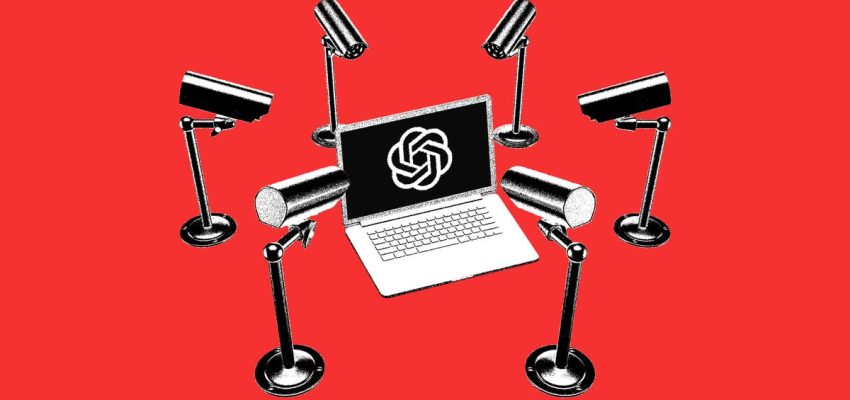

Welcome, fellow tech enthusiasts and professionals, to a new era of workplace dynamics. As an AI specialist and writer deeply immersed in the evolving landscape of artificial intelligence, I’ve observed a fascinating and significant trend taking shape in boardrooms and open-plan offices worldwide. What was once the domain of general productivity metrics or software license management is now evolving into something far more granular and specific: the systematic monitoring of how employees interact with AI tools.
For years, we’ve speculated about AI’s integration into our daily work lives. Now, it’s not just a hypothetical; it’s a measurable reality. From multinational corporations to nimble startups, companies are beginning to deploy sophisticated systems to track not just whether their teams are using approved AI tools, but *how often* and *which ones*. This isn’t just about curiosity; it’s a strategic move to understand, optimize, and potentially redefine the future of work. What does this mean for you, for your career, and for the very fabric of organizational culture? Let’s delve deeper into this burgeoning phenomenon.
AI Usage Tracking: The New Frontier of Workplace Metrics
For decades, businesses have relied on metrics to gauge performance. From sales figures and customer satisfaction scores to lines of code written and hours billed, data has been the backbone of decision-making. Yet, the advent of generative AI and its rapid adoption has introduced an entirely new category of insight: **AI usage tracking**. This isn’t merely a fleeting trend; it represents a fundamental shift in how organizations perceive and manage productivity, innovation, and risk.
Consider the sheer pace at which AI tools have permeated our professional lives. ChatGPT, for instance, reached 100 million active users just two months after its launch in late 2022, a milestone that took Instagram two and a half years to achieve. This explosive adoption, while promising significant gains in efficiency, also creates a blind spot for companies. Without understanding *how* these powerful tools are being leveraged, businesses cannot fully capitalize on their potential nor mitigate the associated challenges.
Organizations are now investing in internal analytics dashboards and custom software solutions designed to capture specific data points related to AI interaction. This can include anything from the frequency of using approved large language models (LLMs) for drafting emails or reports, to the number of AI-generated images created by a design team, or even the volume of code snippets suggested by AI-powered development tools. Some advanced systems might even track the types of prompts used, offering insights into the complexity of tasks being offloaded to AI or the specific use cases being explored by different departments. The aim of **AI usage tracking** is to move beyond anecdotal evidence and provide concrete, quantifiable data on the return on investment (ROI) of AI integration.
This new metric isn’t uniform across the board. Its sophistication varies wildly depending on the industry, company size, and specific AI tools in play. For example, a marketing agency might focus on tracking the success rates of AI-optimized ad copy, while a software development firm might prioritize the efficiency gains from AI-assisted coding. The underlying principle, however, remains consistent: if AI is becoming an integral part of operations, its utilization must be understood, measured, and optimized. This granular visibility allows leaders to identify super-users, pinpoint areas for further training, reallocate resources more effectively, and ensure that AI adoption aligns with broader strategic objectives.
Beyond the Hype: The Drivers Behind Monitoring AI Adoption
The motivations behind widespread **AI usage tracking** are multifaceted, extending far beyond simple curiosity. They encompass a blend of operational efficiency, risk management, strategic planning, and even talent development. Let’s unpack the core drivers:
**1. Maximizing Productivity and Efficiency:** The most obvious benefit of AI is its potential to automate mundane tasks, accelerate creative processes, and enhance data analysis. By tracking AI usage, companies can identify which tools and applications are genuinely boosting output. For instance, if an analytics team consistently uses an AI tool to process large datasets in a fraction of the time, the company can double down on training and investment in that specific solution. Conversely, if a tool is rarely used or doesn’t show tangible benefits, resources can be redirected. This data-driven approach to AI integration is crucial for realizing the promised efficiency gains that often fuel initial investments.
**2. Ensuring Compliance and Data Security:** The use of public AI models, particularly generative ones, poses significant risks concerning data privacy, intellectual property, and compliance. Employees might inadvertently input sensitive company data or proprietary information into unapproved AI tools, creating massive security vulnerabilities. **AI usage tracking** allows companies to enforce policies regarding approved AI tools, monitor for unauthorized usage, and even audit data flows. This is particularly critical in regulated industries like finance, healthcare, or legal services, where data breaches can lead to severe penalties and reputational damage. By understanding *which* tools are being used and *how*, organizations can implement necessary safeguards and provide targeted training on secure AI practices.
**3. Optimizing Resource Allocation and ROI:** AI tools, especially enterprise-grade solutions, can represent substantial investments. Companies need to justify these expenditures. Tracking usage provides a clear picture of adoption rates and engagement, helping leadership assess the true return on investment. If a costly AI license is underutilized, it prompts a reevaluation. If a free or low-cost tool is driving significant value, it might warrant further exploration or formalization. This data-centric approach ensures that AI investments are not just trendy, but economically sound.
**4. Identifying Skill Gaps and Training Needs:** The rapid evolution of AI means that skills quickly become outdated. By monitoring AI tool engagement, companies can pinpoint departments or individuals who might be lagging in AI adoption or proficiency. This insight enables targeted training programs, workshops, and upskilling initiatives. For example, if a content team is struggling to integrate AI into their workflow, the data will highlight this, allowing management to provide specific guidance or training on prompt engineering or AI-assisted content generation. This proactive approach ensures a digitally fluent workforce ready for the challenges of the future.
**5. Fostering Innovation and Best Practices:** Beyond mere compliance, **AI usage tracking** can reveal patterns of innovative AI application. A marketing team might discover a novel way to use an image generation AI for rapid prototyping, or an engineering team might develop a new workflow leveraging a code assistant. By identifying these “super-users” and their methods, companies can disseminate best practices across the organization, fostering a culture of continuous learning and innovation. This also creates internal champions who can inspire wider adoption and demonstrate the tangible benefits of AI integration.
Navigating the Future: Career Implications and Ethical Considerations
The rise of **AI usage tracking** is not without its complexities, particularly for employees. While the motivations behind it are often positive from a business perspective, it introduces new dynamics that professionals must understand and adapt to. The implications for individual careers and broader ethical considerations are profound.
**Career Implications for Employees:**
On one hand, embracing approved AI tools and demonstrating proficiency can become a significant career advantage. Just as fluency in Microsoft Office was once a baseline expectation, AI literacy is rapidly becoming a sought-after skill. Employees who actively leverage AI to enhance their productivity, creativity, and problem-solving abilities are likely to be recognized as high-performers. Their AI usage data could serve as a quantifiable metric of their innovation and efficiency, potentially leading to promotions, new responsibilities, or even shaping performance reviews. It could be argued that *not* engaging with AI, when the tools are available and encouraged, could put an employee at a disadvantage.
However, there’s also a potential downside. Excessive reliance on AI for tasks that require critical human judgment or complex problem-solving could be viewed negatively. The balance between AI assistance and human insight will be crucial. Furthermore, the possibility of surveillance – even if intended for positive outcomes – can foster a sense of unease or distrust among employees. Transparency from employers about *what* is being tracked and *why* is paramount to maintaining morale and a healthy work environment.
**Ethical Considerations:**
The primary ethical concern revolves around privacy. While companies have legitimate reasons for **AI usage tracking**, the data collected offers a granular view into individual work habits, potential struggles, and even the nature of tasks being performed. This raises questions about how this data is stored, who has access to it, and how it might be used beyond its stated purpose. Clear, robust data governance policies, coupled with transparency, are essential to build and maintain trust.
Another ethical dilemma is the potential for creating a ‘two-tiered’ workforce. If AI proficiency becomes a primary metric for career advancement, those with less access to training, inherent technological barriers, or even a philosophical resistance to AI might be left behind. Companies have a responsibility to ensure equitable access to AI tools and comprehensive training for all employees, fostering an inclusive environment where everyone can adapt and thrive.
Furthermore, the quality and accuracy of AI outputs are not always perfect. If an employee uses an AI tool that produces flawed or biased content, and that usage is tracked, who bears the responsibility? The employee, the AI tool, or the company for not providing adequate oversight or better tools? These complexities necessitate thoughtful discussions and clear guidelines.
Ultimately, the effective implementation of **AI usage tracking** requires a delicate balance. Companies must weigh the undeniable benefits of data-driven insights against the privacy concerns and potential for misinterpretation. Establishing clear ethical guidelines, ensuring data security, and maintaining transparent communication with employees will be key to harnessing the power of AI metrics responsibly.
As an AI specialist, I firmly believe that artificial intelligence has the power to transform industries and empower individuals in unprecedented ways. However, this transformation demands careful navigation. The emergence of **AI usage tracking** as a new workplace metric is a clear indicator that we are moving beyond theoretical discussions of AI’s impact into the practicalities of its integration. Companies that embrace transparency, prioritize ethical data handling, and invest in their human capital will be best positioned to thrive in this evolving landscape.
The future of work is undeniably intertwined with AI. How we measure, manage, and adapt to this symbiotic relationship will define success for both organizations and individuals. It’s an exciting, complex, and sometimes challenging journey, but one that promises immense innovation for those who navigate it wisely. Let’s continue to explore, learn, and shape this future together.










