
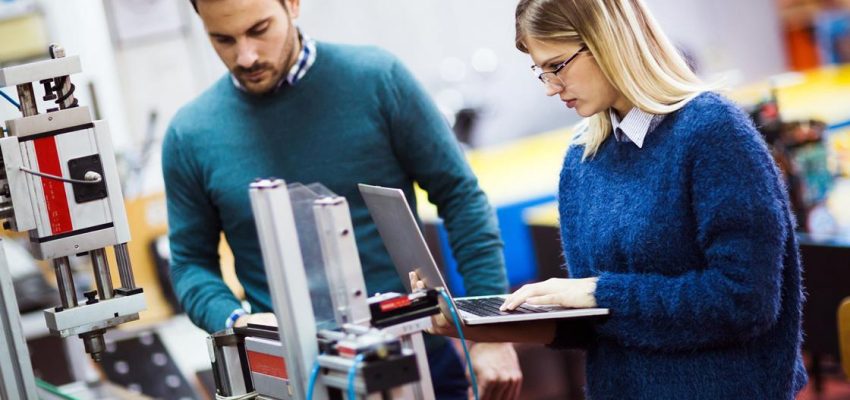

In the vibrant tapestry of scientific discovery, headlines often celebrate the brilliant minds behind groundbreaking theories and revolutionary experiments. We marvel at the discovery of new materials, the mapping of the human genome, or the latest advancements in artificial intelligence. Yet, behind every published paper, every functional prototype, and every critical dataset, there lies an often-unseen bedrock of support: the university and departmental workshops. These hubs of technical expertise are far more than mere equipment rooms; they are the unsung architects of innovation, providing the hands-on solutions that transform abstract ideas into tangible realities.
As André Lacerda, an AI specialist and tech enthusiast, I’ve always been fascinated by the complete ecosystem of innovation – not just the flashy algorithms or silicon chips, but the foundational structures that make high-tech research possible. It’s a holistic view where the precision of a custom-machined part can be as critical as the elegance of a new mathematical model. While my focus often drifts towards the digital frontier, I recognize that the physical world, with its complex instruments and experimental setups, remains indispensable. This is where **research support workshops** truly shine, acting as the indispensable backbone for scientific progress across a multitude of disciplines.
### Research Support Workshops: The Beating Heart of Modern Science
Modern scientific inquiry is an increasingly complex endeavor, demanding not only intellectual prowess but also sophisticated instrumentation and technical infrastructure. From bespoke optics tables in a quantum physics lab to custom bioreactors for biochemical studies, the requirements are often unique, highly specific, and impossible to meet with off-the-shelf solutions. This is precisely where university and departmental workshops step in, serving as pivotal centers of technical assistance and ingenuity. These facilities are staffed by highly skilled engineers, machinists, glassblowers, electronics specialists, and other craftspeople who possess an extraordinary blend of theoretical understanding and practical expertise.
Their roles are incredibly diverse and span the entire research lifecycle. Initially, they might collaborate with researchers during the conceptualization phase, advising on the feasibility of designs or suggesting innovative approaches to construct a novel experimental setup. They then translate these ideas into detailed schematics and, ultimately, into tangible prototypes. When a critical piece of equipment malfunctions – be it a mass spectrometer, an electron microscope, or a sensitive laser system – these workshops are often the first port of call, providing expert diagnostic and repair services that prevent costly downtime and delays. Without these dedicated teams, researchers would face substantial hurdles, often forced to either compromise on their experimental design or endure lengthy, expensive external contracting processes.
Consider the sheer breadth of fields that rely on these vital services. In chemistry departments, glassblowers craft intricate reaction vessels and vacuum systems tailored to specific synthetic procedures, enabling unique experiments that commercial glassware simply cannot replicate. Physics labs frequently require precision-machined components for particle accelerators or specialized optical mounts that demand tolerances measured in microns. Biomedical engineers might need custom scaffolds for tissue engineering or specialized manipulators for microscopic surgical applications. Even in areas seemingly far removed, such as robotics research – a field I am deeply passionate about – the prototyping of new robotic platforms, actuators, or sensor housings relies heavily on the fabrication capabilities found within these **research support workshops**. They are, in essence, the physical manifestation of problem-solving, turning complex scientific challenges into achievable technical feats.
These facilities also serve as critical hubs for interdisciplinary collaboration. A physicist might need a component designed by an engineer, built with materials specified by a chemist, and integrated into a biological experiment. The workshop environment naturally fosters this cross-pollination of ideas and skills, becoming a melting pot where diverse expertise converges to address shared challenges. The ability to consult with experts who understand both the theoretical underpinnings and the practical implications of a design is invaluable, accelerating the pace of discovery and ensuring the robustness of experimental outcomes. They embody a culture of shared knowledge and mutual support, enhancing the overall research ecosystem.
### From Blueprint to Breakthrough: Custom Fabrication and Innovation
One of the most profound contributions of **research support workshops** is their capacity for custom fabrication. In the vanguard of scientific exploration, researchers often find themselves pushing the boundaries of what existing tools can offer. They envision novel instruments, specialized sensors, or unique experimental chambers that are simply not available on the market. This is where the magic of in-house workshops truly unfolds. Skilled craftspeople take conceptual sketches, CAD designs, or even rudimentary hand drawings and transform them into precision-engineered components.
This bespoke capability is a game-changer for innovative research. For instance, developing a new catalyst might require a reactor with a very specific geometry or material composition to operate under extreme pressures and temperatures. A commercially available reactor might not meet these exact specifications, potentially compromising the experiment’s integrity or limiting the scope of investigation. A departmental workshop, equipped with advanced machining tools like CNC mills, 3D printers, and welding stations, can fabricate such a custom reactor, precisely to the researcher’s specifications. This not only ensures optimal experimental conditions but also often provides a significant competitive advantage, allowing institutions to pursue research trajectories unavailable to others.
The iterative process of scientific discovery greatly benefits from this agility. Researchers can rapidly test prototypes, identify flaws, and return to the workshop for modifications or entirely new designs. This quick feedback loop dramatically reduces project timelines, which in the fast-paced world of scientific publication and grant applications, can be crucial. Imagine the time and cost savings compared to outsourcing every custom component, which often involves lengthy procurement processes, external design reviews, and high manufacturing costs. The immediate access to skilled technicians and fabrication equipment within the institution fosters an environment where bold ideas can be quickly iterated upon and refined, pushing the frontiers of knowledge at an accelerated pace.
Beyond just custom parts, these facilities also design and build entire experimental setups. This can range from complex vacuum chambers for material science to elaborate fluid dynamics rigs for environmental studies, or even specialized robotics platforms for AI training datasets. The workshop personnel are often experts in integration, ensuring that all components, whether custom-made or commercially sourced, work harmoniously together. This holistic approach to instrumentation development is a cornerstone of cutting-edge research, enabling scientists to ask and answer questions that were previously beyond reach. The impact on scientific output and the generation of novel intellectual property is immense, making these **research support workshops** truly indispensable engines of innovation.
### Beyond the Bench: Training, Sustainability, and the Human Element
While the tangible outputs of custom-made equipment and repaired instruments are evident, the contributions of **research support workshops** extend far beyond. They serve as invaluable training grounds for the next generation of scientists, engineers, and technicians. Many students and early-career researchers gain their first hands-on experience with advanced tools, design principles, and problem-solving methodologies within these workshops. Learning to operate lathes, mills, or 3D printers, understanding the properties of different materials, or troubleshooting complex electronic circuits provides practical skills that complement their theoretical classroom knowledge. This experiential learning is crucial for developing well-rounded, capable researchers who can bridge the gap between abstract concepts and practical execution. It fosters a deeper appreciation for the engineering challenges inherent in scientific experimentation.
Furthermore, these workshops play a critical role in promoting sustainability and cost-effectiveness within academic institutions. In an era of increasing environmental consciousness and budget constraints, the ability to repair, repurpose, and extend the life of existing equipment is paramount. Rather than purchasing new, expensive instruments every time a component fails or a minor modification is needed, in-house experts can often diagnose and fix issues, design replacement parts, or adapt existing apparatus for new uses. This not only reduces waste and the environmental footprint of research but also translates into significant financial savings, allowing institutions to allocate resources more efficiently towards core research activities. The expertise in material selection and fabrication also contributes to designing more durable and repairable equipment from the outset, embedding sustainability into the very fabric of scientific infrastructure.
Perhaps most importantly, these workshops are places where researchers often find a sense of community and intellectual home. The original article’s title, “Finding a home in the workshop,” perfectly encapsulates this often-overlooked aspect. These spaces become informal centers for mentorship, collaboration, and camaraderie. Researchers, often working in specialized silos, can connect with the workshop team – and with each other – to discuss challenges, share insights, and brainstorm solutions. The dedicated craftspeople who staff these facilities are not just technicians; they are often mentors, problem-solvers, and passionate collaborators who take immense pride in helping scientific endeavors succeed. Their institutional knowledge, patience, and commitment to precision are invaluable, yet their contributions are often unsung.
However, these vital resources face challenges. Funding for infrastructure and staffing can be precarious, the workforce is aging, and there’s a constant need to adapt to rapidly evolving technologies, from advanced additive manufacturing to sophisticated robotics and sensor integration. Ensuring the continued viability and modernization of these **research support workshops** is therefore a crucial strategic objective for any institution committed to maintaining its scientific competitiveness and fostering a thriving research environment.
In an era increasingly defined by digital transformation and artificial intelligence, it might be tempting to overlook the foundational importance of physical infrastructure and hands-on craftsmanship. Yet, as André Lacerda, an AI specialist and tech enthusiast, I firmly believe that the true engines of progress are those environments where ideas can be physically tested, iterated, and refined. The **research support workshops** stand as a testament to this enduring truth, serving as indispensable pillars of scientific advancement.
Their value extends far beyond the tangible output of custom parts or repaired instruments. They cultivate a culture of innovation, foster interdisciplinary collaboration, and provide crucial practical training for the next generation of scientists and engineers. For institutions to remain at the forefront of discovery, continued investment in these vital technical ecosystems is not merely an operational cost, but a strategic imperative. By recognizing and nurturing these indispensable hubs, we empower countless future breakthroughs, ensuring that the journey from an abstract concept to a world-changing reality remains as robust and well-supported as possible.










