

In an era increasingly defined by rapid technological advancement and an evolving job market, the traditional educational model is undergoing a much-needed transformation. While the allure of four-year degrees remains strong, there’s a growing recognition that true preparation for the future demands more than just theoretical knowledge. It requires practical skills, real-world experience, and a direct pathway to meaningful careers. This shift is precisely what’s driving the resurgence of specialized high school programs, designed to equip students with tangible abilities and a head start in their chosen fields.
At the heart of this educational revolution are institutions like the Rockbridge Career and Technical Education Center, whose recent overhaul has brought a spotlight onto the immense value of hands-on learning. Far from the ‘vocational schools’ of old, these modern centers are sophisticated hubs of innovation, offering rigorous curricula that blend academic excellence with practical application. They are proving that high school is not just a stepping stone to college, but a crucial period for career exploration and skill acquisition, capable of launching students directly into rewarding professions or advanced studies with a significant advantage.
Career and Technical Education: Redefining the Path to Success
For decades, vocational education often carried a misguided stigma, seen as a lesser alternative to academic tracks. However, the landscape has dramatically shifted. Today, **Career and Technical Education** (CTE) stands as a vital pillar of the modern educational system, recognized for its critical role in addressing the global skills gap and preparing a highly competent workforce. Modern CTE programs are meticulously designed to align with industry demands, integrating rigorous academic content with hands-on technical skills development.
These programs are not merely about teaching a trade; they are about fostering problem-solving abilities, critical thinking, teamwork, and adaptability – all essential competencies for the 21st-century professional. Students engage in project-based learning, utilizing industry-standard equipment and technologies, often under the guidance of instructors who bring real-world experience from their respective fields. This immersive approach ensures that graduates are not just theoretically aware but practically proficient.
The renewed focus on **Career and Technical Education** is a response to several societal and economic pressures. Firstly, the rising cost of higher education has made alternative, more direct pathways to employment increasingly attractive. Secondly, industries from healthcare to manufacturing, technology to skilled trades, are facing severe shortages of qualified workers. CTE programs directly address this deficit by producing graduates ready to step into high-demand jobs. Furthermore, CTE provides a powerful engagement mechanism for students who thrive in applied learning environments, offering them purpose and direction that might be lacking in purely academic settings. It’s about empowering students to discover their passions early and providing the tools to turn those passions into viable careers, whether that involves immediate entry into the workforce, an apprenticeship, or further specialized training at a community college or university.
Igniting Futures: The Impact of Hands-On Learning
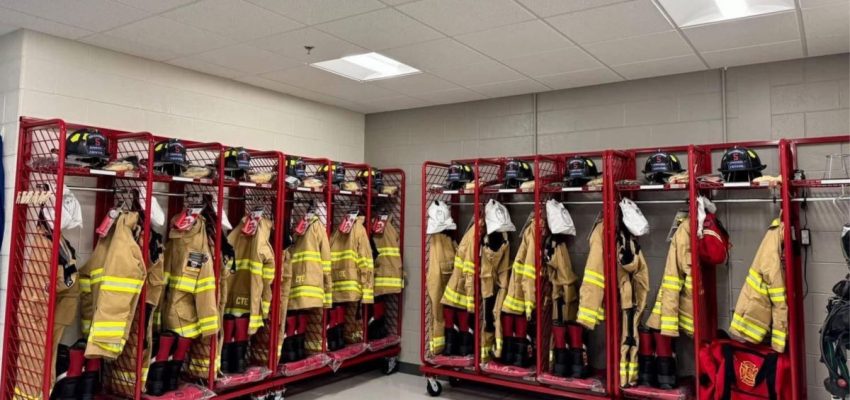
One of the standout offerings at the transformed Rockbridge Center, epitomizing this forward-thinking approach, is its yearlong firefighting course. This isn’t just a brief elective; it’s a comprehensive, immersive program designed to provide students with a deep understanding of fire science, emergency response protocols, and the physical demands of a firefighting career. Imagine high school students learning the intricacies of structural integrity in burning buildings, practicing search and rescue techniques, mastering the use of ladders and hoses, and understanding first aid and incident command systems. It’s a testament to the fact that practical skills and rigorous training can begin much earlier than traditionally assumed.
The real game-changer? This intensive firefighting course nets students nine college credits. This dual enrollment opportunity is incredibly valuable. It means students are not only gaining invaluable, career-specific training but are also simultaneously accumulating credits towards a post-secondary degree, saving them time and significant tuition costs down the line. For many, this could translate into completing an associate’s degree faster or having a substantial head start on a bachelor’s degree, making higher education more accessible and affordable.
Beyond firefighting, the principle of hands-on learning extends to numerous other disciplines within modern **Career and Technical Education** centers. Consider programs in advanced manufacturing, where students operate sophisticated CNC machines and learn automation principles. Or healthcare pathways that immerse students in simulated clinical environments, practicing patient care, medical assisting, and diagnostic procedures. Culinary arts programs teach not just recipes, but the business of running a kitchen, food safety, and hospitality management. Information technology programs delve into cybersecurity, network administration, and software development, providing students with certifications recognized by the industry.
These hands-on experiences are invaluable because they: (1) **Engage diverse learning styles**: Not all students learn best through lectures and textbooks. Applied learning provides an alternative that can significantly boost engagement and understanding. (2) **Develop transferable skills**: Beyond specific technical skills, students hone problem-solving, critical thinking, teamwork, communication, and leadership abilities – skills that are highly valued in any profession. (3) **Build confidence and relevance**: When students see the direct application of their academic studies to real-world scenarios, it makes learning more meaningful and boosts their self-efficacy. They understand ‘why’ they are learning certain concepts.
Beyond the Classroom: Fostering Community and Economic Growth
The impact of robust **Career and Technical Education** extends far beyond individual students; it profoundly shapes communities and drives economic development. By preparing a skilled local workforce, CTE centers act as vital pipelines that feed talent directly into local industries. This helps businesses thrive, reduces reliance on external hiring, and fosters a more resilient local economy. For communities struggling with brain drain, where young talent leaves for opportunities elsewhere, strong CTE programs can provide compelling reasons for graduates to stay and contribute.
Partnerships are key to the success of modern CTE. These centers often collaborate closely with local businesses, community colleges, and industry leaders to ensure their curricula remain relevant and responsive to current workforce needs. This collaboration can involve guest speakers, internships, apprenticeships, equipment donations, and advisory board participation, creating a symbiotic relationship that benefits all stakeholders. For instance, a local hospital might partner with a CTE healthcare program to provide clinical rotations, giving students invaluable real-world experience and the hospital a pool of potential future employees.
Moreover, the integration of cutting-edge technology is transforming what’s possible within CTE. From virtual reality simulations for welding or surgical training to AI-powered robotics in manufacturing labs, students are exposed to the tools and technologies that are shaping the future of work. This ensures they are not just prepared for today’s jobs but are adaptable and equipped for tomorrow’s emerging industries. The shift towards sustainable practices and green technologies is also finding its way into CTE curricula, preparing students for roles in renewable energy, sustainable construction, and environmental management.
This holistic approach positions **Career and Technical Education** as a powerful force for social mobility. It offers a clear, achievable path to economic independence for students from all backgrounds, regardless of whether they pursue a four-year degree immediately after high school. It validates multiple pathways to success, demonstrating that valuable contributions to society come in many forms, and that a hands-on, skill-based education is just as valid, if not more immediately impactful, than purely academic pursuits for many individuals.
In conclusion, the transformation witnessed at centers like Rockbridge underscores a fundamental rethinking of what constitutes a complete high school education. It’s a move away from a one-size-fits-all model towards a more dynamic, responsive system that celebrates diverse talents and ambitions. By prioritizing hands-on learning, integrating college credits, and fostering deep community ties, modern **Career and Technical Education** programs are not just preparing students for careers; they are empowering them to build fulfilling lives and contribute meaningfully to their communities.
As we look to the future, the continued investment in and advocacy for these innovative high school programs will be paramount. They represent an intelligent, pragmatic approach to education that benefits individuals, industries, and entire regions. It’s time to recognize the unsung revolution happening in our high schools and champion the pathways that truly prepare the next generation for success in a rapidly evolving world.










