

In an era defined by relentless technological advancement, the skills required for success are evolving at an unprecedented pace. The digital revolution, powered by artificial intelligence, robotics, and automation, demands a workforce equipped not just with theoretical knowledge but with practical, problem-solving capabilities. It’s within this dynamic landscape that innovative educational approaches become not merely beneficial, but essential. Imagine a tool that encapsulates physics, engineering, programming, and real-world application, all while being incredibly engaging. That tool is the drone, and its integration into educational programs is proving to be a game-changer, particularly in the realm of STEM (Science, Technology, Engineering, and Mathematics).
As an AI specialist and a fervent advocate for technological literacy, I’ve witnessed firsthand the transformative power of hands-on learning with cutting-edge tools. From the burgeoning field of autonomous systems to the intricate challenges of data analysis, the foundational understanding gleaned from working with unmanned aerial vehicles (UAVs) provides an invaluable head start. Programs that incorporate drone technology are not just teaching students to fly; they are igniting curiosity, fostering critical thinking, and preparing them for a future that will be profoundly shaped by artificial intelligence and robotics. This holistic approach to education is what will empower the next generation to be not just consumers of technology, but its architects and innovators.
### Drones for STEM Education: Nurturing the Innovators of Tomorrow
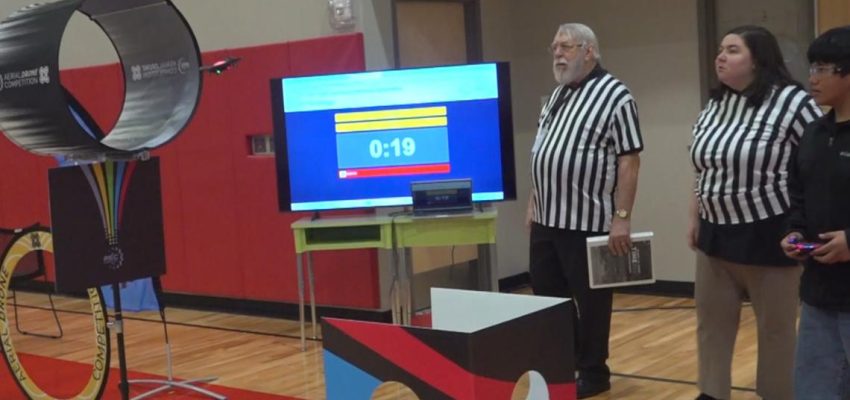
At the heart of preparing the next generation for a future brimming with technological potential lies a fundamental shift in how we approach learning. Gone are the days when rote memorization sufficed; today’s challenges demand creativity, critical thinking, and collaborative problem-solving. This is precisely where initiatives centered around **Drones for STEM Education** shine brightly. A regional drone competition, such as the one recently held in Rogers, Arkansas, exemplifies this paradigm shift perfectly, transforming abstract concepts into tangible, thrilling experiences for students.
These competitions are not just about guiding small unmanned aerial vehicles (UAVs) through an obstacle course; they are immersive laboratories. Students delve into the intricate mechanics of flight, understanding aerodynamics, propulsion systems, and control theory. They wrestle with the principles of physics, calculating trajectories, energy consumption, and load capacities. Beyond the hardware, a significant portion of the challenge involves software and programming. Teams often need to program their drones for autonomous flight segments, utilizing coding languages and logical algorithms, thereby engaging directly with computer science and artificial intelligence principles. This fusion of disciplines—science, technology, engineering, and mathematics—is what makes drone programs an unparalleled platform for holistic STEM development.
The engagement factor of drone technology is undeniable. Unlike traditional classroom exercises, the allure of piloting a drone, or watching code translate into a precise aerial maneuver, captures the imagination of young learners. This excitement translates into deeper engagement, fostering a genuine curiosity that drives further exploration. Participants learn valuable soft skills too: teamwork is paramount as students collaborate on design, programming, and piloting strategies; communication is key when troubleshooting issues under pressure; and resilience is built when facing setbacks and iteratively refining their solutions. Such experiential learning transforms abstract scientific principles into concrete applications, making complex subjects accessible and exciting. The journey from initial concept to successful flight instills a profound sense of accomplishment and demonstrates the real-world impact of STEM skills.
Educational institutions worldwide are increasingly recognizing the value of integrating drone technology into their curricula. From high schools introducing robotics clubs to universities offering specialized drone engineering courses, the trend is clear: these aerial platforms are becoming indispensable teaching tools. The interdisciplinary nature of drone projects naturally breaks down traditional subject silos, encouraging students to see the connections between mathematics and engineering, or science and programming. This integrated learning approach mirrors the demands of real-world innovation, where complex problems rarely fit neatly into a single academic category.
### Navigating the Drone Revolution: A Gateway to Diverse Career Paths
The impact of programs integrating drone technology extends far beyond immediate educational benefits; they serve as critical pathways to an increasingly diverse and dynamic job market. The drone industry is experiencing explosive growth, with market projections estimating its global value could exceed $50 billion by 2030, according to reports from companies like Grand View Research and Goldman Sachs. This isn’t just about drone piloting; it’s about a vast ecosystem of related disciplines that require a highly specialized and adaptable workforce.
Consider the myriad career trajectories opened by an early exposure to unmanned aerial systems. Students who master drone mechanics might gravitate towards aerospace engineering, designing the next generation of more efficient and intelligent aircraft. Those passionate about programming and data could pursue roles in software development, focusing on artificial intelligence algorithms for autonomous navigation, machine learning for data analysis, or developing user interfaces for complex drone operations. The data collected by drones—from high-resolution imagery to thermal scans—fuels careers in geospatial intelligence (GIS), environmental science, agriculture, and construction, where specialists analyze vast datasets to inform critical decisions. For example, in agriculture, drones equipped with multispectral cameras can detect crop stress long before it’s visible to the human eye, enabling precision farming and optimizing resource use.
Beyond these technical roles, the drone revolution is also creating demand in less obvious but equally vital areas. Regulatory specialists are needed to navigate the evolving legal landscape governing drone operations, ensuring safety and compliance—a critical field as airspace integration becomes more complex. Cybersecurity experts are crucial for protecting sensitive data and preventing malicious interference with drone systems, a growing concern given the increasing autonomy of these devices. Even creative fields like cinematography, photography, and journalism are increasingly relying on drone technology for unique perspectives and dynamic storytelling, capturing breathtaking footage that was once impossible or prohibitively expensive. The foundational understanding gained from engaging with drone technology in an educational setting provides students with a distinct advantage, equipping them with both the specialized knowledge and the adaptable problem-solving skills that are highly valued across these diverse industries. It’s about building a robust skill set that remains relevant as technology continues its onward march, ensuring that today’s learners are prepared for tomorrow’s challenges and opportunities.
### From Classroom to Cloud: The Broader Impact of Experiential Learning
The true power of initiatives like drone competitions lies in their ability to bridge the gap between theoretical knowledge acquired in classrooms and the practical application demanded by the real world. This commitment to experiential learning is a cornerstone of modern pedagogy, recognizing that ‘doing’ is often the most effective way to ‘learn.’ When students assemble an aerial robotic platform, calibrate its sensors, write its flight code, and then witness it execute their commands, they are not just absorbing information; they are constructing knowledge. This deep, active learning fosters a more profound understanding and retention of complex concepts, far surpassing what can be achieved through textbooks alone. The process of iteration – design, build, test, refine – mirrors the engineering design process used in professional settings, instilling a valuable mindset for continuous improvement.
Moreover, the integration of drone technology into STEM education subtly introduces students to the cutting edge of artificial intelligence. While they might be focused on achieving a specific task, they are implicitly engaging with principles that underpin AI: sensor fusion, real-time data processing, path planning, and even rudimentary machine learning for object recognition or obstacle avoidance. Many modern educational drone platforms come with AI-driven capabilities, allowing students to experiment with computer vision and autonomous decision-making. This early exposure demystifies AI, transforming it from an abstract concept into a practical tool they can understand, manipulate, and even improve upon. It shows them how intelligence can be embedded into machines, performing tasks with greater precision and efficiency. For example, programming a drone to follow a specific object or avoid obstacles requires understanding algorithms that mimic human-like perception and decision-making.
The impact extends beyond individual skill acquisition. These programs build robust communities of learners, fostering mentorship opportunities between older and younger students, and between industry professionals and aspiring innovators. They also highlight the crucial role of public-private partnerships, where companies and educational institutions collaborate to provide resources, expertise, and opportunities that would otherwise be out of reach. For instance, a technology company might sponsor a drone competition, providing equipment and expert mentors, while schools provide the infrastructure and enthusiastic students. By investing in such forward-thinking educational frameworks, we are not merely preparing students for existing jobs; we are empowering them to define the jobs of the future, to solve problems we haven’t even conceived yet, and to be active participants in shaping the technological landscape of tomorrow. This holistic approach ensures that the next generation is not just digitally literate, but digitally fluent, capable of innovating and thriving in an increasingly interconnected and AI-driven world.
In conclusion, the rise of drone technology in educational settings, particularly through engaging competitions, represents a pivotal moment in how we prepare our youth for the future. It’s more than just about learning to operate a sophisticated piece of machinery; it’s about cultivating a deep, interdisciplinary understanding of STEM principles, fostering critical thinking, and igniting a passion for innovation. The hands-on, problem-solving nature of working with drones provides an unparalleled environment for students to develop skills that are not only relevant today but will be indispensable in an increasingly automated and intelligent world.
As an AI specialist and tech enthusiast, I firmly believe that by embracing these cutting-edge educational tools, we are not just teaching technology; we are nurturing the very spirit of human ingenuity. We are equipping the next generation with the confidence and competence to navigate and shape a world profoundly influenced by AI and emerging technologies. Investing in initiatives that champion experiential learning with tools like drones is an investment in a brighter, more innovative future for all. It ensures that our students are not just consumers of technology, but creators, thinkers, and leaders who will drive progress for decades to come.










