

In an era defined by unprecedented technological advancement, the landscape of work and personal development is undergoing a seismic shift. The once-clear path of education followed by a linear career has blurred, giving way to a dynamic, ever-evolving journey. As an AI specialist, writer, and tech enthusiast, I’ve witnessed firsthand how quickly new technologies emerge and reshape industries. What was cutting-edge yesterday can become foundational, or even obsolete, tomorrow. This relentless pace, particularly driven by the rapid maturation and integration of artificial intelligence (AI), has brought a profound realization: learning isn’t a phase; it’s a permanent state.
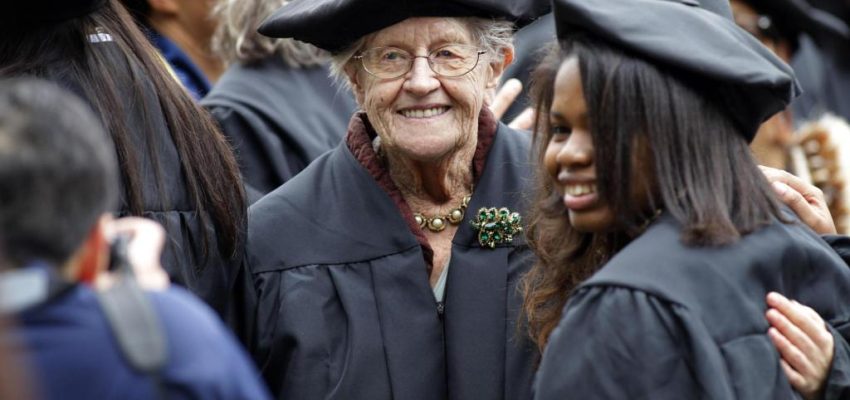
Experts and industry leaders are increasingly acknowledging a fascinating demographic shift in education. The traditional student, fresh out of high school or an undergraduate program, is no longer the sole, or even primary, focus of educational institutions. Instead, a new majority is emerging: adults already entrenched in their careers, or those seeking new personal horizons, who are returning to classrooms – both virtual and physical – with a hunger for knowledge. This isn’t merely about obtaining another degree; it’s about a fundamental commitment to ongoing skill acquisition and intellectual growth. The simple truth is, in a world where AI is constantly redefining the boundaries of possibility, **lifelong learning** has ceased to be a mere advantage and has firmly become an imperative.
Lifelong Learning: The Imperative in the AI Age
The most significant catalyst for this resurgence in adult education is undoubtedly artificial intelligence. AI is not just a tool; it’s a transformative force that is fundamentally altering how we work, interact, and even think. From automating repetitive tasks to augmenting human capabilities in complex decision-making, AI is weaving its way into every sector imaginable. This widespread integration brings with it both challenges and immense opportunities. The fear of job displacement, while real for some roles, is often overshadowed by the creation of entirely new professions and the enhancement of existing ones. However, to seize these opportunities, individuals must proactively adapt.
The shelf-life of skills is shrinking at an alarming rate. A decade ago, a professional might acquire a core set of competencies that would serve them well for a significant portion of their career. Today, the half-life of a technical skill can be as short as five years, or even less in rapidly advancing fields like data science or machine learning. This means that remaining static is, in essence, falling behind. Organizations like the World Economic Forum consistently highlight that a substantial portion of the global workforce will require significant reskilling or upskilling in the coming years due to automation and the adoption of AI. For instance, reports suggest that over half of all employees will need reskilling by 2025 as AI and automation continue to transform job roles across industries such as manufacturing, finance, healthcare, and even creative fields.
This isn’t just about learning to code or understand algorithms. It’s about developing a broader understanding of how AI impacts business strategy, ethical considerations, and human-computer interaction. It’s about cultivating uniquely human skills – critical thinking, creativity, emotional intelligence, and complex problem-solving – which AI can augment but not replicate. Professionals across all sectors, from marketing managers needing to understand AI-driven analytics to healthcare providers leveraging AI for diagnostics, recognize that continuous education is no longer optional. It’s the strategic cornerstone for career resilience and growth. Embracing **lifelong learning** ensures that professionals remain relevant, adaptable, and valuable assets in an increasingly AI-driven economy, fostering a collaborative future where human ingenuity and artificial intelligence work in tandem.
The Evolving Educational Landscape: Flexibility and Accessibility
Recognizing the growing demand from this ‘new majority’ student, the educational landscape itself is undergoing a remarkable transformation. Traditional universities, once the gatekeepers of higher education, are adapting, but perhaps the most significant innovations are emerging from more flexible, accessible platforms. Online learning, once considered a niche alternative, has blossomed into a sophisticated ecosystem offering everything from short courses to full degrees.
Platforms like Coursera, edX, Udacity, and specialized bootcamps provide a wealth of learning opportunities tailored for busy professionals. These offerings often focus on specific, in-demand skills, providing certifications and micro-credentials that are highly valued by employers. Unlike traditional degree programs that can demand years of full-time commitment, these modern alternatives offer unparalleled flexibility, allowing individuals to learn at their own pace, often outside of working hours. The global online education market, valued at hundreds of billions of dollars, continues to expand rapidly, a testament to this growing need for accessible, modular learning.
Furthermore, businesses themselves are investing heavily in corporate training and development programs. Many forward-thinking companies understand that fostering a culture of continuous learning is not just a benefit but a strategic necessity. They are partnering with educational providers, developing internal academies, and incentivizing employees to pursue ongoing professional development. Even AI itself is being harnessed to personalize learning experiences, with adaptive platforms that can tailor content and pace to an individual’s specific needs and learning style, making the process more efficient and engaging than ever before. This evolving ecosystem ensures that **lifelong learning** is not only necessary but also increasingly attainable for anyone committed to it.
Beyond Career Growth: Personal Enrichment and Societal Impact
While career advancement and professional relevance are undeniably powerful drivers for adults returning to education, the motivations extend far beyond mere vocational necessity. Many individuals embark on journeys of **lifelong learning** for profound personal enrichment and intellectual curiosity. In a world saturated with information and complex technological shifts, there’s a deep-seated human desire to understand the forces shaping our future, to engage critically with new ideas, and to simply grow as individuals.
Consider the adult learner who delves into a course on the ethics of AI, not because their job requires it, but out of a civic responsibility to understand its societal implications. Or the retired professional who takes up a course in quantum computing simply to satisfy a long-held fascination with cutting-edge science. These pursuits contribute to a more informed, engaged, and adaptable citizenry, fostering critical thinking skills essential for navigating a complex, tech-driven world. The “silver tsunami” of older adults embracing new technologies and educational opportunities further highlights this trend, demonstrating that the pursuit of knowledge transcends age and career stages.
Moreover, a society that values and facilitates continuous learning is inherently more resilient and innovative. A workforce that is constantly updating its skills, exploring new domains, and challenging established paradigms is better equipped to drive economic growth, solve grand challenges, and foster a culture of perpetual improvement. The benefits ripple outwards, impacting local communities, national economies, and global progress. Therefore, **lifelong learning** is not just an individual pursuit; it is a collective endeavor that strengthens the very fabric of society, ensuring we not only keep pace with the future but actively shape it with wisdom and foresight.
In conclusion, the paradigm shift in education, driven by the relentless march of artificial intelligence and technological evolution, is unmistakable. The rise of the adult learner as the ‘new majority’ is a testament to a collective recognition that learning is an ongoing, fluid process, inextricably linked to both professional success and personal fulfillment. As an AI specialist, I firmly believe that this era calls for a proactive embrace of continuous intellectual engagement, transforming challenges into unparalleled opportunities.
Navigating the complexities of the 21st century demands agility, adaptability, and an unwavering commitment to growth. The future belongs not to those who cease learning, but to those who view every day as a chance to acquire new knowledge, hone existing skills, and expand their understanding of the world. Embracing **lifelong learning** is not just a strategy for career survival; it is a philosophy for thriving in the age of adaptation, ensuring that humanity continues to innovate, evolve, and lead with purpose in an increasingly intelligent world.










