
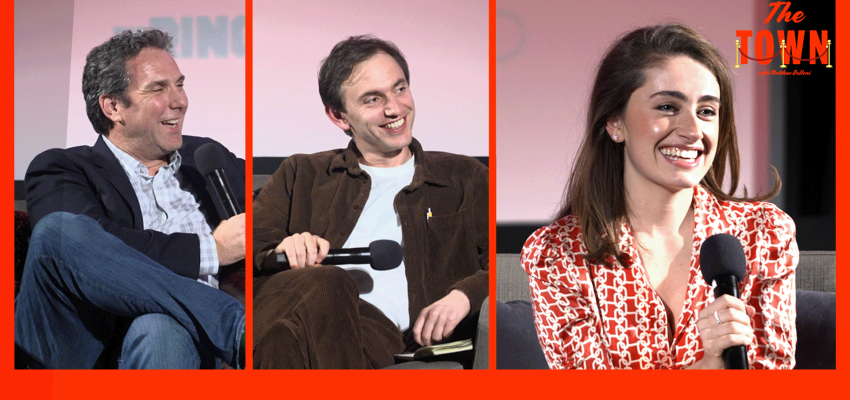

In an era defined by rapid technological advancement and ever-shifting cultural landscapes, charting a successful professional trajectory often feels like navigating an uncharted sea. Traditional maps are obsolete, and new tools emerge daily. It’s a challenge faced across industries, from cutting-edge artificial intelligence research to the seemingly timeless realm of entertainment. Yet, stories of breakthrough success offer invaluable lessons, demonstrating how vision, adaptability, and a willingness to challenge conventions can pave the way forward. One such compelling narrative emerges from the vibrant and often unpredictable world of Hollywood, specifically through the journey of Rachel Sennott.
Known for her distinctive voice, sharp comedic timing, and a refreshing authenticity, Rachel Sennott has rapidly ascended from indie darling to a pivotal figure in contemporary entertainment. Her recent role as star and showrunner for HBO’s ‘I Love LA’ isn’t just a testament to her talent; it’s a masterclass in how to forge a modern Hollywood career. Her approach to pitching, producing, and engaging with a younger audience provides a blueprint not just for aspiring filmmakers and actors, but for innovators in any field grappling with disruption – especially those of us immersed in the dynamic currents of AI and technology. As an AI specialist and tech enthusiast, I find immense inspiration in Sennott’s journey, seeing profound parallels between the evolving entertainment industry and the frontiers of artificial intelligence.
Modern Hollywood Career: Beyond the Traditional Trajectory
The traditional entry points into Hollywood—film school, internships, years of networking, and gradually climbing the studio ladder—are still valid, but they are no longer the exclusive pathways. Rachel Sennott exemplifies a new breed of creative professionals who have leveraged digital platforms, personal branding, and an unfiltered artistic voice to carve out their own space. Her roots in stand-up comedy and social media didn’t just provide a platform; they were a crucible for developing her unique perspective and connecting directly with an audience. This direct-to-consumer model, where creators build a following independently, is increasingly vital. It’s a phenomenon we see mirrored in the tech world with open-source communities, independent game developers, and tech influencers who build an audience around their expertise or projects, bypassing traditional gatekeepers.
Sennott’s rise signals a significant shift: a modern Hollywood career is less about waiting to be discovered and more about actively creating opportunities. Consider the independent film circuit, which has always been a breeding ground for new talent, but now, with lower barriers to entry for production and distribution (thanks to accessible technology), it’s more vibrant than ever. From micro-budget films gaining critical acclaim at festivals like Sundance to viral web series transitioning to major networks, the landscape values originality and tenacity above all else. This entrepreneurial spirit, this ‘build it yourself’ ethos, is precisely what drives innovation in AI. Startups often begin with a compelling prototype, a unique algorithm, or a novel application built by a small, dedicated team, proving concept and attracting attention before seeking significant investment or partnership.
The lessons here extend beyond the creative sphere. In AI development, for example, the ability to rapidly prototype, iterate, and showcase a minimum viable product can be far more impactful than waiting for perfect conditions or institutional backing. Sennott’s journey underscores the power of self-generated content and authentic connection in a hyper-connected world, proving that a unique voice, amplified correctly, can cut through the noise and establish a robust modern Hollywood career.
The Art of the Pitch and the Power of Authenticity in a Connected World
One of the most intriguing aspects of Sennott’s story is how she pitched and sold ‘I Love LA’ to HBO. This wasn’t merely about presenting a script; it was about articulating a vision, demonstrating market understanding, and conveying the inherent value of her unique voice. In Hollywood, a successful pitch blends creative genius with strategic thinking, showing not just what the story is, but who it’s for, and why it matters now. For Sennott, making TV for a younger audience was central to her pitch. She understood her demographic intimately, recognizing their viewing habits, their cultural touchstones, and their desire for authentic, relatable narratives.
This dynamic mirrors the challenge of pitching an innovative AI solution. Whether you’re presenting to venture capitalists, potential clients, or a research committee, the core principles are identical: clarity of vision, demonstrable value proposition, and a deep understanding of the target audience or problem space. An AI startup pitching a new diagnostic tool for healthcare, for instance, must articulate not just the technical prowess of its algorithms, but also how it addresses a critical unmet need in patient care, its potential impact on clinical workflows, and its unique competitive advantage. Data-driven insights are paramount, just as knowing your audience’s preferences (and even their TikTok trends, in Sennott’s case) informs a creative pitch.
Furthermore, Sennott’s emphasis on authenticity resonates strongly. In an age of digital saturation and curated online personas, genuine storytelling stands out. Audiences, particularly younger ones, are acutely attuned to inauthenticity. They seek content that reflects their experiences and speaks to their realities. This drive for authenticity is also vital in AI. As AI systems become more ubiquitous, trust and transparency are paramount. Developing AI that is ethical, fair, and truly solves human problems, rather than merely showcasing technical wizardry, fosters user adoption and long-term success. It’s about building AI that genuinely serves, just as Sennott’s work genuinely connects with its intended viewers.
Showrunning, Innovation, and the Future of Work in Creative Tech
Stepping into the role of a first-time showrunner is a monumental undertaking, demanding a blend of artistic vision, leadership, and rigorous project management. A showrunner is essentially the CEO of a television series, overseeing everything from script development and casting to production logistics and budgetary constraints. Sennott’s experience in this demanding role offers profound insights into navigating complex creative projects, a skill set increasingly vital across all sectors, particularly in the fast-evolving landscape of technology and AI.
Consider the parallels to leading an AI development team. A project lead in AI must define the technical vision, manage a diverse team of engineers and data scientists, ensure the project stays within scope and budget, and adapt to unforeseen challenges—be they technical hurdles, changing data requirements, or new ethical considerations. Just as a showrunner ensures narrative consistency and a cohesive artistic vision, an AI lead must ensure the models are robust, the data pipelines are efficient, and the final product aligns with its intended purpose and ethical guidelines. Both roles demand intense collaboration, problem-solving under pressure, and the ability to inspire a team toward a shared, often ambitious, goal.
Beyond leadership, the very fabric of content creation is being reshaped by technology. Artificial intelligence is not merely a background player; it is an emerging co-creator and enabler across the creative industries. From AI-powered tools assisting in script analysis, character development, and even early-stage story generation, to advanced visual effects driven by machine learning, the influence is undeniable. Virtual production, famously pioneered in shows like ‘The Mandalorian,’ utilizes massive LED screens and game engine technology to create immersive environments in real-time, blurring the lines between physical and digital sets. AI also optimizes post-production workflows, with tools that can automate aspects of video editing, color grading, and even sound design, freeing up human creatives to focus on higher-level artistic decisions.
The impact extends to distribution and consumption as well. AI algorithms power the recommendation engines of streaming platforms like Netflix and HBO, curating personalized viewing experiences for millions. This data-driven approach to understanding audience preferences and optimizing content delivery is a sophisticated application of AI, directly influencing how creative work reaches its viewers and how a modern Hollywood career is shaped by audience engagement metrics. Ethical considerations, however, are paramount. The rise of deepfakes and AI-generated content raises complex questions about intellectual property, authenticity, and the very definition of creativity, requiring careful navigation by creators, platforms, and policymakers alike.
Cultivating a Unique Voice in the Digital Age: Lessons for Every Innovator
What truly sets Rachel Sennott apart, and what offers a universal lesson for any ambitious professional, is her unwavering commitment to cultivating a unique voice. In a crowded digital landscape, where content creation is more accessible than ever, simply being present isn’t enough. Standing out requires a distinct perspective, a willingness to be vulnerable, and the courage to challenge established norms. Sennott’s projects often explore themes relevant to her generation with a blend of humor and poignant observation, resonating deeply because they feel authentic and specific.
This principle is profoundly relevant for innovators in the AI space. While foundational models and general-purpose AI tools are powerful, true breakthroughs often come from applying AI in novel ways, solving niche problems, or developing specialized algorithms that address specific industry needs. Just as Sennott found her niche in portraying the complexities of modern youth culture, AI developers can find their unique value proposition by focusing on underserved markets, refining existing technologies for new applications, or developing AI that embodies particular ethical or creative philosophies. The importance of community and networking also cannot be overstated. Sennott collaborated with peers who shared her vision, forming a creative ecosystem that supported her ascent. Similarly, in AI, engaging with open-source communities, attending conferences, and collaborating on research projects fosters innovation and opens doors to new opportunities. A thriving modern Hollywood career, much like a groundbreaking career in AI, is rarely a solitary endeavor.
The journey of Rachel Sennott is far more than just a Hollywood success story; it’s a compelling case study in navigating the complexities of modern professional life. Her entrepreneurial spirit, her shrewd understanding of audience dynamics, and her willingness to embrace the multifaceted demands of a showrunner’s role offer invaluable insights. These aren’t just lessons for aspiring actors or filmmakers; they are universal principles for anyone looking to make an impact in a world defined by constant change and technological disruption.
As we continue to push the boundaries of artificial intelligence, creating new tools and paradigms, the human elements that define Sennott’s success—authenticity, vision, collaboration, and adaptability—remain paramount. Whether building a groundbreaking AI model or crafting a compelling narrative for a new generation, the ability to understand your audience, innovate fearlessly, and lead with conviction will always be the most critical components of charting a successful and impactful career in the 21st century. The creative industries and the tech world, often seen as disparate, are increasingly intertwined, learning from each other’s evolutionary paths to shape the future of human experience.










