
The world our children will inherit is one of unprecedented change, largely driven by the accelerating pace of artificial intelligence. As an AI specialist and tech enthusiast, I often ponder how we can best prepare the next generation for a landscape that is continuously evolving, where job titles we can’t even imagine today will become commonplace tomorrow. This is precisely why initiatives like the recent Career Day at Frances Meeks Elementary School are not just engaging events, but critical foundational experiences for young minds.
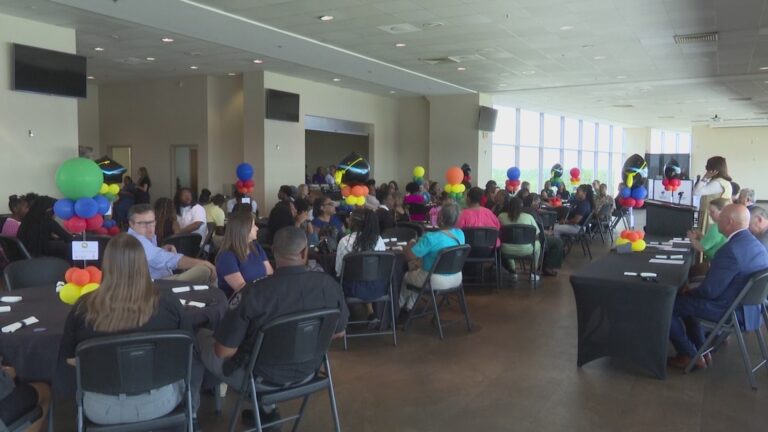
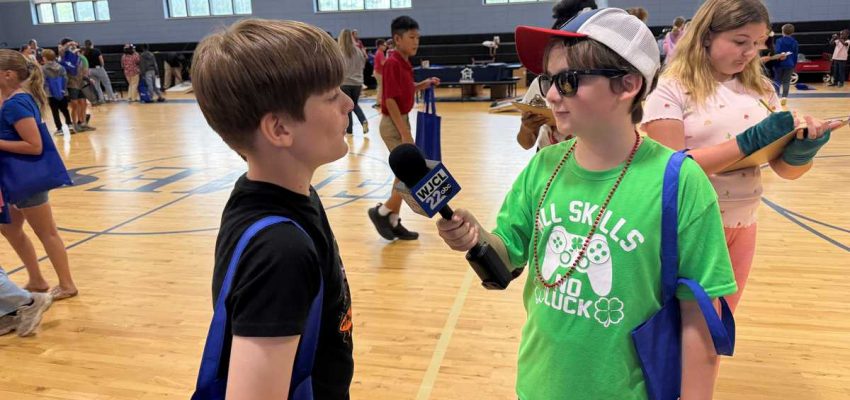
On a vibrant Friday, 950 students at Frances Meeks Elementary were given a remarkable opportunity: to peer into the world of work. Among the myriad of fields they explored, one highlight was a hands-on look at TV news production. Imagine the thrill for a child, not just watching the news, but getting to sit behind an anchor desk, operate a camera, or understand the hustle of a newsroom. These aren’t just fun activities; they are seeds of curiosity planted, sparking interests that could one day blossom into fulfilling professional paths. In a world where screens often mediate our experiences, providing a tangible, interactive encounter with a profession is invaluable, fostering a deeper understanding and appreciation for diverse roles.
### **Future careers** Start Early: Nurturing Curiosity in the Digital Age
Career exploration at an early age serves multiple vital purposes. Firstly, it broadens horizons. Many children’s understanding of professions is limited to what they see in their immediate environment – parents, teachers, doctors, firefighters. A career day introduces them to an expansive universe of possibilities, from engineering to environmental science, from culinary arts to content creation. It helps dismantle preconceived notions and stereotypes about who can do what, encouraging them to imagine themselves in roles they might never have considered. For instance, a young girl might discover a passion for robotics, or a boy might find joy in storytelling through journalism, simply by being exposed to these fields in an accessible manner.
Secondly, these experiences are crucial for developing self-awareness. As children interact with professionals and learn about different job functions, they begin to identify what excites them, what challenges them, and what aligns with their burgeoning skills and interests. This self-discovery is an ongoing process throughout life, but laying the groundwork early can significantly impact their educational choices and eventual career trajectories. The hands-on element, like simulating a TV news broadcast, transforms abstract concepts into concrete, memorable experiences that resonate far more deeply than any textbook description.
Furthermore, early exposure helps students understand the link between education and employment. When they meet an engineer, a software developer, or a news reporter, they hear firsthand about the journey these professionals undertook, including the schooling and skills required. This contextualizes their current studies, making subjects like mathematics, science, and language arts feel more relevant and purposeful. It helps answer the age-old question, “Why do I need to learn this?” by demonstrating its real-world application. According to a study by the Organisation for Economic Co-operation and Development (OECD), early and repeated exposure to the world of work can significantly reduce the likelihood of young people becoming ‘NEETs’ (Not in Education, Employment, or Training), underscoring the long-term benefits of such initiatives.
### The AI Revolution and the Evolving Job Landscape
Now, let’s connect this foundational career exploration to the grand narrative of our time: the rise of artificial intelligence. While the students at Frances Meeks were exploring traditional roles, they are growing up in an era where virtually every profession is being, or will be, touched by AI. This isn’t just about robots taking jobs; it’s about a fundamental transformation of *how* we work, what skills are valued, and the emergence of entirely new categories of **future careers**.
Consider the field of journalism, which piqued the interest of many students at the Career Day. While the core tenets of reporting – critical thinking, storytelling, ethical considerations – remain timeless, the tools and processes are rapidly evolving. AI is already used in newsrooms for automated content generation (e.g., financial reports, sports summaries), data analysis to identify trends for investigative pieces, personalized news delivery, and even deepfake detection. The journalist of tomorrow won’t necessarily be replaced by AI, but will be an AI-augmented professional, leveraging these tools to produce more impactful and efficient work. This demands a new blend of traditional journalistic skills with digital literacy and an understanding of AI’s capabilities and limitations.
Beyond traditional roles, AI is creating entirely new **future careers**. We’re seeing the demand for roles like AI ethicists, who ensure AI systems are developed and used responsibly; prompt engineers, who specialize in crafting effective queries for large language models; AI trainers, who refine machine learning algorithms; and AI integration specialists, who bridge the gap between AI development and real-world business applications. These roles require a unique combination of technical acumen, critical thinking, creativity, and often, a deep understanding of human behavior and societal impact.
This rapid evolution means that the job market is becoming less about rote tasks and more about uniquely human capabilities. The World Economic Forum’s ‘Future of Jobs Report 2023’ highlights that while AI will displace some jobs, it will create many more, particularly those requiring ‘green skills,’ digital literacy, and human-centric attributes. It’s predicted that 69 million new jobs will emerge by 2027, driven by technological adoption.
### Skills for Tomorrow: Preparing Students for Unseen Paths
Given this dynamic landscape, what skills should we be cultivating in students today to prepare them for these unknown **future careers**? It’s no longer just about memorizing facts; it’s about developing adaptability, resilience, and a mindset of lifelong learning.
1. **Critical Thinking and Problem-Solving:** AI can process vast amounts of data, but humans are still superior at nuanced problem-solving, identifying underlying causes, and asking the right questions. Teaching children to analyze situations, evaluate information, and devise creative solutions is paramount.
2. **Creativity and Innovation:** While AI can generate art and text, the spark of original thought, the ability to connect disparate ideas, and the drive to innovate remain distinctly human. Encouraging imaginative play, artistic expression, and divergent thinking is more important than ever.
3. **Digital Literacy and AI Fluency:** This goes beyond simply knowing how to use a computer. It involves understanding how AI works at a conceptual level, recognizing its potential and its limitations, and being able to interact with AI tools effectively and ethically. Starting with basic coding, computational thinking, and even discussions about how AI impacts daily life can lay a strong foundation.
4. **Emotional Intelligence and Collaboration:** As routine tasks are automated, roles requiring strong interpersonal skills – empathy, communication, negotiation, and teamwork – become even more valuable. AI excels at logic, but human connection and understanding complex social dynamics are our strengths. Group projects and collaborative learning environments are vital.
5. **Adaptability and Resilience:** The only constant is change. Students need to be equipped with the mental fortitude to embrace new technologies, learn new skills, and navigate uncertainty. Fostering a growth mindset, where challenges are seen as opportunities for learning, is key.
6. **Ethical Reasoning:** With powerful technologies like AI, ethical considerations become central. Teaching children to think about fairness, bias, privacy, and the societal impact of technology will be crucial for responsible innovation in their **future careers**.
These are the skills that will empower students to thrive, not just survive, in an AI-driven world. Events like Career Day at Frances Meeks Elementary are vital because they provide the initial spark, making these abstract concepts tangible. They allow children to see themselves as active participants in shaping their own professional journeys and, by extension, the world.
Education, in this context, must move beyond traditional boundaries. It requires a collaborative effort from schools, parents, industry, and the community to provide diverse learning experiences. Workshops, mentorship programs, internships (even short-term ones for older students), and ongoing dialogue about technological advancements will be crucial. We are not just preparing students for a job; we are preparing them for a lifetime of learning and adaptation.
The journey toward defining **future careers** is dynamic and exciting. The students at Frances Meeks Elementary, through simple acts of exploration, are taking their first steps on a path that will undoubtedly lead to innovation, discovery, and contributions we can only begin to imagine. It is our collective responsibility to guide them, nurture their curiosity, and equip them with the tools and mindset to build a future that is not only technologically advanced but also profoundly human.
In conclusion, the enthusiastic exploration of professions by 950 students at Frances Meeks Elementary is far more than just a school event; it is a profound investment in their future. By offering hands-on experiences and glimpses into diverse career paths, we empower young learners to dream bigger, understand the world around them, and begin to envision their place within it. This early exposure to the working world, exemplified by the excitement around TV news, lays crucial groundwork for informed decisions down the line.
As an AI specialist, I believe that nurturing curiosity and fostering a spirit of inquiry from an early age is the most powerful antidote to the uncertainties of technological disruption. The **future careers** landscape will be complex, demanding both technological fluency and uniquely human attributes. By combining foundational career exploration with an emphasis on critical thinking, creativity, and adaptability, we can ensure that the next generation is not merely prepared for the future, but actively designs and leads it, creating a more innovative, equitable, and fulfilling world for all.