
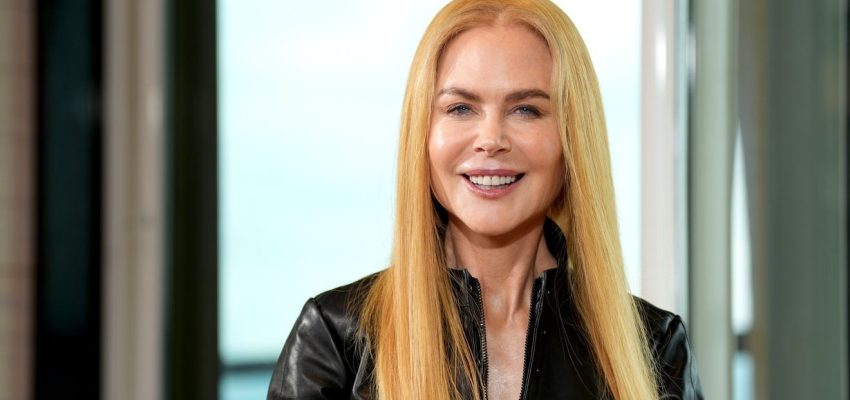

In an era where celebrity news often orbits around glamorous projects and philanthropic gestures, a recent announcement concerning Hollywood icon Nicole Kidman has captured widespread attention for its deeply human and remarkably profound implications. Known globally for her transformative roles on screen, Kidman is now venturing into a realm far removed from the red carpet: she is embracing a new career as a **death doula**. This revelation, while surprising to many, signals a powerful shift in how society views and approaches the final chapter of life, bringing into the mainstream a role that is as ancient as humanity itself yet remarkably relevant in our modern, often disconnected world.
As André Lacerda, an AI specialist and tech enthusiast, I find this convergence of celebrity influence and a profoundly human service fascinating. It highlights our enduring need for connection and support, even as technology advances, and underscores a growing global movement towards more conscious and compassionate end-of-life experiences. Kidman’s decision to immerse herself in end-of-life care transcends typical celebrity endeavors; it’s a powerful statement that challenges taboos and opens a vital dialogue about mortality, grief, and the invaluable support systems that can transform a challenging journey into one marked by dignity and peace.
### Death Doula: Redefining End-of-Life Support
The concept of a **death doula**, or end-of-life companion, might sound novel to some, but its roots stretch back through millennia of human history. Before the advent of modern medicine and institutionalized care, dying was often a community event, with family and neighbors providing comfort, practical assistance, and emotional support. The rise of hospitals and medical technologies, while offering immense benefits, inadvertently shifted death from the home to clinical settings, often isolating individuals and families from familiar surroundings and rituals.
Enter the modern **death doula**. Much like a birth doula supports expectant parents through childbirth, a death doula offers non-medical, holistic support to individuals nearing the end of their lives and their families. This support encompasses a wide array of services, tailored to the unique needs and wishes of each person. It can include emotional companionship, helping to navigate difficult conversations, facilitating legacy projects (such as compiling memoirs or creating memory boxes), assisting with practical tasks, and providing grief support during and after the passing. A doula acts as a guide, an advocate, and a compassionate presence, ensuring that the dying process aligns with the individual’s values and preferences.
It’s crucial to distinguish the role of a **death doula** from hospice care. Hospice provides medical care, pain management, and nursing services to terminally ill patients, often requiring a physician’s referral. While a doula can work in conjunction with hospice, their role is distinct. Doulas focus on the emotional, spiritual, and social aspects of dying, complementing the medical care provided by hospice. They fill the gaps that traditional medical systems often cannot, offering continuous, personalized attention that fosters comfort, meaning, and connection during a profound life transition. Organizations like the National End-of-Life Doula Alliance (NEDA) and the International End of Life Doula Association (INELDA) have been instrumental in professionalizing this field, setting standards for training and ethical practice, and raising public awareness about this vital service.
The growing demand for end-of-life doulas reflects a societal longing for more personalized, dignified deaths. Studies consistently show that a significant majority of people – around 70%, according to surveys by the National Hospice and Palliative Care Organization (NHPCO) – express a desire to die at home, surrounded by loved ones. Yet, in reality, only about 20% achieve this, with many passing in hospitals or long-term care facilities. The presence of an end-of-life companion can significantly bridge this gap, offering the support needed to honor these wishes, whether at home, in a hospital, or in a hospice setting.
### Beyond the Script: Nicole Kidman’s Personal Connection to End-of-Life Advocacy
Nicole Kidman’s decision to become a **death doula** is more than a fleeting interest; it represents a profound commitment that resonates deeply. While the specifics of her personal journey into this field are not widely publicized, her involvement naturally draws attention to a topic often relegated to the shadows. It’s reported that her interest may have been sparked or amplified during her work on the upcoming film “Scarpetta,” directed by Chloe Zhao and co-starring Riley Keough. The film, which delves into the complex world of a forensic pathologist, likely exposed Kidman to themes of death, grief, and the human response to loss in a very direct way.
For a figure of Kidman’s caliber – an Academy Award-winning actress with global recognition – to embrace such a role is immensely significant. Her celebrity status has the power to demystify and destigmatize death, bringing a conversation that is often considered morbid or uncomfortable into the mainstream. It lends credibility and visibility to the vital work that doulas perform, encouraging more people to explore this support for themselves and their families, and perhaps even inspiring others to join the ranks of end-of-life caregivers.
Kidman’s journey aligns with a broader cultural shift. There’s a burgeoning movement globally to reclaim death as a natural, integral part of life. This movement seeks to move beyond fear and denial, fostering an environment where conversations about mortality are open, honest, and proactive. By having a high-profile individual like Kidman champion this cause, the message reaches new audiences, challenging entrenched societal norms and promoting a more compassionate, conscious approach to dying. It’s a testament to the idea that true compassion knows no boundaries, whether on a Hollywood set or in the most intimate moments of a person’s life.
### The Future of Dying: How Death Doulas are Changing the Narrative
The rising prominence of the **death doula** movement signals a fundamental transformation in how we perceive and manage end-of-life care. It represents a collective yearning for a return to humanity in a process that has become increasingly clinical. As our global population ages, and as medical advancements extend lifespans, the need for empathetic, holistic support during the dying process will only intensify. The future of dying, ideally, will be one where individuals have agency, dignity, and unwavering emotional and practical support.
This shift is also intertwined with technological advancements. As an AI specialist, I observe how technology is already beginning to complement these deeply human roles, not replace them. For instance, digital legacy planning tools allow individuals to organize their digital assets, social media accounts, and online memories, ensuring their digital footprint is managed according to their wishes. AI-powered platforms can offer personalized information about palliative care options, grief resources, and legal considerations, making complex information more accessible to families. Virtual reality is being explored to create calming environments for patients, or even to allow distant family members to share meaningful, albeit digital, moments.
However, it’s critical to emphasize that technology serves as an augmentation, not a substitute, for the profound human connection offered by a **death doula**. AI can process data, but it cannot offer the nuanced empathy, intuitive understanding, or the gentle touch that defines a doula’s presence. The future will likely see a hybrid model where technological tools streamline administrative burdens and provide accessible information, freeing doulas to focus on their core mission: being present, listening deeply, and providing comfort that is inherently human. Ethical considerations surrounding AI in end-of-life care, such as data privacy and algorithmic bias in resource allocation, will be paramount, ensuring that humanity remains at the forefront of this sensitive domain.
Furthermore, the growth of the end-of-life doula profession is catalyzing broader conversations about death education in schools, workplaces, and communities. As more people become familiar with the concept, the stigma surrounding death slowly erodes. This normalization encourages individuals to plan proactively, articulate their wishes, and engage in open dialogue with loved ones, leading to more peaceful transitions and less complicated grief for those left behind. The impact of a single individual choosing to become a **death doula**, especially one with Nicole Kidman’s platform, ripples outward, empowering countless others to approach life’s final chapter with greater intention and peace.
Nicole Kidman’s embrace of the **death doula** role is far more than a celebrity headline; it is a significant cultural marker. It underscores a powerful, evolving understanding of mortality—one that moves beyond fear and denial toward acceptance, presence, and profound human connection. Her decision helps to shine a spotlight on a vital service, inviting us all to consider how we approach the end of life, both for ourselves and our loved ones.
As we continue to navigate an increasingly complex world, both technologically and socially, the importance of roles like the end-of-life doula becomes ever more apparent. They remind us that while innovation can improve efficiency and access, the fundamental human need for empathy, dignity, and connection remains timeless and irreplaceable. Kidman’s journey serves as a poignant reminder that some of life’s most profound roles are found not on a stage, but in the quiet, sacred spaces where human compassion shines brightest.










