The landscape of work is undergoing a profound transformation, propelled by the relentless march of artificial intelligence. What was once the domain of science fiction is now an integral part of our daily lives, from personalized recommendations to complex data analysis. In this ever-evolving world, understanding how to navigate the future of employment is paramount.
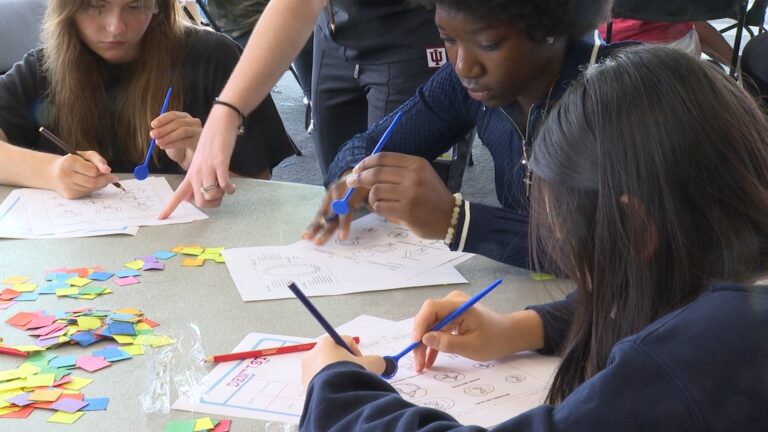
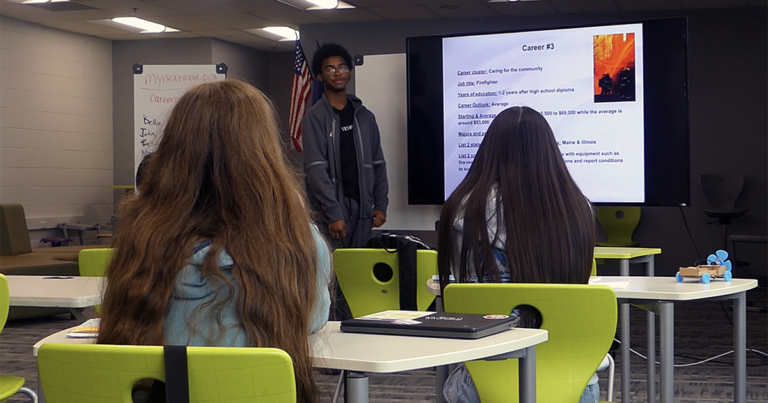
Recently, an initiative at Allen Community College, their “Drive Your Future: Career Exploration Day” held in recognition of National Apprenticeship Week, served as a timely reminder of the fundamental human need to understand and prepare for what lies ahead professionally. While such events traditionally focus on established trades and local opportunities, they implicitly underscore a universal challenge: how do we empower individuals to explore and secure meaningful roles in an economy increasingly defined by intelligent machines? As an AI specialist, writer, and tech enthusiast, I find myself constantly pondering this question, convinced that understanding AI’s impact is no longer a niche concern, but a core component of any meaningful career exploration today.
The advent of AI is not merely changing *how* we work; it’s fundamentally reshaping *what* work is. It’s opening up entirely new industries, automating repetitive tasks, and, most importantly, augmenting human capabilities in unprecedented ways. This shift necessitates a fresh perspective on career development, skill acquisition, and the very purpose of education. The future isn’t about competing with AI; it’s about collaborating with it, leveraging its power to solve complex problems, innovate, and create value in ways previously unimaginable.
AI careers: Charting New Territories in the Digital Age
When we talk about **AI careers**, many people immediately envision roles like data scientists, machine learning engineers, or AI researchers. While these foundational roles remain critical, the spectrum of opportunities touched by artificial intelligence is rapidly expanding, creating a diverse and dynamic job market. We are witnessing the birth of entirely new professions that didn’t exist a decade ago, each demanding a unique blend of technical acumen, creative thinking, and human-centric understanding.
Consider the role of a ‘Prompt Engineer,’ a nascent but rapidly growing field focused on crafting precise and effective queries to get optimal results from large language models. This isn’t just about technical coding; it requires an understanding of language, logic, and user intent. Similarly, ‘AI Ethicists’ are becoming indispensable, tasked with ensuring that AI systems are developed and deployed responsibly, without bias, and in alignment with societal values. As AI permeates critical sectors like healthcare, finance, and transportation, the demand for professionals who can navigate complex ethical dilemmas and regulatory frameworks will only intensify.
Beyond these specialized roles, AI is creating a ripple effect across virtually every industry. In healthcare, AI specialists are working alongside medical professionals to develop diagnostic tools, personalized treatment plans, and drug discovery platforms. In creative fields, ‘AI-assisted content creators’ are leveraging generative AI to streamline workflows, brainstorm ideas, and produce innovative multimedia. Even traditional roles in manufacturing and logistics are being redefined by robotics and predictive analytics, demanding ‘AI integration specialists’ who can seamlessly blend human oversight with automated systems.
According to a report by PwC, AI could contribute up to $15.7 trillion to the global economy by 2030, a figure that underscores the immense potential for new job creation. The World Economic Forum’s ‘Future of Jobs Report 2023’ highlights a significant increase in demand for roles like AI and Machine Learning Specialists, Business Intelligence Analysts, and Information Security Analysts, all of which are deeply intertwined with AI’s ongoing development and deployment. The challenge, then, for individuals at all stages of their professional journey, is to explore these emerging avenues and understand where their skills and passions can best intersect with this transformative technology.
The Evolving Skillset: What AI Demands from the Modern Professional
The narrative that AI will simply replace human jobs is overly simplistic and, frankly, misleading. A more accurate perspective is that AI will augment human capabilities, automate repetitive tasks, and elevate the demand for uniquely human skills. Therefore, the most critical aspect of preparing for an AI-powered future lies in cultivating a ‘future-proof’ skillset—one that complements, rather than competes with, artificial intelligence.
Technical proficiency in areas like data literacy, basic programming (even visual programming tools), and understanding AI concepts will undoubtedly be an advantage. However, the truly indispensable skills will be those that AI struggles to replicate: critical thinking, creativity, complex problem-solving, emotional intelligence, and interpersonal communication. AI can process vast amounts of data, but it cannot yet grasp nuance, empathize with human experiences, or innovate in the abstract sense that humans can. These are the core competencies that will define success in the future workforce.
Lifelong learning, therefore, is no longer a buzzword; it is an absolute necessity. The pace of technological change means that skills acquired today may be partially obsolete in five to ten years. Professionals must embrace a mindset of continuous learning, regularly updating their knowledge and adapting to new tools and methodologies. This isn’t just about formal education; it encompasses online courses, certifications, workshops, and even informal learning through communities and self-directed study. The model of apprenticeships, emphasized during National Apprenticeship Week, offers a valuable parallel here—practical, hands-on learning integrated with real-world application, a highly effective way to acquire and refine new skills rapidly.
Furthermore, the ability to work effectively in interdisciplinary teams will be paramount. As AI integrates into diverse fields, professionals will need to collaborate with experts from various backgrounds, bridging the gap between technical AI development and practical application in specific industries. This demands strong communication skills, an open mind, and the capacity to translate complex technical concepts into understandable insights for non-specialists. The future workforce will be a symphony of diverse talents, with AI acting as the conductor, orchestrating greater efficiency and innovation.
Education and Institutions: Preparing the Next Generation for an AI-Powered Future
Educational institutions, from community colleges like Allen Community College to universities and vocational schools, bear a significant responsibility in preparing current and future generations for this AI-driven world. The traditional model of education, often criticized for its emphasis on rote memorization and standardized testing, is ill-suited for a future where information is ubiquitous and critical thinking is paramount.
Instead, educational curricula must evolve to foster creativity, critical analysis, and adaptability. This means integrating AI concepts not just into computer science departments, but across all disciplines—understanding AI’s implications in ethics, law, art, history, and social sciences. Students should be encouraged to engage with project-based learning, problem-solving challenges, and interdisciplinary collaborations that mirror the complexities of the real world. Experiential learning, including internships and industry partnerships, will become even more crucial, providing students with hands-on experience in applying AI tools and theories.
Moreover, the focus should shift from merely imparting knowledge to cultivating digital literacy and data fluency as universal skills. Every student, regardless of their chosen field, should understand the basics of how AI works, its capabilities, its limitations, and its ethical considerations. This foundational understanding empowers individuals to be informed citizens and adaptable professionals in an AI-saturated society. Educators themselves must also engage in continuous professional development to stay abreast of AI advancements and pedagogical best practices for teaching in this new era.
Beyond formal education, institutions can serve as hubs for reskilling and upskilling the existing workforce. Offering flexible, modular courses and certifications in emerging AI-related fields can help displaced workers transition into new roles or enable current professionals to enhance their capabilities. By fostering a culture of lifelong learning and providing accessible pathways to acquire new skills, educational bodies can play a pivotal role in ensuring that the benefits of AI are widely distributed and that no one is left behind in this technological revolution.
A Future Defined by Human-AI Collaboration
The transformation spurred by artificial intelligence is more than just a technological shift; it’s a societal evolution. The discussions and preparations sparked by events like Allen Community College’s Career Exploration Day, when viewed through the lens of AI, underscore a universal truth: preparing for the future means understanding the forces that shape it. The rapid evolution of **AI careers** demands not just new technical skills, but a renewed emphasis on human attributes—creativity, critical thinking, empathy, and adaptability—that will differentiate us in an increasingly intelligent world.
As we look ahead, the promise of AI is not in replacing humanity, but in augmenting it, enabling us to achieve greater things. The journey will be challenging, requiring continuous learning, thoughtful ethical considerations, and proactive adaptation from individuals and institutions alike. But it is also a journey filled with immense opportunity, where collaboration between humans and intelligent machines can unlock unprecedented potential for innovation, progress, and a more fulfilling future for all. Embracing this perspective will be key to thriving in the exciting new frontier that AI continues to unfold before us.