

In an era defined by rapid technological advancement, the skills required to navigate and innovate in the professional landscape are constantly evolving. While artificial intelligence and digital transformation capture headlines, the bedrock of practical engineering and problem-solving remains indispensable. It is within this dynamic context that programs fostering foundational technical skills, even those seemingly traditional, become more vital than ever.
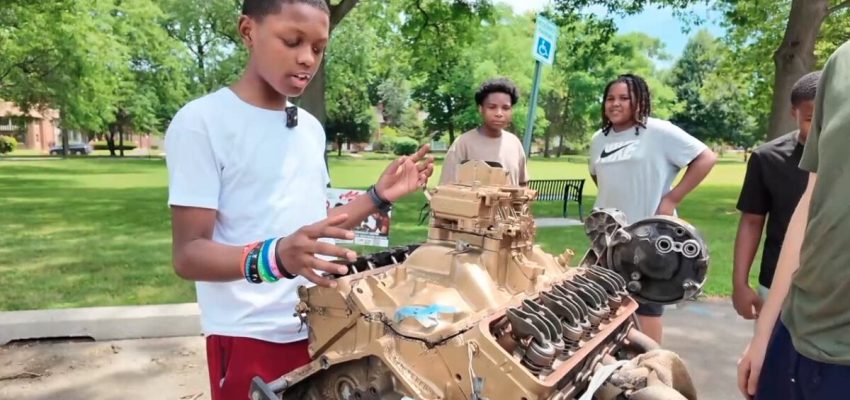
Recently, a compelling initiative in Detroit exemplified this principle: a free summer program offering middle and high school students hands-on experience with engines, while simultaneously introducing them to promising career opportunities within motorsports and the broader automotive industry. As an AI specialist and keen observer of technological trends, I see more than just mechanical training in such programs; I recognize the cultivation of the very mindset and skillset that will empower the next generation to thrive in an AI-driven world.
This article delves into the profound impact of such grassroots initiatives, exploring how they serve as crucial launchpads for future innovators. We’ll examine how engaging with tangible mechanics lays the groundwork for understanding complex systems, how career exposure shapes aspirations, and why investing in practical, foundational learning is an indispensable component of preparing for a future deeply intertwined with artificial intelligence and advanced technology.
STEM education: Igniting the Future of Innovation in Detroit and Beyond
The city of Detroit, with its rich heritage as the automotive capital of the world, provides a particularly poignant backdrop for a program focused on engine skills. Once a beacon of industrial might, Detroit has faced its share of economic challenges, yet it consistently demonstrates remarkable resilience and a spirit of innovation. Initiatives like this free summer bootcamp are not just about teaching mechanical skills; they are about re-investing in the city’s youth, providing pathways to prosperity, and ensuring the continued vitality of American industry.
The core of this program lies in its hands-on approach to
STEM education
. By allowing students to literally get their hands dirty, to disassemble and reassemble engines, diagnose problems, and understand the intricate workings of complex machinery, the bootcamp offers an invaluable learning experience that traditional classroom settings often cannot replicate. This experiential learning fosters critical thinking, problem-solving abilities, and an understanding of cause and effect – skills that are transferable across virtually all scientific and technical disciplines, including the rapidly expanding field of artificial intelligence.
Why is early engagement in
STEM education
so critical? Data from various research organizations, including the National Science Board, consistently highlights a growing demand for a skilled workforce in science, technology, engineering, and mathematics. The U.S. Bureau of Labor Statistics projects significant growth in STEM occupations over the next decade, with many roles commanding higher wages than non-STEM equivalents. However, a persistent skills gap remains, particularly in fields requiring both technical prowess and innovative thinking. Programs that introduce students to the practical application of engineering principles at a young age are essential for building a robust talent pipeline capable of meeting these future demands.
Furthermore, such bootcamps serve a vital role in demystifying complex fields and making them accessible. For many middle and high school students, the worlds of engineering or motorsports might seem distant or abstract. By offering a direct, tangible experience, these programs break down barriers, spark curiosity, and help students visualize themselves in these exciting careers. This is especially important for engaging underrepresented groups in STEM, ensuring that the innovation economy is inclusive and benefits from a diversity of perspectives and talents.
The emphasis on
STEM education
in Detroit is not just about its past but its future. The automotive industry is undergoing its most significant transformation in a century, driven by electrification, autonomous driving, and connected vehicle technologies – all heavily reliant on advanced software and artificial intelligence. Preparing students with foundational mechanical understanding, coupled with exposure to these emerging trends, creates a powerful synergy, equipping them with a holistic perspective that will be invaluable in tomorrow’s highly integrated industrial ecosystem.
Bridging the Gap: From Engine Mechanics to AI-Driven Automotive Futures
It might seem counterintuitive for an AI specialist to emphasize the importance of traditional engine mechanics. However, the future of the automotive industry is not about replacing mechanical engineering with software engineering, but rather about seamlessly integrating the two. Modern vehicles are complex ecosystems where physical components, intricate mechanical systems, and sophisticated software and AI algorithms work in concert. Understanding the fundamental principles of how an engine operates provides an invaluable context for anyone working on the artificial intelligence that optimizes its performance, predicts its maintenance needs, or even controls an electric motor that replaces it.
Consider the evolution of automotive design and manufacturing. Decades ago, vehicles were primarily mechanical marvels. Today, they are essentially ‘computers on wheels,’ brimming with sensors, microprocessors, and lines of code. Autonomous vehicles, for instance, rely on advanced AI to perceive their environment, make decisions, and execute actions. Yet, for these AI systems to function safely and effectively, they must operate within the constraints and capabilities of the physical vehicle. An engineer developing AI for predictive maintenance, for example, would greatly benefit from a foundational understanding of engine wear patterns, fluid dynamics, and material fatigue – knowledge gained through practical experience.
Moreover, the skills honed in an engine bootcamp – meticulous attention to detail, systematic troubleshooting, and diagnostic reasoning – are directly transferable to the world of AI development. Debugging a software algorithm shares surprising parallels with diagnosing a mechanical fault; both require a logical, iterative approach to identify and resolve issues. These foundational cognitive abilities are cultivated through hands-on
STEM education
.
The automotive industry is a prime example of Industry 4.0 in action. Smart factories utilize AI and robotics for automated assembly, quality control, and supply chain optimization. Vehicle design now incorporates generative AI to explore thousands of design iterations for optimal performance and efficiency. Even motorsports, the fast-paced proving ground for automotive innovation, heavily leverages data science and AI for real-time telemetry analysis, aerodynamic optimization, and race strategy. The students learning about engines today are, in essence, laying the groundwork for understanding the ‘hardware’ upon which future automotive ‘software’ will run.
This symbiotic relationship between mechanical understanding and digital innovation underscores the profound relevance of programs like the Detroit bootcamp. They are not merely preserving old skills; they are preparing students to be versatile, interdisciplinary professionals capable of bridging the gap between the physical and digital worlds. The next generation of automotive engineers will need to be fluent in both the language of torque and horsepower, and that of algorithms and data structures.
Cultivating the Next Generation of Technologists and Innovators
Beyond the technical knowledge of engines, the Detroit summer bootcamp cultivates a host of soft skills and career awareness that are just as crucial for success in any modern industry. The intensive, hands-on ‘bootcamp’ model promotes teamwork, communication, and resilience. Students work together, often in small groups, to tackle complex tasks, mirroring the collaborative environment found in professional engineering teams, whether in a manufacturing plant or an AI research lab.
The exposure to diverse career paths within motorsports and the broader automotive industry is another invaluable component. Students don’t just learn about engines; they learn about the people who design, build, test, and race them. This includes engineers specializing in aerodynamics, suspension, powertrain, and electronics, as well as data analysts, project managers, and even marketing professionals. Such broad exposure helps students understand the vast ecosystem of opportunities available within a single industry, empowering them to make informed decisions about their future educational and career pursuits. This holistic approach to career exploration is a cornerstone of effective
STEM education
.
For many students, especially those from underserved communities, programs like this can be a life-changing experience. They offer not only skills but also mentorship, networking opportunities, and a sense of belonging to a community of like-minded enthusiasts. Seeing tangible results from their efforts – an engine running smoothly because of their work – builds confidence and self-efficacy, critical traits for pursuing challenging academic and professional paths.
The long-term impact of such initiatives extends far beyond individual students. By fostering a passion for
STEM education
and practical engineering, these programs contribute to regional economic development and national competitiveness. A robust pipeline of skilled talent is essential for attracting and retaining businesses, driving innovation, and ensuring that a country remains at the forefront of global technological advancements. In a world where AI is rapidly automating routine tasks, the demand for creative problem-solvers, critical thinkers, and those with hands-on technical acumen will only increase.
Furthermore, these skills are highly transferable. A student who learns to diagnose an engine problem today has developed a systematic approach to troubleshooting that can be applied to debugging software code, optimizing a robot’s movements, or even refining an AI model. The underlying principles of logical analysis, hypothesis testing, and iterative refinement are universal across STEM fields. This broadens the horizon for students, showing them that their early interests in engines can seamlessly transition into careers in robotics, aerospace, sustainable energy, or even core AI research and development.
Finally, the importance of community involvement and corporate sponsorship cannot be overstated. Free programs remove financial barriers, making quality
STEM education
accessible to all, regardless of socio-economic background. When local businesses, educational institutions, and community organizations collaborate, they create powerful ecosystems that nurture talent and build stronger, more innovative communities. This collective investment in human potential is perhaps the most critical component of securing a vibrant future for both industry and society.
The Detroit summer bootcamp, while modest in its individual scope, represents a potent blueprint for future-proofing our workforce. It reminds us that while the future is increasingly digital and AI-driven, it is built upon the foundational principles of engineering, the curiosity sparked by hands-on discovery, and the human ingenuity that ultimately guides technology.
In a world rapidly being reshaped by artificial intelligence, programs that provide tangible, hands-on experience in areas like engineering and mechanics are more valuable than ever. They are not merely teaching technical skills but fostering critical thinking, problem-solving, and a deep appreciation for how complex systems operate. The students in Detroit, meticulously working on engines, are gaining far more than just mechanical proficiency; they are acquiring the foundational literacy needed to engage with, understand, and ultimately innovate within the increasingly integrated physical and digital landscapes of tomorrow.
As we look to the future, it becomes clear that true innovation will emerge from the seamless integration of human creativity, fundamental engineering principles, and advanced AI. Supporting and expanding initiatives that provide practical
STEM education
and early career exposure is paramount. These programs empower young individuals to become not just consumers of technology, but its creators and shapers, ensuring a dynamic, skilled workforce capable of tackling the challenges and harnessing the opportunities of an AI-powered world. The future belongs to those who are curious, adaptable, and equipped with both the knowledge to build and the vision to innovate.










