
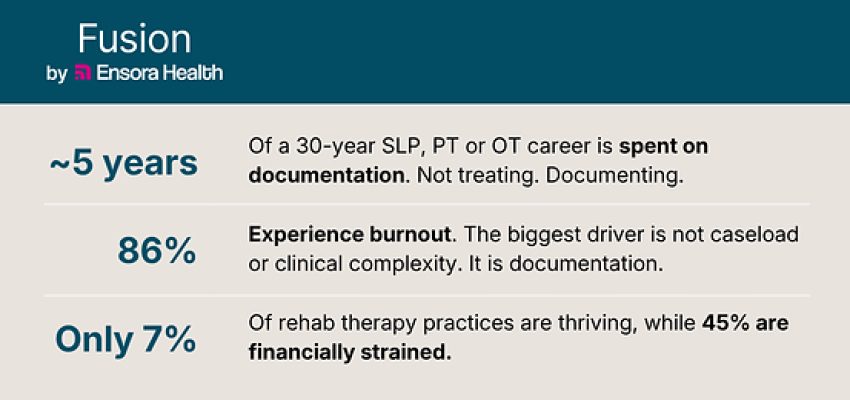

In the demanding world of healthcare, few professions are as vital and hands-on as rehabilitation therapy. Physical therapists, occupational therapists, and speech-language pathologists dedicate their careers to helping individuals regain mobility, function, and independence, often after life-altering injuries or illnesses. Their work requires immense skill, empathy, and unwavering focus on patient well-being. Yet, a stark reality often overshadows their direct patient interaction: an overwhelming burden of administrative tasks. Recent research from Ensora Health has brought this issue into sharp focus, revealing a truly startling statistic: over a 30-year career, the average rehab therapist spends the equivalent of nearly five years on documentation alone. Five years. Not treating patients, not refining techniques, but meticulously logging, charting, and coding. As an AI specialist and a keen observer of technological advancements, this finding resonates deeply with me, highlighting a critical area where intelligent systems can not only alleviate burdens but also revolutionize the delivery of care.
This revelation isn’t just about lost time; it’s about the erosion of a career’s primary purpose. Imagine the dedication required to become a highly skilled therapist, only to find a significant portion of your professional life consumed by paperwork. This administrative burden isn’t merely an inconvenience; it’s a systemic challenge impacting therapist well-being, patient access, and the overall efficiency of the healthcare system. For every hour spent meticulously updating an electronic health record (EHR) or navigating complex billing codes, that’s an hour not spent directly engaging with a patient, conducting a crucial assessment, or providing the hands-on therapy that makes all the difference. The implications are profound, touching on issues of burnout, job satisfaction, and ultimately, the quality of care provided to those who need it most.
The Alarming Reality: A Career Eroded by Paperwork
To truly grasp the magnitude of the Ensora Health research, let’s break down what ‘nearly five years’ truly means. Over a standard 30-year career, this equates to roughly 16.6% of a therapist’s professional life. If we consider a typical 40-hour work week, that’s an average of 6.6 hours every single week, or more than an hour each day, exclusively dedicated to documentation. This isn’t just a quarterly report; it’s an incessant, daily task that stretches across decades, accumulating into a colossal loss of productive, patient-facing time.
The reasons behind this documentation deluge are manifold and complex. Healthcare, particularly in rehabilitation, is subject to rigorous regulatory oversight. Every interaction, every treatment, every observed improvement or setback must be meticulously recorded to ensure compliance with legal standards, justify billing to insurance providers, and facilitate seamless communication across multidisciplinary care teams. These records include detailed patient notes, progress reports, individualized treatment plans, functional assessments, and a labyrinth of billing and coding requirements (like CPT codes and ICD-10 diagnoses). Each entry must be accurate, comprehensive, and often requires specific phrasing to meet insurer demands, adding layers of cognitive load to an already demanding job.
The impact on therapists is undeniable. The constant pressure to document accurately and efficiently, often after long hours of physical and mental engagement with patients, contributes significantly to professional burnout. Many therapists find themselves staying late, taking work home, or sacrificing breaks to complete documentation, leading to increased stress, fatigue, and a reduced sense of job satisfaction. This, in turn, can lead to a higher turnover rate in a field that desperately needs dedicated professionals. Furthermore, when therapists are rushed or exhausted, there’s an increased risk of human error in documentation, which can have severe consequences for patient care, legal compliance, and financial reimbursement.
For patients, the consequences are equally dire. Less time spent with their therapist means potentially longer wait times for appointments, shorter therapy sessions, and a reduced opportunity for personalized care. When a therapist’s attention is divided between the patient in front of them and the impending documentation backlog, the quality of the human connection, which is so crucial in rehabilitation, can suffer. It impedes the therapist’s ability to fully engage, empathize, and adapt treatment plans in real-time. The net effect is a healthcare system that, despite its best intentions, inadvertently forces highly trained professionals to prioritize administrative duties over the very people they committed their lives to serve.
AI in Healthcare Documentation: A Beacon of Hope for Rehabilitation
It is precisely at this intersection of overwhelming administrative burden and the critical need for human-centric care that artificial intelligence emerges as a powerful, transformative solution. The core premise of **AI in healthcare documentation** is not to replace the therapist but to augment their capabilities, freeing them from the repetitive, time-consuming tasks that currently consume so much of their valuable time. Think of AI as an intelligent co-pilot, handling the tedious paperwork so the therapist can focus entirely on the patient.
So, what does **AI in healthcare documentation** actually entail? At its simplest, it involves leveraging technologies like natural language processing (NLP), machine learning (ML), and advanced speech-to-text transcription to automate and streamline the entire documentation process. Imagine a scenario where a therapist is interacting with a patient, conducting an assessment, or guiding them through an exercise. An AI-powered system, with appropriate patient consent and robust privacy measures in place, could be actively listening and intelligently extracting key information from the conversation.
This isn’t just about turning spoken words into text. Advanced NLP models can understand context, identify clinical terms, recognize patterns in patient responses, and even discern the sentiment of an interaction. The system could automatically generate a draft of the patient’s progress note, highlighting relevant observations, treatment performed, and goals discussed. It could then pre-populate standardized forms with pertinent data, suggest appropriate billing codes based on the services rendered, and even flag potential compliance issues before the therapist even reviews the draft. This immediate, intelligent assistance drastically cuts down the time spent post-session on manual data entry and report generation.
The benefits extend beyond mere time-saving. By automating routine documentation, AI can significantly improve accuracy and completeness. Human error, often a byproduct of fatigue and time pressure, can be minimized. AI systems can ensure that all required fields are filled, that coding is consistent, and that documentation adheres to the latest regulatory guidelines, thereby reducing costly claim denials and audits. This newfound efficiency allows therapists to dedicate more mental and emotional energy to what truly matters: providing compassionate, effective, and individualized care. It transforms the therapist’s role from a documentarian to a pure clinician, enhancing job satisfaction and reducing the likelihood of burnout.
Beyond Transcription: The Transformative Power of Intelligent Systems
The capabilities of **AI in healthcare documentation** extend far beyond simple voice-to-text transcription. While accurate transcription is a foundational element, the true power lies in the intelligent processing of that data. Natural Language Processing (NLP) is the engine that allows AI to not just hear but to understand. It can identify symptoms, diagnoses, treatment plans, and patient responses from unstructured clinical notes or spoken conversations. For instance, NLP can extract specific functional limitations described by a patient or the precise measurements taken during an assessment, converting qualitative observations into quantifiable data points.
Machine learning (ML) algorithms further enhance this capability by learning from vast datasets of existing medical records. This allows AI systems to make predictive insights, such as identifying patients at higher risk for certain complications or readmissions, based on their documentation history and demographic data. For rehabilitation therapists, this means the system could flag a patient who might benefit from a particular intervention based on outcomes observed in similar cases, or suggest adjustments to a therapy plan if a patient isn’t progressing as expected. This data-driven approach moves documentation from a retrospective record-keeping exercise to a proactive tool for enhancing care.
Moreover, the automation of billing and compliance becomes far more robust with AI. Instead of therapists manually sifting through thousands of codes, intelligent systems can analyze the documented services and automatically suggest the most appropriate CPT (Current Procedural Terminology) codes, modifier codes, and ICD-10 (International Classification of Diseases, Tenth Revision) diagnoses. This not only speeds up the billing process but also significantly reduces the incidence of under-coding or over-coding, leading to more accurate reimbursements and fewer administrative headaches. Ensuring that all necessary fields are completed and that documentation meets payer requirements becomes a seamless, automated process, minimizing claim denials and streamlining the revenue cycle.
Seamless integration with Electronic Medical Records (EMRs) is another critical aspect. While EMRs were designed to digitize patient information, many existing systems are clunky, siloed, and contribute to documentation fatigue rather than alleviating it. AI acts as an intelligent layer, bridging gaps and enhancing interoperability. It can pull relevant data from disparate EMR modules, synthesize information from various care providers, and push new, well-structured documentation directly into the patient’s record. This creates a more holistic and accessible patient file, improving communication among all members of the care team.
However, it’s crucial to address the ethical considerations and the paramount importance of data security. Implementing **AI in healthcare documentation** requires strict adherence to regulations like HIPAA (Health Insurance Portability and Accountability Act) to protect patient privacy. AI systems must be designed with robust encryption, access controls, and de-identification protocols. Furthermore, it’s vital to emphasize that AI is a tool to assist, not replace, human judgment. Therapists remain the ultimate decision-makers, reviewing and validating all AI-generated content. The goal is to empower them, not to diminish their role, ensuring that the human element of empathy, critical thinking, and complex problem-solving remains at the core of rehabilitation care.
The Future of Rehabilitation: Empowered Therapists, Enhanced Care
Envisioning the future of rehabilitation with advanced AI solutions paints a remarkably optimistic picture. In this future, rehabilitation therapists are no longer bogged down by the clerical demands that currently consume so much of their time. Instead, they are empowered clinicians, leveraging intelligent systems to amplify their skills and focus on the highest-value aspects of their profession: direct patient interaction, complex problem-solving, emotional support, and hands-on, therapeutic intervention. The therapist becomes a conductor, orchestrating a symphony of human expertise and technological efficiency to achieve the best possible patient outcomes.
This shift will have a profound impact on therapist well-being. With the relentless pressure of documentation significantly reduced, we can anticipate a noticeable decrease in burnout rates, increased job satisfaction, and a better work-life balance for these dedicated professionals. This, in turn, will help retain talent within the field and attract new individuals, ensuring a robust workforce ready to meet the ever-growing demand for rehabilitation services. Therapists will have more mental space to engage in professional development, research, and collaborative care, fostering a culture of continuous improvement.
For patients, the benefits are equally transformative. More therapist time means more individualized attention during sessions, more frequent follow-ups, and a greater capacity for therapists to delve into complex cases without the constant specter of administrative tasks looming. Data-informed decisions, driven by AI’s analytical capabilities, will lead to more precise, personalized, and effective treatment plans. This could translate into faster recovery times, improved functional independence, and a significantly enhanced overall patient experience. The focus returns to the human connection, which is often the most potent medicine in the recovery journey.
From an economic perspective, the widespread adoption of **AI in healthcare documentation** also promises significant healthcare cost reductions. By increasing efficiency, reducing administrative overhead, minimizing claim denials, and potentially improving patient outcomes, healthcare systems can optimize resource allocation. This leads to a more sustainable and accessible healthcare model, where technology serves to lower barriers rather than create them. It’s a win-win scenario, benefiting therapists, patients, and the entire healthcare ecosystem.
The journey towards this future is ongoing, but the path is clear. Embracing these technologies requires a collaborative effort between tech innovators, healthcare providers, and policymakers. It demands careful implementation, continuous refinement, and a steadfast commitment to ethical considerations and patient privacy. As we continue to develop and integrate AI into the fabric of healthcare, we unlock an unprecedented potential to redefine efficiency, enhance human connection, and ultimately, elevate the standard of care for everyone.
The statistic of nearly five years lost to documentation is a powerful wake-up call, but it also presents an incredible opportunity. It underscores the urgent need for innovation and highlights how intelligent automation can liberate skilled professionals to focus on their core mission. As an AI specialist, I am incredibly optimistic about the future role of **AI in healthcare documentation**. It’s not just about efficiency; it’s about restoring purpose, reducing burden, and unleashing the full potential of our dedicated rehabilitation therapists.
By empowering these clinicians with advanced tools, we are not just optimizing workflows; we are fostering a healthcare environment where human empathy and expertise can truly flourish. The goal is to create a system where technology serves humanity, ensuring that every precious moment of a therapist’s career is dedicated to healing, empowering, and transforming lives, rather than being confined to the endless cycle of paperwork. The future of rehabilitation therapy is bright, and AI is poised to illuminate that path, allowing therapists to reclaim their time and their passion for patient care.










