
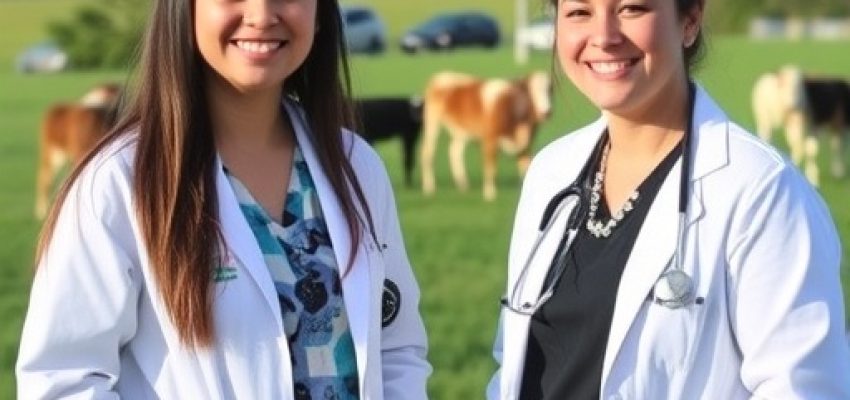

The fabric of global healthcare is intricately woven, yet some threads remain stretched thin, particularly in our rural and remote communities. These areas frequently grapple with a scarcity of medical professionals, limited access to advanced facilities, and an often-disproportionate burden of chronic diseases. This perennial challenge has garnered significant attention, with studies consistently highlighting the systemic issues that deter early-career doctors from choosing practice outside urban centers.
Traditionally, discussions around attracting medical talent to these underserved regions have focused on incentives, infrastructure, and lifestyle factors. However, as an AI specialist and tech enthusiast, I see a powerful, yet often underutilized, catalyst emerging: artificial intelligence. The question isn’t just ‘what attracts or deters early-career doctors?’, but ‘how can cutting-edge technology, particularly AI, fundamentally reshape the rural medical landscape to make it not only viable but highly appealing to the next generation of physicians?’
We are standing at the precipice of a revolution where intelligent systems can democratize access to expertise, streamline clinical workflows, and even enhance professional development, turning historical deterrents into novel attractions. My aim today is to explore how AI in rural healthcare is not just a futuristic concept but a tangible, transformative force ready to redefine the very essence of medical practice in our most remote communities.
AI in Rural Healthcare: Bridging the Distance and Augmenting Capacity
The geographical isolation inherent to rural practice is perhaps its most defining characteristic, often leading to professional loneliness and a lack of immediate specialist support. Historically, this has meant that patients in remote areas might travel hundreds of miles for a specialist consultation, or worse, go without critical care. This is where AI in rural healthcare shines brightest, offering unparalleled capabilities to bridge these distances.
Telemedicine, a precursor to many AI applications, has already demonstrated its efficacy. However, AI elevates this to an entirely new dimension. Imagine an AI-powered diagnostic assistant that can analyze medical images (X-rays, MRIs, dermatological scans) with a level of precision matching, or even exceeding, human specialists, providing real-time insights to a general practitioner in a remote clinic. Startups like K Health use AI to analyze patient symptoms and medical history, offering preliminary diagnoses and treatment plans, or recommending specialist visits. While not replacing the doctor, such tools serve as invaluable second opinions, augmenting the capacity of a single physician to manage a wider array of complex cases.
Furthermore, AI-driven predictive analytics can revolutionize resource allocation and preventive care in rural settings. By analyzing local health data, environmental factors, and demographic trends, AI models can forecast outbreaks of infectious diseases, predict surges in demand for specific services (e.g., during flu season), and identify populations at high risk for chronic conditions. This allows rural clinics to proactively deploy resources, engage in targeted public health campaigns, and manage inventory more efficiently, optimizing the limited budgets and personnel often characteristic of these areas. According to a report by the World Health Organization, strategic application of digital health technologies, including AI, is crucial for achieving universal health coverage, particularly in underserved regions.
Another critical aspect is the provision of continuous medical education and access to the latest research. For doctors in bustling urban hospitals, staying updated is often facilitated by conferences, grand rounds, and easy access to specialized libraries. For a rural physician, this can be a significant challenge. AI-driven platforms can curate personalized learning pathways, provide instant access to the latest peer-reviewed journals, and even simulate complex clinical scenarios for training. This ensures that a doctor in a small town in the interior of Brazil or the Australian outback can remain at the forefront of medical knowledge, fostering professional growth and reducing feelings of isolation.
Transforming Professional Practice: AI as a Magnet for Talent
The study by Minooee, Wright, and Woolley, and similar research, consistently point to a few key deterrents for early-career doctors considering rural practice: heavy workload, limited professional development opportunities, and perceived lack of sophisticated resources. These are precisely the areas where strategic deployment of AI in rural healthcare can act as a powerful magnet.
Firstly, AI can significantly reduce the administrative burden that often overwhelms general practitioners. Think of intelligent electronic health records (EHRs) that automatically transcribe consultations, organize patient data, flag potential drug interactions, and even complete billing codes. This frees up countless hours, allowing doctors to dedicate more time to direct patient care and reducing burnout. Studies have shown that physicians spend nearly half their workday on EHR tasks and desk work, a burden that AI can substantially alleviate, making rural practice less daunting and more patient-focused.
Secondly, professional development, as mentioned earlier, is a major draw for ambitious young doctors. The ability to consult with AI-powered diagnostic tools, collaborate remotely with specialists via advanced telepresence systems, and participate in AI-enhanced virtual training programs transforms the rural clinic from a place of professional isolation into a hub of innovation. It provides an environment where one can engage with cutting-edge technology daily, hone diagnostic skills with AI assistance, and feel connected to the broader medical community, all while serving a critical need.
Moreover, AI can enable a level of precision medicine previously unthinkable in resource-constrained settings. With AI analyzing genetic data, medical history, and environmental factors, a rural doctor can offer highly personalized treatment plans, moving beyond a one-size-fits-all approach. This enhances diagnostic accuracy and therapeutic effectiveness but also makes the practice of medicine more intellectually stimulating and rewarding for the physician. It means practicing at the forefront of medical innovation, even when geographically distant from major research hospitals.
The Road Ahead: Challenges and Ethical AI Deployment
While the potential of AI in rural healthcare is immense, its implementation is not without challenges. Infrastructure, particularly reliable high-speed internet, remains a significant hurdle in many remote areas. The digital divide must be addressed for these solutions to be truly equitable. Governments and private sector partners need to invest in expanding broadband access to ensure that AI’s benefits are not exclusive to digitally privileged communities.
Furthermore, there are ethical considerations that demand careful attention. Data privacy and security are paramount, especially when dealing with sensitive patient information across potentially less secure networks. Algorithmic bias is another critical concern; if AI models are trained predominantly on data from urban, specific demographic populations, they may not perform accurately or equitably for the diverse populations found in rural areas, potentially exacerbating existing health disparities. Robust regulatory frameworks, transparent AI development, and continuous monitoring are essential to mitigate these risks.
The human element also cannot be overlooked. While AI can augment capabilities and reduce burdens, it must be integrated in a way that supports, rather than replaces, human judgment and empathy. Early-career doctors must be trained not just in traditional medicine but also in how to effectively collaborate with AI tools, understanding their strengths and limitations. This hybrid model of human-AI partnership will define the future of medicine in these evolving landscapes.
As we navigate this exciting new frontier, it is clear that AI offers a compelling vision for the future of rural healthcare. It promises to dismantle traditional barriers, enhance medical services, and fundamentally redefine what it means to be a doctor outside the bustling city. By proactively addressing infrastructure, ethical, and training needs, we can ensure that this technological revolution truly serves to create a more equitable, efficient, and attractive healthcare system for all.
The journey to fully integrate artificial intelligence into the fabric of rural medical practice is complex, yet undeniably promising. For early-career doctors contemplating their career paths, the prospect of leveraging cutting-edge AI tools to deliver high-quality, personalized care in underserved communities could transform what was once seen as a challenging career choice into a pioneering opportunity. The allure will not just be about service, but about practicing at the vanguard of medical innovation.
As an AI specialist, I believe that by strategically embracing and investing in AI in rural healthcare, we can not only alleviate the pressures on overburdened systems but also cultivate a new generation of physicians who are drawn to the unique blend of community impact and technological advancement that these settings will offer. The future of medicine, especially in our remote corners, is intrinsically linked to the intelligent machines that will empower doctors to do more, know more, and ultimately, care more effectively.










