We stand at a unique juncture in human history, witnessing a technological shift so profound that it rivals the industrial revolution or the advent of the internet. As an AI specialist, writer, and tech enthusiast, I’ve had the privilege of observing, contributing to, and reflecting upon the rapid evolution of artificial intelligence. What began as a domain of academic curiosity and futuristic speculation has now permeated every facet of our existence, signaling an undeniable era of **AI Transformation**.
This isn’t just about smarter software or more efficient algorithms; it’s a foundational change in how we interact with technology, make decisions, and even understand intelligence itself. From the smallest smart device in our homes to the most complex scientific endeavors, AI is no longer a distant concept but a present reality, continuously expanding its capabilities and redefining what’s possible. Join me as we delve deeper into this exciting, sometimes daunting, but ultimately revolutionary period.
### AI Transformation: Reshaping Industries and Everyday Life
The most tangible evidence of the current **AI Transformation** lies in its pervasive impact across virtually every sector of the global economy. Industries that once seemed impervious to automation or digital disruption are now embracing AI to unlock unprecedented efficiencies, foster innovation, and create new value propositions. This isn’t just an incremental improvement; it’s a fundamental re-architecture of operational paradigms.
Consider the healthcare industry, for example. AI is revolutionizing everything from diagnostics to drug discovery. Machine learning algorithms can analyze medical images with accuracy comparable to, or even exceeding, human experts, aiding in the early detection of diseases like cancer and diabetic retinopathy. Predictive AI models are being deployed to forecast patient outcomes, optimize treatment plans, and even manage hospital resource allocation more effectively. The global AI in healthcare market, valued at approximately $14.5 billion in 2023, is projected to surge to over $200 billion by 2032, underscoring the immense potential and rapid adoption of these intelligent systems. Beyond clinical applications, AI is accelerating pharmaceutical research, sifting through vast datasets to identify potential drug candidates and model their interactions with unparalleled speed.
In the financial sector, AI powers sophisticated fraud detection systems, algorithmic trading platforms that execute millions of transactions per second, and personalized banking services. It meticulously analyzes transaction patterns, flags anomalies in real-time, and helps institutions manage risk more intelligently. Retail is leveraging AI for demand forecasting, supply chain optimization, and hyper-personalized customer experiences, leading to more efficient inventories and higher customer satisfaction. Consider the recommendation engines that power e-commerce giants, suggesting products tailored to individual preferences based on complex behavioral data. This level of personalization, previously unimaginable, is a hallmark of the **AI Transformation**.
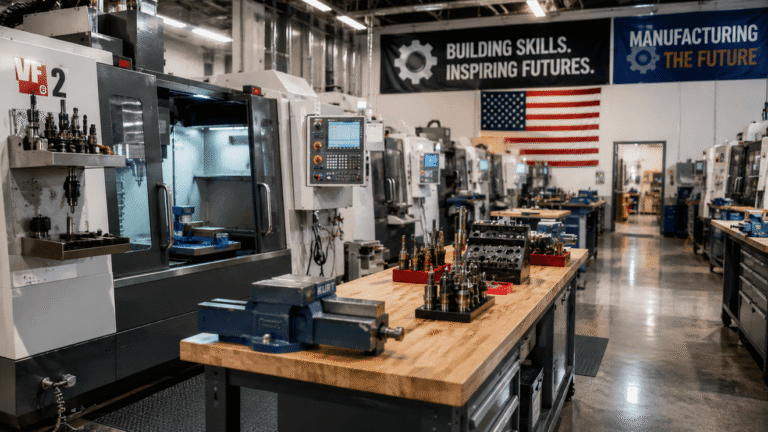
Even in manufacturing, AI-driven robotics and predictive maintenance are transforming factory floors, reducing downtime and enhancing product quality. Education is seeing the rise of AI-powered personalized learning platforms, adapting content and pace to individual student needs, while generative AI tools are assisting with content creation and research across various academic disciplines. On a day-to-day basis, most of us interact with AI in some form, whether through voice assistants like Siri and Alexa, personalized content feeds on social media, or navigation apps that optimize our commutes in real-time. This ubiquitous integration highlights how deeply AI has woven itself into the fabric of our modern lives, making the **AI Transformation** not just an industrial phenomenon, but a societal one.
### The Core Technologies Driving This Evolution
To truly grasp the magnitude of the **AI Transformation**, it’s essential to understand the underlying technologies that have fueled its current acceleration. While the concept of artificial intelligence has been around for decades, recent breakthroughs in computational power, data availability, and algorithmic sophistication have coalesced to create this explosive period of innovation.
At the heart of modern AI lies Machine Learning (ML), a paradigm where systems learn from data rather than explicit programming. This broad field encompasses several key approaches. Supervised learning, perhaps the most common, trains models on labeled datasets to perform tasks like classification (e.g., spam detection) or regression (e.g., predicting housing prices). Unsupervised learning, on the other hand, finds hidden patterns and structures in unlabeled data, crucial for tasks like customer segmentation. Reinforcement learning, inspired by behavioral psychology, teaches agents to make optimal decisions through trial and error, a technique famously employed by DeepMind’s AlphaGo, which defeated the world champion in the complex game of Go.
Deep Learning, a specialized subset of machine learning, is particularly responsible for many of the headline-grabbing AI achievements we see today. It utilizes artificial neural networks with multiple layers (hence ‘deep’) to model high-level abstractions in data. These networks, loosely inspired by the human brain, require vast amounts of data and significant computational resources but have proven incredibly powerful for tasks like image recognition, natural language understanding, and speech synthesis. For instance, the accuracy of computer vision systems has skyrocketed thanks to deep convolutional neural networks, enabling autonomous vehicles to ‘see’ and interpret their surroundings with remarkable precision.
Natural Language Processing (NLP) is another cornerstone of the **AI Transformation**, allowing machines to understand, interpret, and generate human language. Early NLP systems struggled with the nuances of language, but with the advent of large language models (LLMs) like OpenAI’s GPT series, the capabilities have become extraordinary. These models, trained on gargantuan text datasets from the internet, can generate coherent articles, summarize complex documents, translate languages, answer questions, and even write creative content, mimicking human linguistic abilities with surprising fidelity. Their ability to grasp context and generate contextually relevant text has opened up entirely new avenues for human-computer interaction and content creation.
Finally, Generative AI stands out as a recent and incredibly impactful development. Building on deep learning, generative models can create new, original content – be it images, music, video, or text – that is indistinguishable from human-created output. Tools like DALL-E, Midjourney, and Stable Diffusion have democratized artistic creation, allowing users to generate stunning visuals from simple text prompts. This capability marks a significant leap, moving AI beyond mere analysis and prediction into the realm of true creation, profoundly influencing industries from marketing and entertainment to product design. These intertwined technologies collectively form the bedrock of the ongoing **AI Transformation**, continuously pushing the boundaries of machine intelligence and its practical applications.
### Navigating the Future: Challenges, Ethics, and Opportunities in AI
The unparalleled growth and adoption of AI, while brimming with promise, also bring forth a complex array of challenges and ethical considerations that demand thoughtful engagement. The trajectory of this **AI Transformation** hinges not just on technological advancement, but equally on our collective ability to navigate these intricate issues responsibly.
One of the most pressing challenges is the issue of algorithmic bias. AI systems learn from data, and if that data reflects historical societal biases – whether in race, gender, or socioeconomic status – the AI will inevitably perpetuate and even amplify these biases. This can lead to unfair outcomes in critical areas like loan applications, hiring processes, and even criminal justice. Addressing bias requires meticulous data curation, diverse training datasets, and robust ethical oversight to ensure fairness and equity in AI deployment. Furthermore, data privacy and security remain paramount. As AI systems ingest vast quantities of personal information, safeguarding this data from misuse and ensuring compliance with evolving privacy regulations like GDPR and CCPA is a continuous battle.
Another significant concern is the potential for job displacement. While AI is creating new jobs and augmenting human capabilities, it’s also automating routine tasks across various sectors, leading to a need for workforce reskilling and adaptation. The key lies in fostering a collaborative environment where humans work alongside AI, leveraging its strengths for analysis and automation, while humans focus on creativity, critical thinking, and complex problem-solving. This human-AI symbiosis is vital for a beneficial **AI Transformation**.
Ethical AI development extends beyond bias to encompass transparency, accountability, and control. The ‘black box’ nature of some complex AI models, particularly deep learning networks, makes it difficult to understand how they arrive at specific decisions. This lack of explainability (XAI) poses challenges in regulated industries and situations where understanding the ‘why’ behind a decision is crucial. Establishing clear lines of accountability for AI decisions, especially in autonomous systems, is another frontier requiring careful consideration and regulatory frameworks. The rise of generative AI also introduces concerns around misinformation, deepfakes, and intellectual property, necessitating new strategies for content verification and digital provenance.
Despite these hurdles, the opportunities presented by this **AI Transformation** are immense and inspiring. AI holds the key to solving some of humanity’s most intractable problems. In climate change, AI can optimize energy grids, develop more efficient sustainable materials, and model complex environmental systems to predict and mitigate ecological impacts. In scientific research, AI is accelerating discovery across disciplines, from materials science to astrophysics, by identifying patterns and generating hypotheses far beyond human capacity. Personalized medicine, tailored treatments based on an individual’s genetic makeup and health data, is moving from concept to reality thanks to AI.
Ultimately, the future of AI isn’t about machines replacing humans, but about empowering us with new tools to achieve more. It’s about designing intelligent systems that augment our intelligence, enhance our creativity, and free us to focus on higher-order tasks. Responsible AI development, guided by ethical principles and collaborative governance, will be crucial in harnessing its full potential for the betterment of society.
### A Future Forged by Intelligence
The **AI Transformation** we are currently experiencing is more than a fleeting technological trend; it’s a fundamental recalibration of our relationship with information, automation, and innovation. From the subtle enhancements in our daily digital interactions to the profound shifts reshaping entire global industries, artificial intelligence has firmly established itself as a cornerstone of our present and future.
As an AI specialist, I believe that this era calls for a balanced perspective: one that embraces the awe-inspiring potential of AI while remaining acutely aware of its challenges and ethical imperatives. The journey ahead will demand continuous learning, adaptability, and a commitment to designing and deploying AI systems that are fair, transparent, and ultimately serve humanity. The **AI Transformation** is not merely a technical evolution; it is a societal dialogue, an ongoing process that invites us all to participate in shaping a future where intelligence, both human and artificial, can flourish in harmony.